Popular Tours






Have you ever wondered what it feels like to walk through a home where history has breathed for over 200 years? As the residence of seven generations of the same family, the Tan Ky Ancient House stands as a resilient masterpiece of architectural fusion in the heart of Hoi An. Let’s cross the threshold to uncover the stories etched into the very beams of this living museum.
Must Knows About Tan Ky Ancient House
Short on time? Here is a quick snapshot of the essential details before you step into this 200-year-old architectural marvel:
- Location: 101 Nguyen Thai Hoc Street (Right in the heart of the Old Town, stretching back to the riverfront).
- Historical Status: Built in 1741, it proudly stands as the very first house in Hoi An to be recognized as a National Cultural Heritage Site (1985).
- The Inhabitants: It is not a sterile museum! The house has been continuously inhabited by 7 generations of the Le family, who still live on the upper floor today.
- Entrance Fee: Requires one coupon from your general Hoi An Old Town Ticket (120,000 VND / approx. $4.80 USD).
- Signature Highlights: The legendary “Cup of Confucius” (teaching moderation) and the shocking historical flood marks etched into the living room walls.
- Architecture: A flawless Feng Shui fusion of Vietnamese, Japanese, and Chinese design elements.
Overview of Tan Ky Ancient House
Of all the heritage buildings in Hoi An, the Old House of Tan Ky Hoi An ancient stands as the most remarkably preserved example of a merchant’s residence. Built in 1741, it has miraculously survived centuries of wars, weather, and economic shifts to remain largely intact. It was the very first house in Hoi An to be recognized as a National Cultural Heritage Site in 1985, cementing its status as an icon of the town.
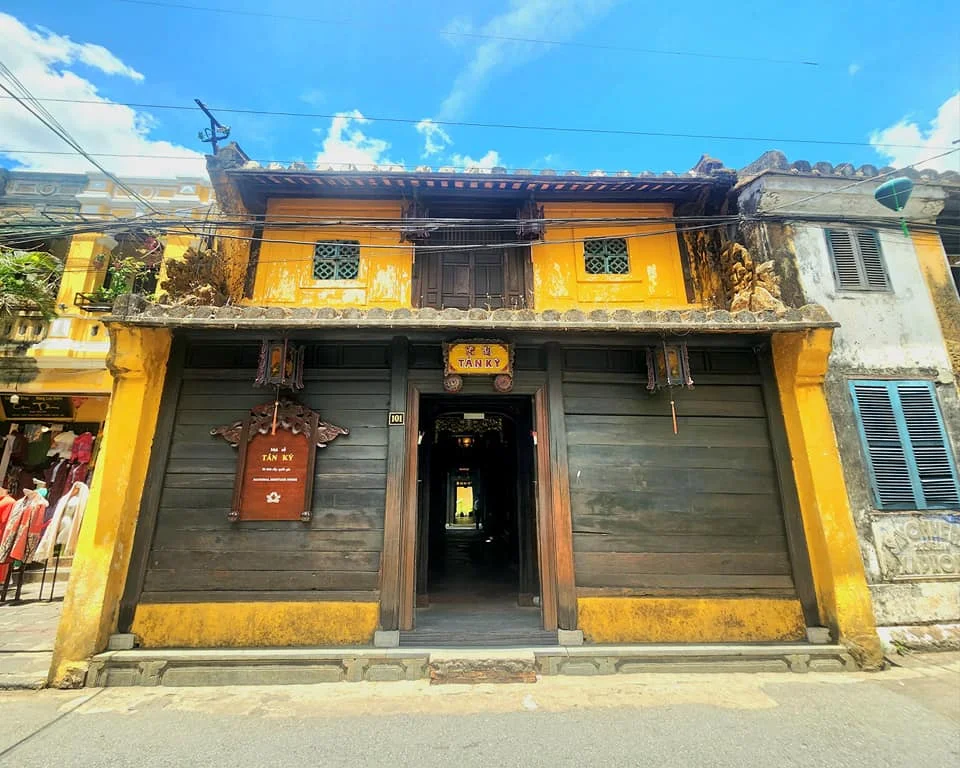
The house functions as a private home and a living museum. The current generation of the Le family still resides in the upper floors, maintaining the ancestral altars and greeting visitors in the front hall. This continuity of life gives the house a warmth that sterile museums lack; you can feel the pulse of daily existence amidst the artifacts.
Located at 101 Nguyen Thai Hoc Street, the house stretches all the way back to the riverfront on Bach Dang Street. This dual-frontage design was strategic for business. The front door on Nguyen Thai Hoc was for welcoming guests and displaying goods, while the back door on the river allowed for easy loading and unloading of cargo from merchant ships.
View more: Hoi An Historical Sites: Top Historic Places You Must Visit
A 200-Year Legacy and Tan Ky Old House History
To understand the house, one must delve into the Tan Ky Old House history. The name “Tan Ky” was not the original name of the family but a business name bestowed upon the house by the second generation. It translates to “Progress Shop,” reflecting the family’s aspiration for prosperity in their agricultural trade business.

The Le family originally arrived from China and settled in Hoi An ancient town during the late 16th century, seizing the opportunities of the bustling port. Over seven generations, they amassed considerable wealth, which they invested back into their home. Each generation left its mark, collecting antiques and refining the interior decor.
However, the history is not just about wealth; it is about resilience. The house has witnessed historic floods, including the devastating deluge of 1964 which submerged the ground floor up to the ceiling. The family has repeatedly saved their home and heirlooms, moving furniture to higher ground through a pulley system that still exists today. This fight against nature is etched into the very fabric of the building.
Discover another fascinating heritage site at the Old House of Phung Hung.


Walking Distance from Major Old Town Landmarks
Because the Ancient Town is compact and pedestrian-friendly, reaching the house is a breeze. Tan Ky Ancient House sits right in the heart of the heritage zone, making it a perfect central stop on your walking itinerary.
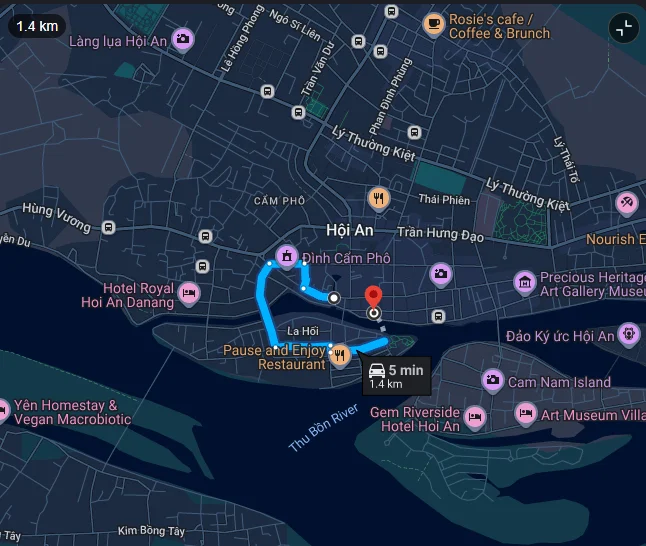
From the Japanese Covered Bridge, the most famous landmark in town, the walk is less than 5 minutes (approx. 200 meters). You simply follow the curve of the river or walk straight down Nguyen Thai Hoc Street. The house is located on the southern side of the street.
If you are coming from the Phuc Kien Assembly Hall, another major site, the walk is about 10 minutes (approx. 700 meters). This route takes you past numerous tailor shops and art galleries, allowing you to soak in the vibrant atmosphere of the Old Town.
>>> View more: Hoi An Ancient Town Map: Complete Walking Map & Attractions Guide
How to Find Tan Ky Ancient House in the Pedestrian Zone
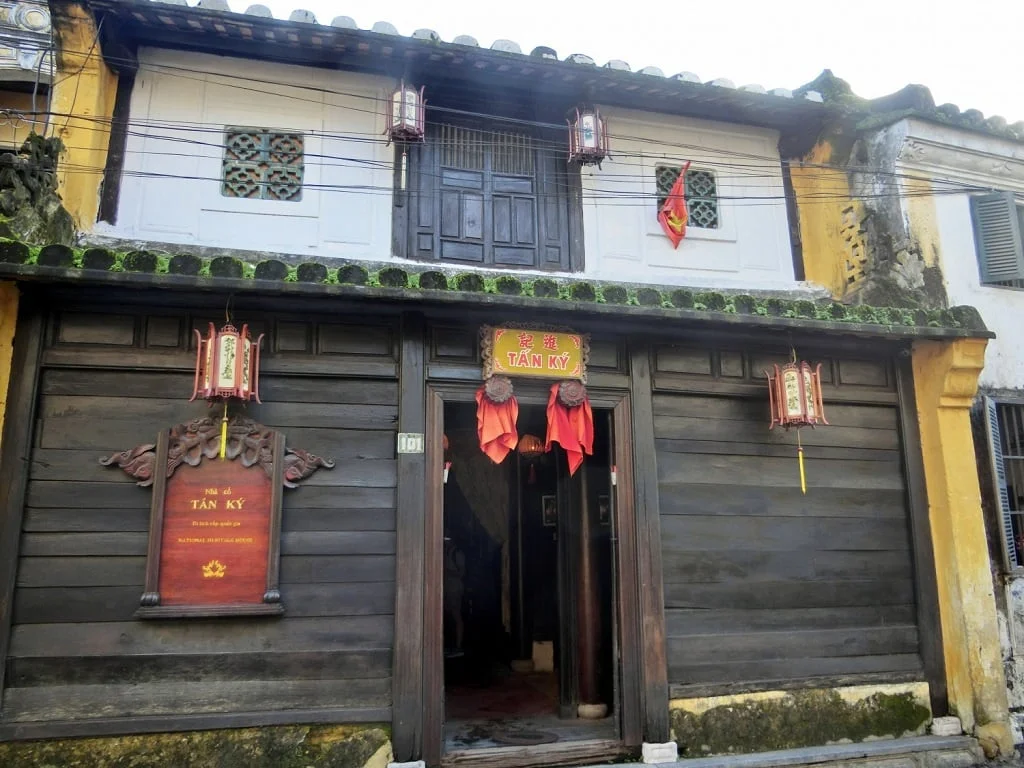
Finding the house is straightforward, but it can be easy to miss amidst the row of similar-looking yellow facades. Look for the wooden sign hanging above the door with the characters “Tan Ky” carved in gold.
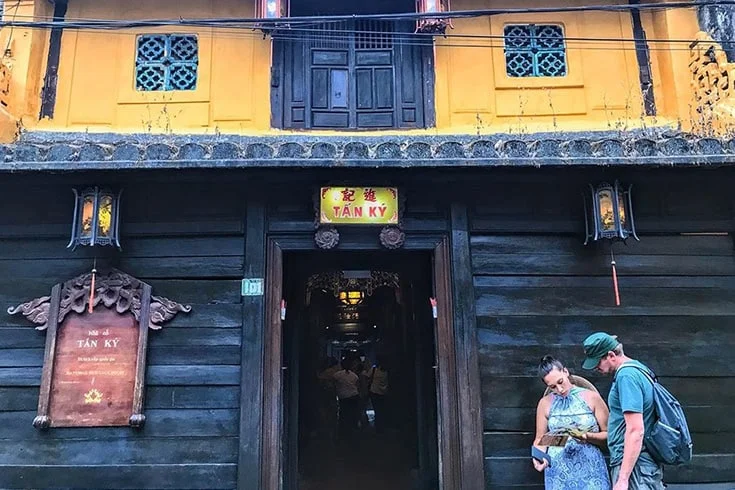
The house is situated at 101 Nguyen Thai Hoc Street. It is open daily from 8:00 AM to 5:00 PM. To enter, you will need a valid Hoi An Ancient Town entrance ticket. One coupon from your ticket booklet allows you access to this site.
Once you spot the ticket checker at the door, present your coupon. You will likely be greeted by a member of the Le family or a guide who will offer you a cup of tea before you begin your tour. The hospitality is as much a part of the experience as the architecture itself.
The Unique Fusion of Tan Ky House Architecture
The beauty of Tan Ky House architecture lies in its masterful blend of three distinct cultures: Vietnamese, Chinese, and Japanese. This fusion mirrors the multicultural society of Hoi An during its trading peak.
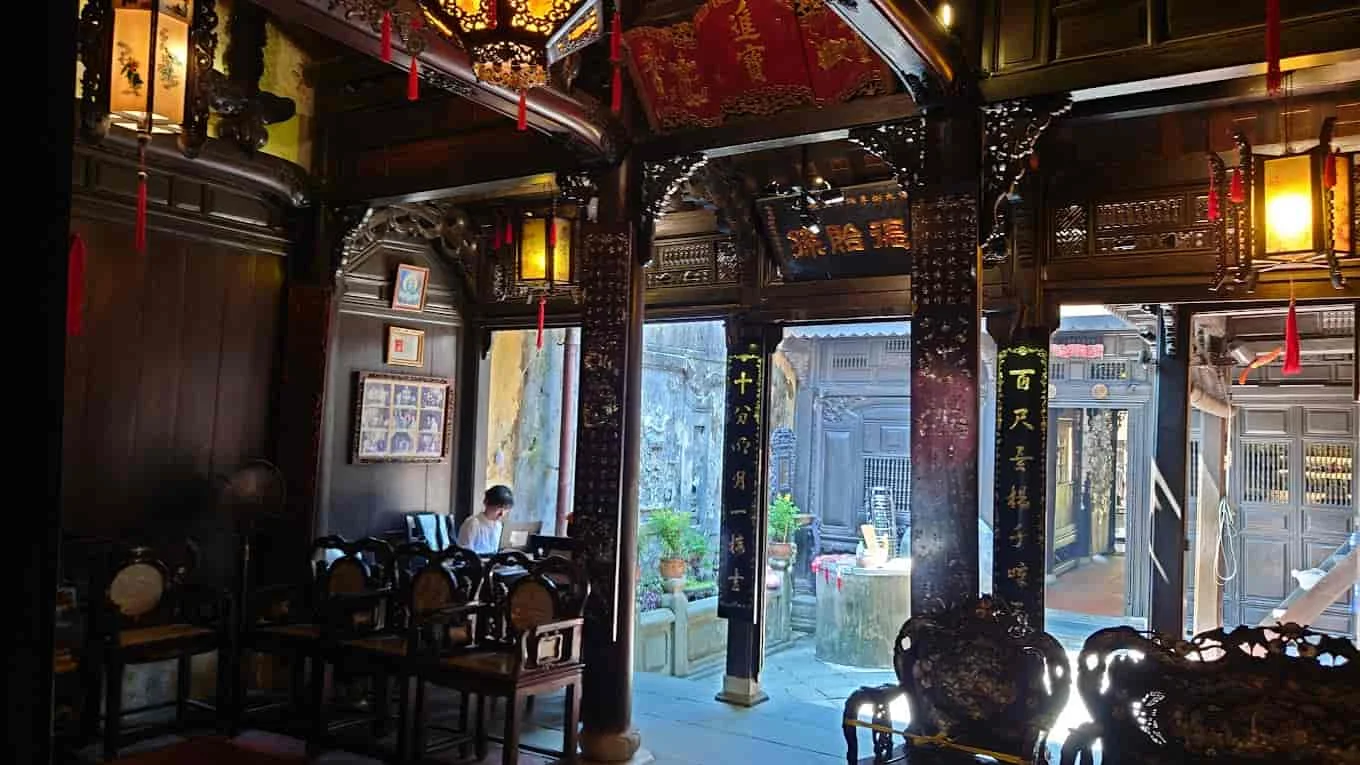
The Japanese influence is evident in the ceiling of the sitting area, known as the “crab shell” ceiling. This curved design is supported by three beams, representing heaven, earth, and humanity. It is elegant and creates a sense of spaciousness.
The Chinese influence dominates the intricate carvings. You will see crossed sabers wrapped in silk ribbon, symbolizing force and flexibility. Poems written in mother-of-pearl inlay adorn the columns, shaped to look like birds taking flight.
The Vietnamese touch is found in the traditional three-compartment structure and the yin-yang roof tiles. These tiles not only provide ventilation but also represent the harmony of opposing forces. The layout is designed according to Feng Shui principles to ensure health and prosperity for the residents.
Step Inside Tan Ky Family House and See the Flood Markings
When you step inside Tan Ky family house, the first thing you might notice is the cool air. The house is designed to be naturally air-conditioned, thanks to the open courtyard in the center that pulls in the breeze.
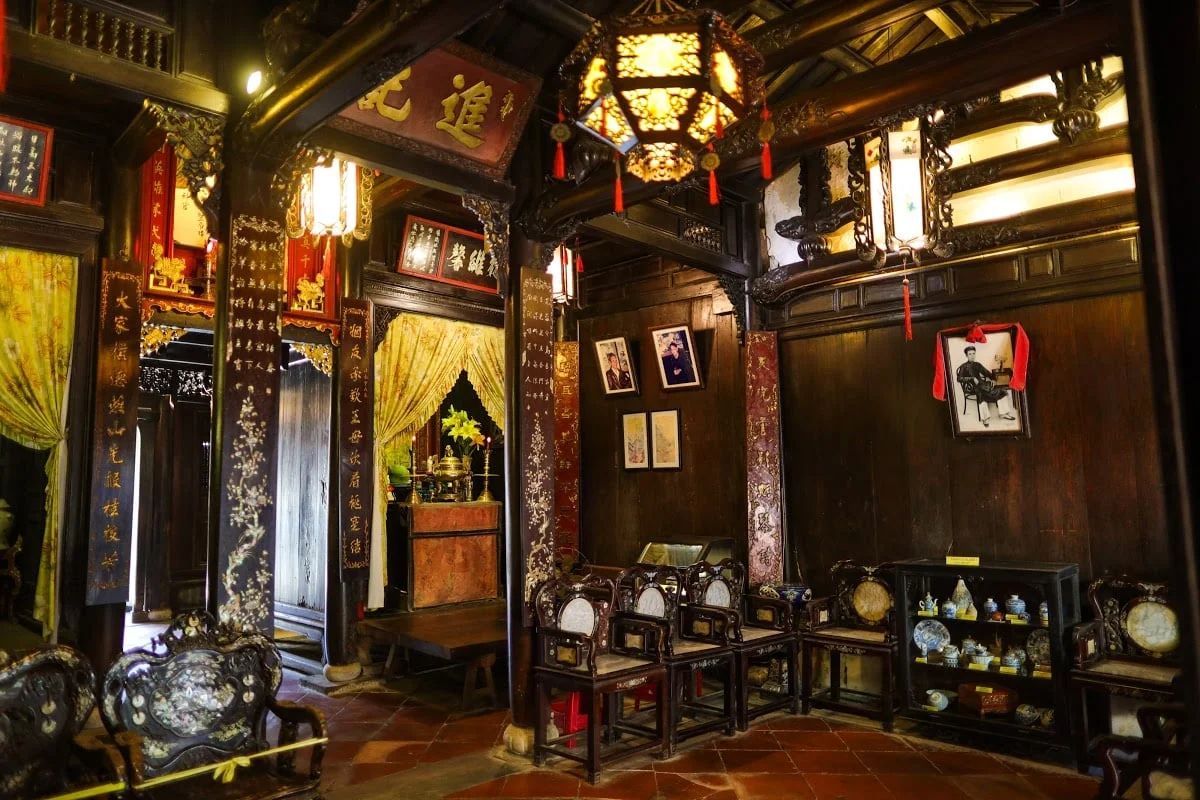
Look closely at the walls in the back room. Here, the family has marked the high-water levels of major floods over the past century. The highest mark, from 1964, is shockingly close to the ceiling.
These markings are a sobering reminder of the reality of life on the riverbank. They tell a story of survival and adaptation. You can also see the trapdoor in the ceiling and the pulley system used to hoist heavy furniture to the second floor when the waters rise.
Discover the “Cup of Confucius” and Antique Treasures
The house is filled with antiques collected over centuries, but one item stands out: the “Cup of Confucius.” This seemingly simple porcelain cup holds a profound moral lesson.
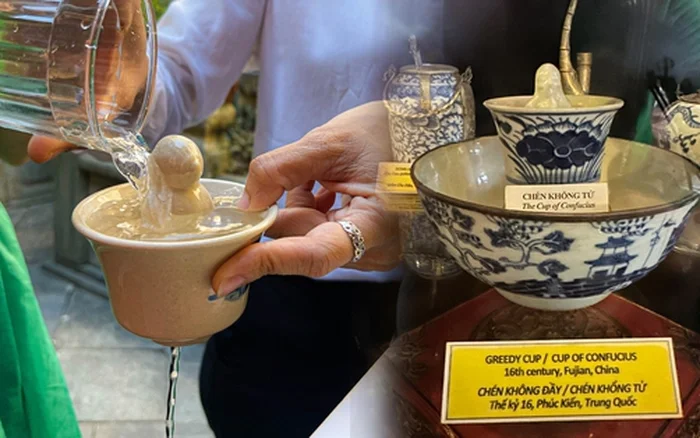
When you pour water into it, it stays in. But if you fill it past a certain point, approaching the brim, all the water instantly drains out through a hole in the bottom. It teaches the virtue of moderation: take only what you need, for greed leads to losing everything.
The family considers this their most precious heirloom. It is believed to be the only one of its kind in Vietnam. You will also see ancient ceramics, pearl-inlaid furniture, and calligraphic panels gifted by kings and nobles, each with its own fascinating backstory.
>>> Discover the rich heritage of the Cantonese Assembly Hall in Hoi An’s Ancient Town.
Great Places to Eat Near Tan Ky Old House
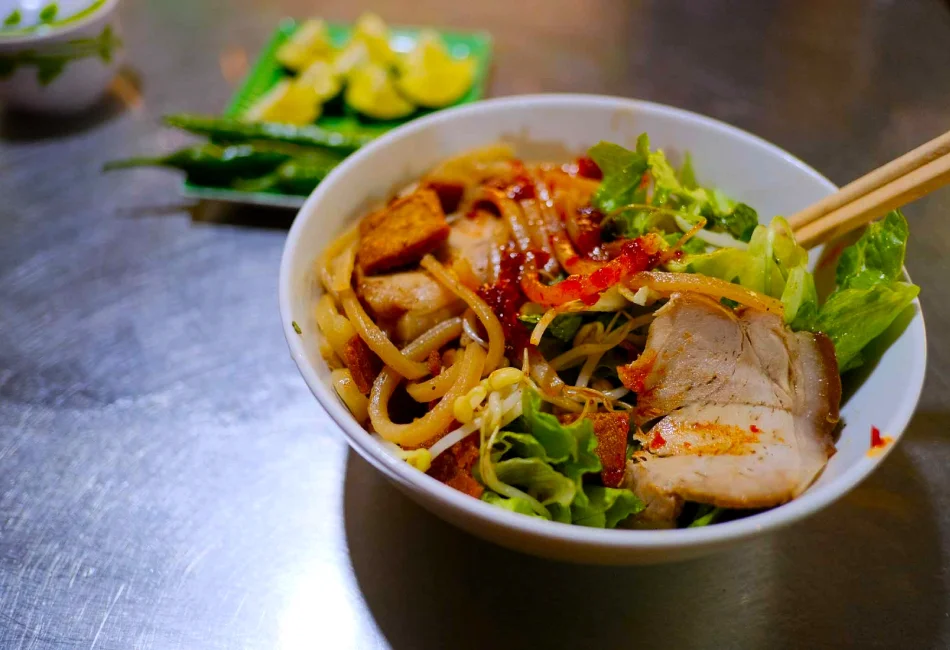
After immersing yourself in history, you can enjoy some of the best food Hoi An has to offer just steps away.
- Morning Glory Original – [106 Nguyen Thai Hoc, Minh An, Hoi An]: Located almost directly across the street, this is one of the most famous restaurants in town. It serves authentic street food dishes in a comfortable setting. Their Banh Xeo (crispy pancake) is legendary.
- Cargo Club – [107-109 Nguyen Thai Hoc, Minh An, Hoi An]: Also nearby on Nguyen Thai Hoc, this place offers great views of the river from its terrace. It is known for its excellent pastries, coffee, and a mix of Western and Vietnamese dishes.
- Tam Tam Café – [110 Nguyen Thai Hoc, Minh An, Hoi An]: Housed in a colonial-era building used for tea drying, this cafe has a wonderful vintage atmosphere. It is a great spot for a relaxed lunch or a strong Vietnamese coffee.
- Street Vendors – [Near Tan Ky Old House, 101 Nguyen Thai Hoc, Hoi An]: Just outside the house, you will often find vendors selling “Xi Ma” (black sesame soup) or mango cakes. These are cheap, delicious, and perfect for a quick energy boost.
>> Don’t miss the chance to explore authentic Hoi An Street Food.
Where to Stay: Heritage Hotels Near Tan Ky House
To fully immerse yourself in the historical vibe of the merchants, consider staying in a heritage-style accommodation just a few steps away:
- Vinh Hung Heritage Hotel: Located just down the street, this is the only hotel situated right inside a perfectly preserved wooden merchant house in the walking zone. (Prices start from 1,600,000 VND / approx. $65 USD per night).
- Bel Marina Hoi An Resort: If you prefer modern luxury with a heritage touch, this resort is located just across the river, offering spectacular sunset views of the Old Town. (Prices start from 2,300,000 VND / approx. $95 USD per night).
- Little Riverside Hoi An: A beautiful, lantern-lit boutique hotel on the banks of the Thu Bon River, offering an easy 5-minute stroll to Tan Ky House. (Prices start from 2,500,000 VND / approx. $100 USD per night).
What to See Next: Expand Your Cultural Walking Tour
Tan Ky Ancient House is perfectly positioned right in the middle of the heritage zone, acting as the ultimate anchor for your walking itinerary. After saying goodbye to the Le family, seamlessly walk to these nearby landmarks to continue your historical journey:
- The Japanese Covered Bridge (Chua Cau): Just a quick 3-minute stroll to the west. Admire Hoi An’s iconic 400-year-old symbol and notice how the Japanese architectural elements there perfectly match the “crab shell” ceiling you just saw inside Tan Ky!
- Cantonese Assembly Hall (Hoi Quan Quang Dong): Located right next to the Japanese Bridge. Step inside this vibrant 19th-century hall to marvel at its magnificent dragon fountain and detailed murals depicting ancient Chinese legends.
- Phung Hung Old House: Walk 5 minutes west (just past the Japanese Bridge) to explore another spectacular wooden merchant house. Comparing its imposing two-story architecture with Tan Ky offers a fascinating masterclass in Hoi An’s trading history.
- Phuc Kien (Fujian) Assembly Hall: Head east down Tran Phu Street for about 7 minutes to discover the grandest Chinese assembly hall in town, famous for its giant, burning spiral incense coils and highly photogenic mosaic gates.
- Hoi An Central Market: Walk down to the riverfront and head east. Transition from the quiet history of the ancient houses into the chaotic, vibrant energy of local merchants trading fresh spices, silk, and street food—just as they did centuries ago.
- Precious Heritage Art Gallery Museum: Continue your walk past the market into the French Quarter to experience Réhahn’s world-class photography documenting Vietnam’s 54 ethnic tribes. Best of all, it is 100% free to enter!


Important Travel Tips Before Entering the Ancient House
Understanding basic etiquette and practical considerations in advance helps ensure your visit is both respectful to the homeowners and enjoyable for you. Below are essential tips to keep in mind before stepping inside.
Dress Code
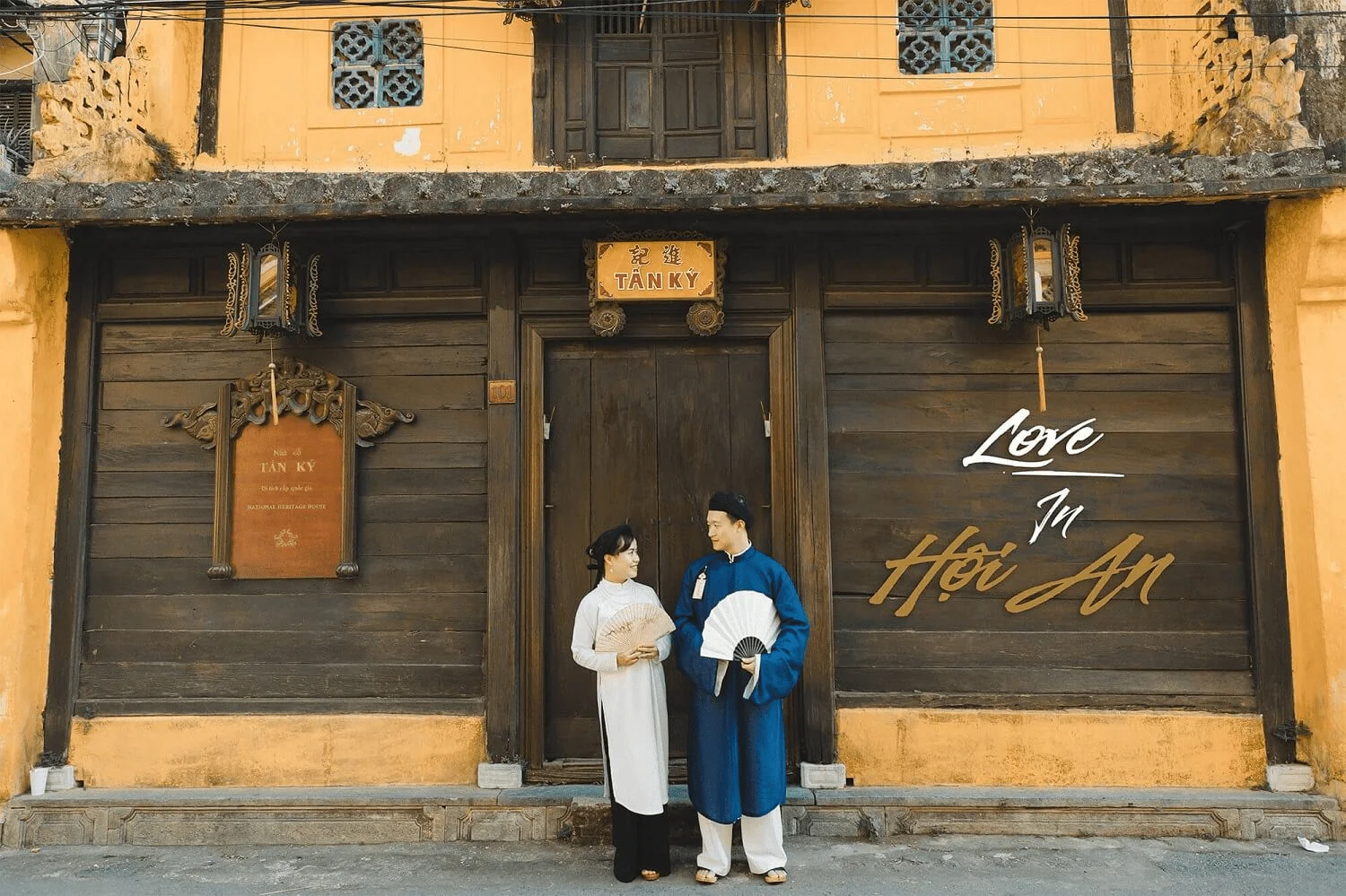
Like most heritage sites in Vietnam, modesty is appreciated. While there is no strict dress code like in a temple, it is respectful to avoid wearing swimwear or overly revealing clothes inside a private family home. Comfortable walking shoes are a must for navigating the uneven wooden floors.
Be Respectful of the Residents
Remember that people live here. Do not enter the private areas on the second floor unless invited. Ask for permission before taking photos of the family members. They are usually very welcoming, but courtesy goes a long way.
Timing Your Visit
The house can get crowded with tour groups, especially in the mid-morning and mid-afternoon. For a quieter experience, try visiting right when it opens at 8:00 AM or during the lunch hour (12:00 PM – 1:00 PM). This allows you to speak with the hosts and examine the artifacts without being jostled.
Continue your cultural journey with a fascinating My Son Sanctuary Tour.
Why Explore Ancient Houses with Hoi An Unique Travel?
You can visit Tan Ky Ancient House on your own, but to unlock the 200-year-old secrets, you need a storyteller. Hoi An Unique Travel connects you with the history behind the facade.
Our guides are locals who know the Le family. They can translate the poetic inscriptions on the columns and explain the deeper meanings of the architectural symbols that you might miss. We turn a sightseeing stop into a conversation with history.
We handle the logistics of tickets and timing, ensuring you have a stress-free experience. We can combine your visit with other hidden gems in the Old Town, creating a curated cultural journey that goes deeper than the guidebooks.
Contact Us to arrange a private tour. For immediate assistance and a free consultation, call +84 916 976 731. Let us open the door to the past for you.
>>> View more: Hoi An Tours & Private Luxury Experiences | Hoi An Unique Travel
FAQs About Tan Ky Ancient House
What is the significance of the Old House of Tan Ky?
It is the most remarkably preserved merchant house in Hoi An, famous for its masterful fusion of Vietnamese, Chinese, and Japanese architecture. Built in 1741, it made history by becoming the very first house in Hoi An to be designated a National Cultural Heritage Site in 1985.
Does anyone still live in the Old House of Tan Ky?
Yes! Unlike many sterile museum exhibits, this is a living home. The Le family has resided here for seven generations. While the ground floor is open to visitors, the current descendants still actively live and maintain their ancestral altars on the upper floor.
What is the “Cup of Confucius” inside the house?
It is a legendary, 200-year-old porcelain cup considered the family’s greatest treasure. It holds a profound philosophical trick: if you fill it with water up to 80%, it holds the liquid perfectly. But if you get greedy and fill it to the brim, a hidden hole opens and drains all the water away—teaching the timeless virtue of moderation.
How much does it cost to visit the Tan Ky Ancient House?
Entry requires one of the five tear-off coupons included in your general Hoi An Old Town Ticket (120,000 VND / approx. $4.80 USD). You do not need to pay an additional cash fee at the door!
Recent Posts






Our Associations


Our Awards








