Popular Tours






What makes the Cantonese Assembly Hall distinct from every other historic structure in Hoi An’s Ancient Town? With its majestic dragon fountains and elaborate statues, this site offers a dazzling look at the artistic and spiritual life of the Cantonese merchant community unlike any other. Follow our guide to navigate the layout, history, and architectural secrets of this stunning landmark.
Must Knows About the Cantonese Assembly Hall
Before you step into this vibrant cultural monument, here is a quick snapshot of what to expect:
- Location: 176 Tran Phu Street (Conveniently located right next to the iconic Japanese Covered Bridge).
- Historical Status: Built in 1885 by Chinese merchants from the Guangdong region, making it one of the most flamboyant assembly halls in Hoi An.
- Main Deities: Dedicated primarily to Quan Cong (the symbol of loyalty and integrity) and Thien Hau (Goddess of the Sea).
- Entrance Fee: Requires one coupon from your general Hoi An Old Town Ticket (120,000 VND / approx. $4.80 USD).
- Signature Highlight: The spectacular, highly photogenic Ceramic Dragon Fountain in the main courtyard.
Introduction of Cantonese Assembly Hall
The Cantonese Assembly Hall, also known as the Quang Trieu Assembly Hall, is one of the five major assembly halls that define the architectural landscape of Hoi An Ancient Town. Located at 176 Tran Phu Street, right next to the iconic Japanese Bridge, it is an unmissable landmark for any visitor. While other halls might be dedicated to sea goddesses, this one resonates with a different kind of power.
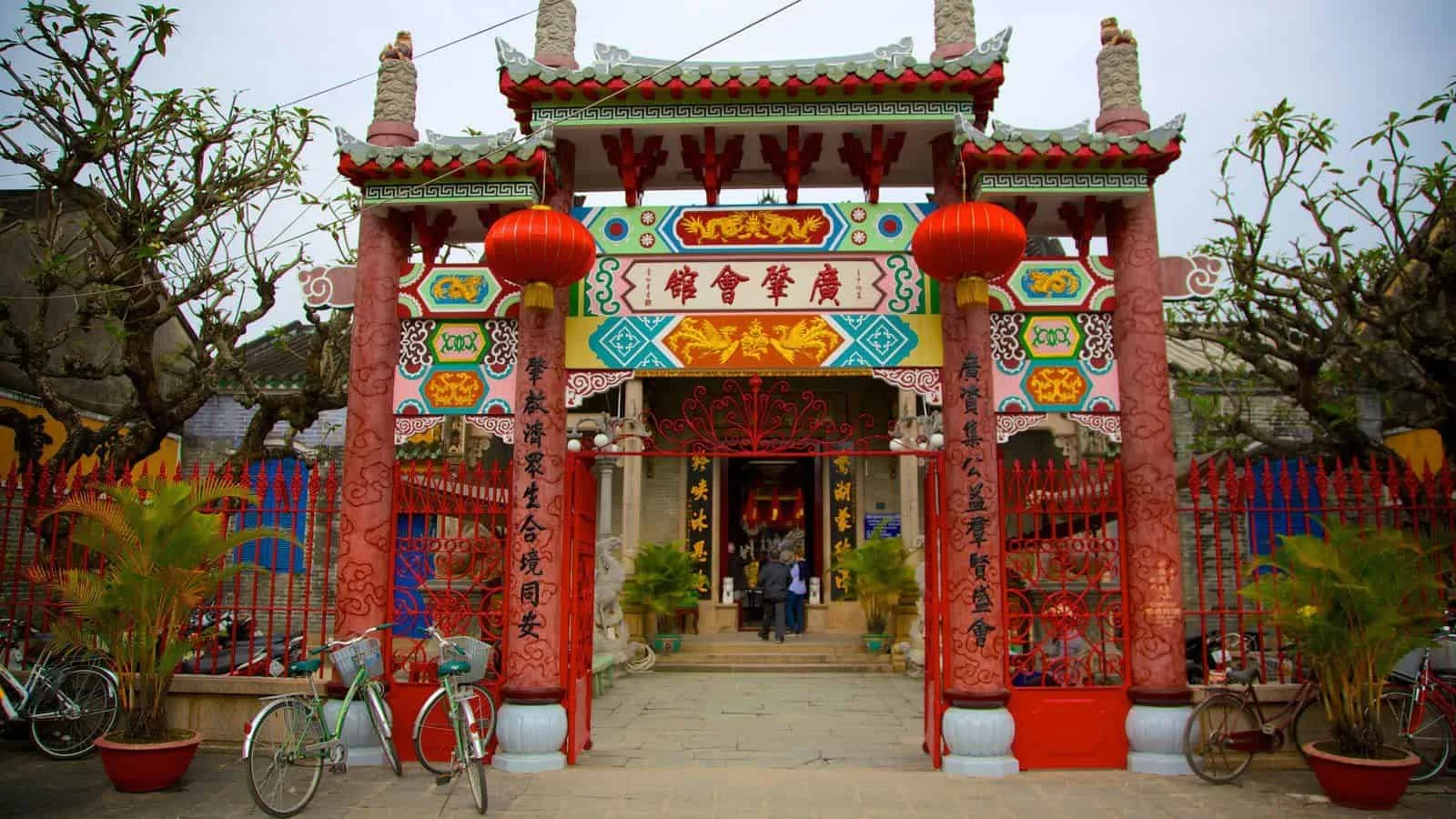
Built by Chinese merchants from the Canton (Guangdong) region, the hall was originally intended as a community center for business and socializing. It was a place for fellow countrymen to gather, rest after long sea voyages, and support one another in a foreign land. Over time, its function evolved, blending the secular with the sacred.
Today, it is primarily a place of worship dedicated to Quan Cong, a revered general symbolizing loyalty and integrity, and Thien Hau, the goddess of the sea. The hall is famous for its distinct architectural style, which is often described as more flamboyant and detailed than its counterparts.
The structure itself was reportedly built in 1885, making it a relative latecomer compared to others, but what it lacks in age, it makes up for in grandeur. The assembly hall was constructed using materials shipped all the way from China, ensuring that every brick and beam remained true to its Cantonese roots.
View more: Hoi An Historical Sites: Top Historic Places You Must Visit
The Origins of the Cantonese Assembly Hall in Hoi An
To understand the Cantonese Assembly Hall Hoi An, one must look back to the peak of the town’s trading era. Hoi An was a melting pot where merchants from Japan, China, and Europe converged. The Chinese community was particularly influential, organizing themselves into congregations based on their home provinces.
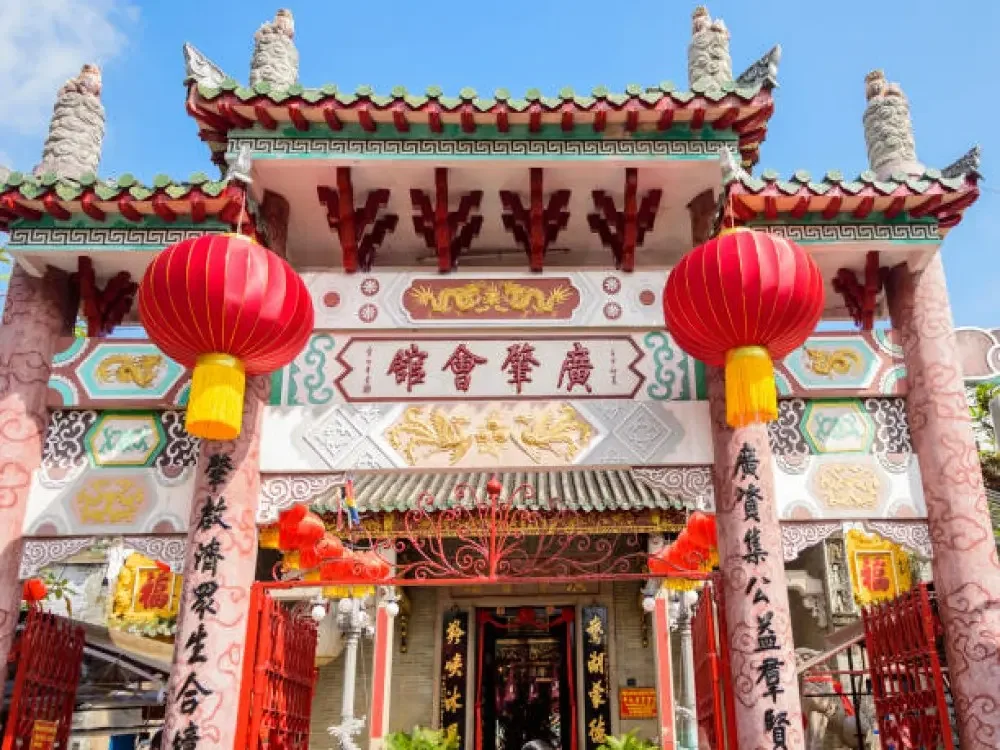
The Cantonese merchants were known for their adventurous spirit and business acumen. They established this hall not just as a clubhouse but as a statement of their identity and success. The location they chose, adjacent to the Japanese bridge and the river, was strategic for commerce.
The hall has witnessed the changing tides of history, from the bustling days of the spice trade to the quiet preservation of the modern era. Unlike other wooden structures that suffered from fire and termites, the Cantonese Assembly Hall was built with a sturdy frame of stone and wood, allowing it to survive with much of its original detailing intact.
It is a living monument to the diaspora. Every year, during the Lunar New Year and the Lantern Festival, the hall comes alive with lion dances and traditional rituals, proving that the connection to its ancestral roots remains unbroken.
View more: Minh Huong Communal House Hoi An: A Complete Guide
How to Get to Cantonese Assembly Hall in the Old Town
Located at the western end of the Ancient Town, reaching the hall is a straightforward and scenic journey. Whether you are arriving from the beach or the city center, the hall serves as a perfect starting or ending point for your heritage walk.
Walking from the Japanese Bridge
The most common way to arrive is on foot. If you are standing at the Japanese Covered Bridge, simply look to the east. The Cantonese Assembly Hall is practically its neighbor, located just a few dozen meters away at 176 Tran Phu Street.
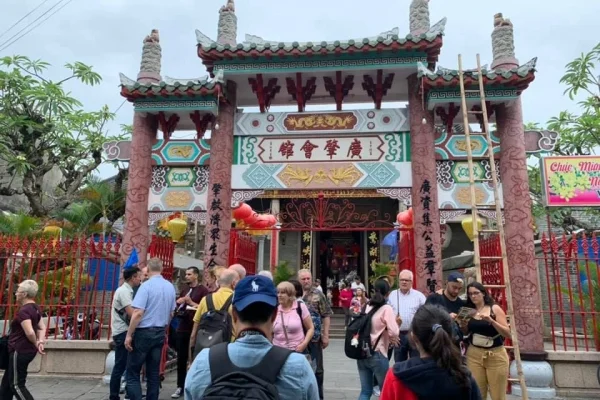
Its close proximity means you can easily visit both landmarks in quick succession. The street connecting them is pedestrian-friendly during peak hours, lined with souvenir shops and colorful lanterns. It is a pleasant 2-minute stroll that takes you from the Japanese quarter into the heart of the Chinese influence.
View more: Quan Am Pagoda Hoi An: History, Architecture & Visitor Guide
Cycling from An Bang Beach
If you are staying at a beach resort in An Bang or Cua Dai, cycling is a fantastic option. The ride to the Old Town takes about 20-30 minutes through picturesque rice paddies. Once you reach the town, you will need to park your bike at a designated lot, as bikes are restricted in the core heritage zone during evenings.

There are several parking spots near the Japanese Bridge area where you can leave your bicycle for a small fee (approx. 5,000 VND). From there, proceed on foot to the assembly hall. This combination of cycling and walking is the quintessential Hoi An experience.
>>> View more: Eco-Luxury Hoi An Cycling Tour: Cam Thanh & Organic Farm
Arriving by Taxi or Private Car
For those preferring comfort, especially in the midday heat, a taxi or private car can drop you off at the edge of the pedestrian zone. The closest drop-off point is usually the square near the Japanese Bridge or the intersection of Phan Chau Trinh and Nguyen Thi Minh Khai.

From the drop-off point, it is a short 5-minute walk to the assembly hall. Hoi An Unique Travel can arrange seamless private transfers that get you as close as possible to the heritage sites, saving you energy for the exploration inside.
Visitor Essentials: Location, Tickets, and Opening Hours
Planning your visit is simple, but knowing the logistics helps you avoid the crowds. The hall operates under the standard regulations of the Hoi An Heritage Management Center.
2026 Visitor Guide
| Category | Details |
| Address | 176 Tran Phu Street, Hoi An |
| Opening Hours | Daily from 8:00 AM to 5:00 PM |
| Best Time to Visit | 8:30 AM – 10:00 AM or 3:30 PM – 4:30 PM |
| Entrance Ticket | Included in Hoi An Old Town Ticket |
| Ticket Price (Intl) | 120,000 VND (Approx. $4.80 USD) |
| Ticket Validity | 24 Hours for 5 heritage sites |
To enter, you will need a valid Hoi An Ancient Town entrance ticket. One coupon from your ticket booklet grants you access to the Cantonese Assembly Hall. There is no separate fee payable at the door.
While the official hours end at 5:00 PM, the exterior of the hall is beautifully illuminated at night. It is worth walking past in the evening to see the lanterns glowing against the intricate stonework, even if the doors are closed.
Architectural Wonders and Hidden Symbols
The architecture of the Cantonese Assembly Hall is a feast for the eyes. It follows the traditional “Tam” character layout (three parallel lines), comprising a front gate, a spacious courtyard, and a main sanctuary. The structure is renowned for its incredible attention to detail, particularly in the ceramic work.
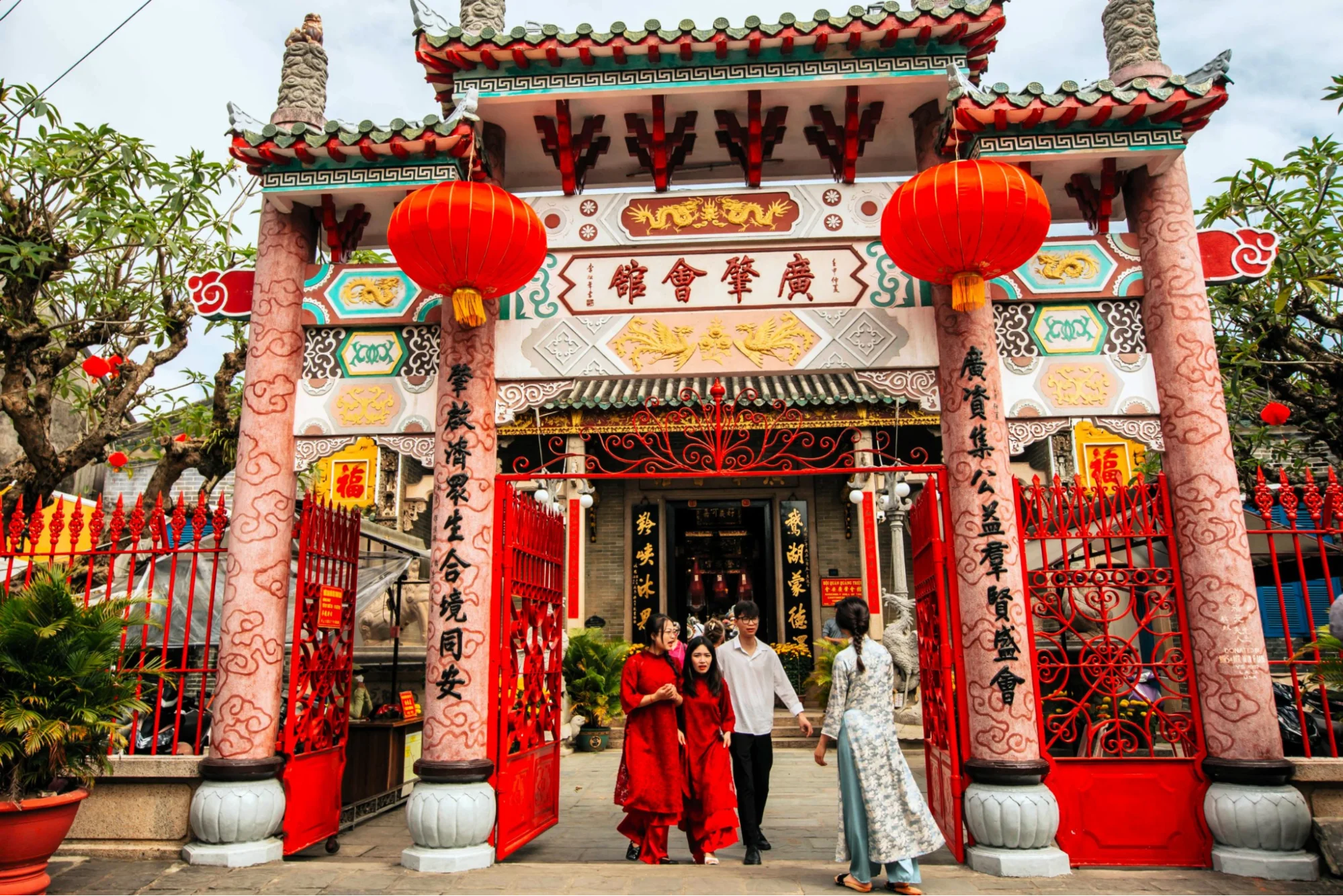
Unlike the wooden carvings found in other halls, the Cantonese style emphasizes stone and pottery. The roof ridges are adorned with elaborate ceramic statuettes produced in the famous kilns of China. These figures depict scenes from Chinese opera and mythology, adding a theatrical element to the building.
The use of materials was deliberate. The heavy stone columns were brought in to anchor the building against typhoons, while the ceramic decorations were chosen for their ability to withstand the humid tropical climate without fading.
Snap a Photo with the Iconic Ceramic Dragon Fountain
The centerpiece of the courtyard is the spectacular ceramic dragon fountain. This is arguably the most photographed feature within the hall. The dragon is depicted coiling through clouds, its scales rendered in vibrant blue and green pottery shards.
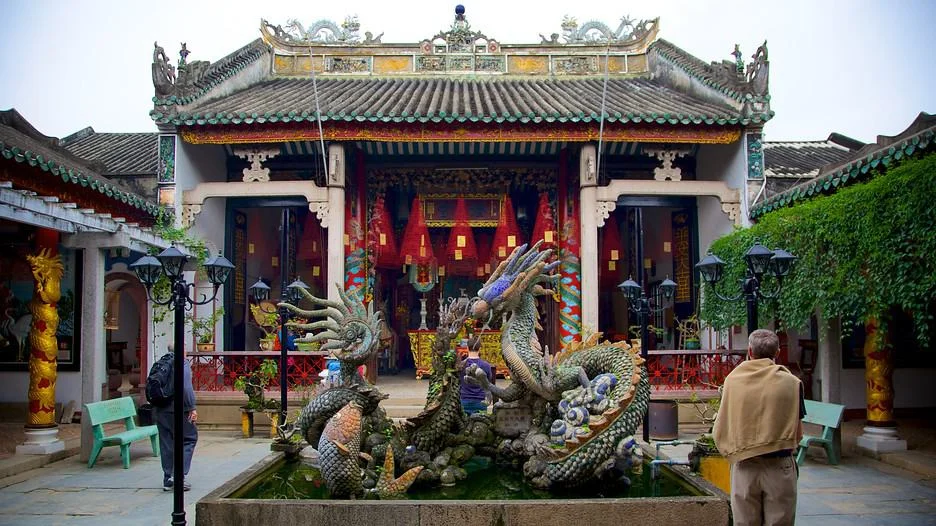
In Chinese culture, the dragon is a symbol of power, strength, and good fortune. It is also associated with rain and water, essential for agriculture and safe sea voyages. The fountain is not just decorative; it represents the community’s wish for prosperity and protection.
Surrounding the dragon are statues of carp attempting to leap over the “Dragon Gate.” This motif symbolizes perseverance and success, particularly in academic or business endeavors. It is a visual representation of the merchant’s journey, struggling against the current to achieve greatness.
Worshiping the General: Inside the Cantonese Assembly Hall Quan Cong Temple
Moving into the main sanctuary, the atmosphere shifts from ornate to solemn. This is the Cantonese Assembly Hall Quan Cong Temple, dedicated to the legendary general Quan Cong (Guan Yu).
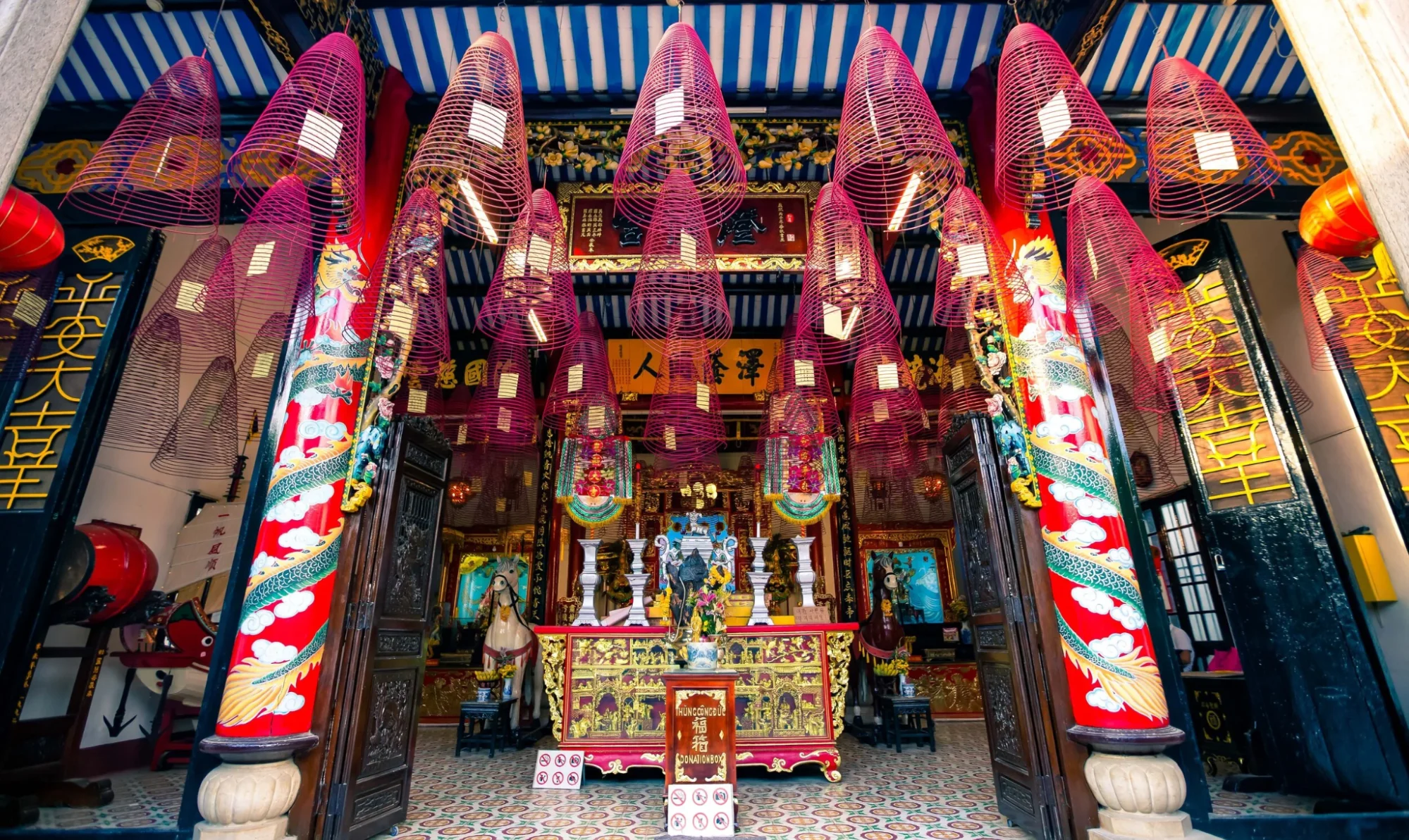
His statue dominates the central altar. He is depicted with a red face and a long beard, exuding an aura of loyalty and righteousness. Quan Cong is the patron saint of brotherhood and commercial integrity. For merchants, swearing an oath before him was binding; breaking it meant facing divine retribution.
To the rear of the hall, there is an altar dedicated to Thien Hau, the Holy Mother of the Sea. She is the protector of sailors, a figure of immense importance to the Cantonese immigrants who crossed the dangerous South China Sea to reach Vietnam. Visitors often light spiral incense coils here, hanging them from the ceiling to carry their prayers for safe travels.
After exploring the historic hall, discover more heritage sites on a My Son Sanctuary Tour.
Famous Street Food Stalls Near the Assembly Hall
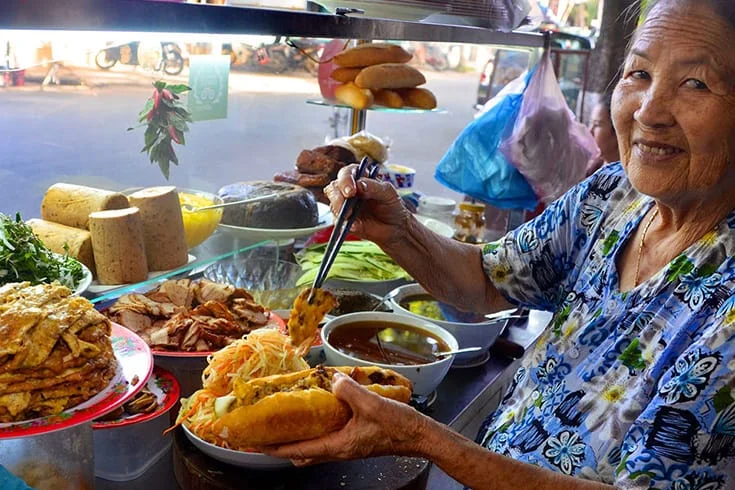
Exploring the hall will likely build an appetite. Fortunately, its location on Tran Phu Street places you in the middle of a culinary hotspot.
- Mot Hoi An – [150 Tran Phu, Minh An, Hoi An]: Just a short walk east from the hall, you will find this famous herbal tea stand. Their signature drink, served in a cup adorned with a lotus petal, is a refreshing blend of lemongrass, lime, and herbs. It is the perfect way to cool down.
- Madam Khanh – The Banh Mi Queen – [115 Tran Cao Van, Minh An, Hoi An]: Located slightly north of the hall, this shop is legendary. Their Banh Mi is packed with savory meats, homemade pate, and a secret sauce that balances sweet and savory perfectly. It is an affordable and delicious lunch option.
- Morning Glory Original – [106 Nguyen Thai Hoc, Minh An, Hoi An]: For a sit-down meal, this restaurant is just across the street. It offers a comprehensive menu of Hoi An specialties like Cao Lau and White Rose dumplings in a beautiful heritage setting.
- Mango Mango – [45 Nguyen Phuc Chu, Minh An, Hoi An]: If you head towards the river near the Japanese Bridge, this modern eatery offers fusion cuisine and cocktails with a view of the water. It is a great spot for a sunset dinner after your temple visit.
>> Discover the authentic flavors of the city through a Hoi An Street Food experience.
Where to Stay: Heritage Comfort Near the Assembly Hall
To maximize your time exploring the western end of the Ancient Town, consider booking a stay at one of these nearby boutique hotels:
- La Siesta Hoi An Resort & Spa: A luxurious, tranquil retreat surrounded by tropical gardens, located just a short 10-minute walk or bicycle ride from the hall. (Prices start from 2,800,000 VND / approx. $110 USD per night).
- Vinh Hung Heritage Hotel: For true history lovers, this is the only hotel located right on the pedestrian walking street, offering an authentic merchant house experience. (Prices start from 1,600,000 VND / approx. $65 USD per night).
- Anantara Hoi An Resort: A premium riverside property boasting elegant French colonial architecture, just a short stroll from the heritage zone. (Prices start from 4,800,000 VND / approx. $195 USD per night).
What to See Next: Expand Your Cultural Tour
The Cantonese Assembly Hall’s prime location makes it the perfect launching pad for further exploration. Seamlessly continue your historical walk by visiting these nearby sites:
- The Japanese Covered Bridge (Chua Cau): Literally next door! Contrast the flamboyant Chinese ceramics of the assembly hall with the understated, weathered elegance of this 400-year-old Japanese monument.
- The Old House of Phung Hung: Walk just 2 minutes west (past the Japanese Bridge) to explore this massive ironwood merchant house, famous for its unique Japanese-style four-sided roof.
- Phuc Kien (Fujian) Assembly Hall: Head east down Tran Phu Street to discover another magnificent Chinese assembly hall and compare its grand scale and giant incense coils with the Cantonese architecture.
Cultural Tips for Visiting Chinese Temples in Hoi An
Visiting Chinese temples in Hoi An offers a deeper insight into the town’s spiritual life and Chinese heritage. To ensure a respectful and meaningful experience, visitors should be mindful of several important cultural practices and etiquette guidelines.
Dress Modestly
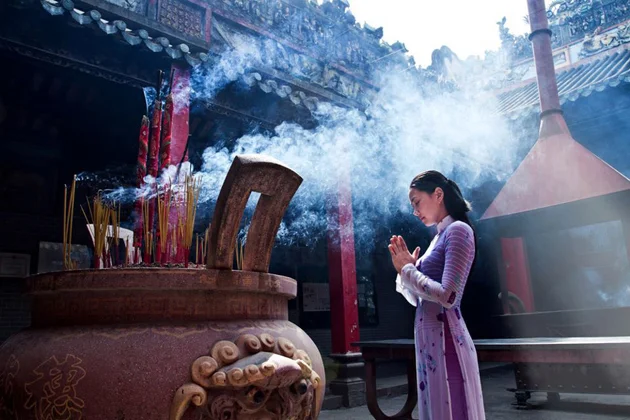
As an active place of worship, the Cantonese Assembly Hall requires visitors to dress appropriately. Ensure your shoulders and knees are covered. Avoid wearing tank tops, singlets, or very short skirts. If you are unprepared, you may be asked to cover up or denied entry.
Respect the Rituals
You will see locals offering incense and bowing before the altars. Please be respectful of their space. Do not stand directly in front of someone praying to take a photo. Keep your voice low and avoid loud laughter within the sanctuary. Observing quietly allows you to appreciate the spiritual atmosphere without disrupting meaningful religious practices.
Photography Etiquette
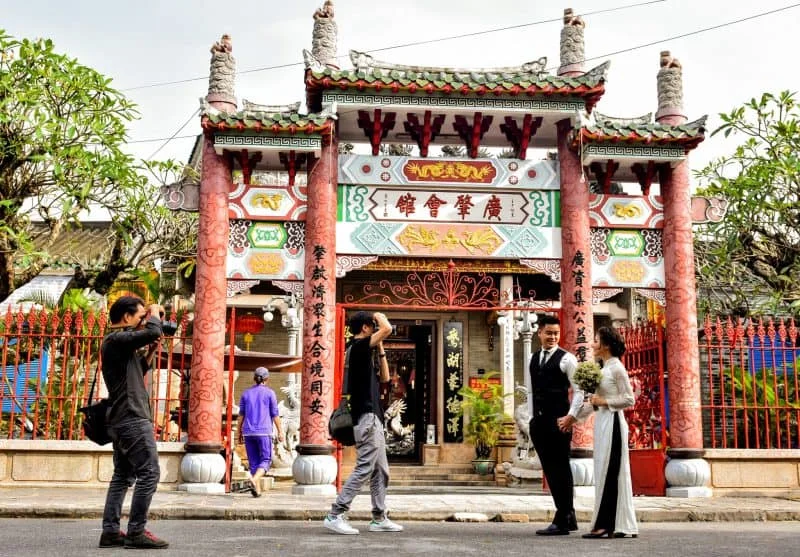
Photography is generally allowed, but use discretion. Do not use flash inside the darker prayer halls, as it can be distracting and damaging to the artwork. Always ask for permission before taking close-up photos of the temple keepers or worshippers.
Why Explore Hoi An’s Assembly Halls with Hoi An Unique Travel?
You can admire the dragons on your own, but to understand what they are guarding, you need a storyteller. Hoi An Unique Travel transforms a sightseeing walk into a cultural revelation.
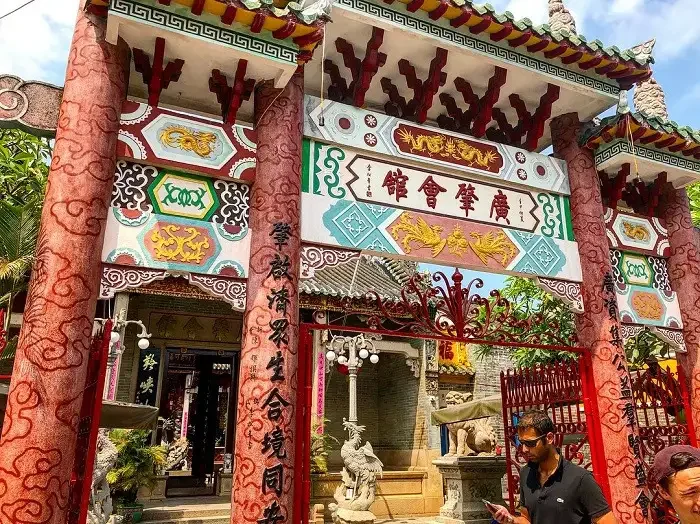
Our local guides can decode the Chinese characters inscribed on the pillars, explaining the poetry and history they hold. We tell you the legends of Quan Cong that aren’t in the guidebooks and show you the hidden architectural details that most tourists miss.
We handle the logistics of the ticket system and guide you to the hall at the best times to avoid the crowds. We can combine your visit with other assembly halls, creating a comprehensive narrative of the Chinese influence in Hoi An.
Contact Us to arrange a private tour. For immediate assistance, call +84 916 976 731 for a free consultation. Let us unlock the secrets of the Cantonese Assembly Hall for you.
>>> View more: Hoi An Tours & Private Luxury Experiences | Hoi An Unique Travel
FAQs About Cantonese Assembly Hall
Is the Cantonese Assembly Hall worth a stop in Hoi An Old Town?
Yes, absolutely. It is widely considered one of the most visually stunning and elaborate buildings in the Old Town. The massive ceramic dragon fountain alone makes it a must-visit for photographers and culture lovers.
What can visitors see inside the Cantonese Assembly Hall?
Visitors will be captivated by the iconic ceramic dragon fountain, the intricate statues of General Quan Cong and the Sea Goddess Thien Hau, beautiful stone carvings, and a peaceful rear garden with seating.
Is the Cantonese Assembly Hall crowded during the day?
It can get busy, especially in the mid-morning when tour groups arrive. To avoid the crowds and enjoy the large, open courtyard in peace, we highly recommend visiting early at 8:00 AM or late in the afternoon around 4:00 PM.
Can you combine the Cantonese Assembly Hall with nearby attractions?
Yes! Its location right next to the Japanese Covered Bridge makes it incredibly easy to combine. You can comfortably visit the bridge, the assembly hall, and the Phung Hung Old House all within a single hour of walking.
Do I need a separate ticket to enter the hall?
No, you do not need to pay an extra cash fee at the door. Entry simply requires one of the five tear-off coupons included in your general Hoi An Old Town Ticket (120,000 VND / approx. $4.80 USD).
Recent Posts






Our Associations


Our Awards








