Popular Tours






Seeking a quiet retreat from the bustling lantern-lit streets of the ancient town? Tucked away amid centuries-old merchant houses, Quan Am Pagoda Hoi An offers a rare glimpse into the spiritual heartbeat of central Vietnam. As experts at Hoi An Unique Travel, we always encourage travelers to step beyond the main tourist trails. Discovering this sacred Buddhist sanctuary reveals a deeper, more tranquil side of the city. Let us walk you through the history, architecture, and practical tips for visiting this beautiful temple dedicated to the Goddess of Mercy.
An Overview of Quan Am Pagoda
Located just a short walk from the iconic yellow facades of the old town, Quan Am Pagoda Hoi An stands as a testament to the region’s deep-rooted Buddhist heritage. This serene temple is entirely dedicated to Bodhisattva Avalokitesvara, widely revered across Asia as the Goddess of Mercy. It serves as an active place of worship where locals gather daily to pray for peace, health, and prosperity.
Travelers planning a visit will find the logistics quite simple:
- Location: 13 Nguyen Hue street, Minh An ward, Hoi An city, Quang Nam province, Vietnam.
- Opening Hours: The temple welcomes visitors daily, generally from 7:00 AM to 6:00 PM.
- Entrance Fee: Unlike larger assembly halls in the city center, entering this sacred sanctuary is completely free and does not require a dedicated entry ticket.
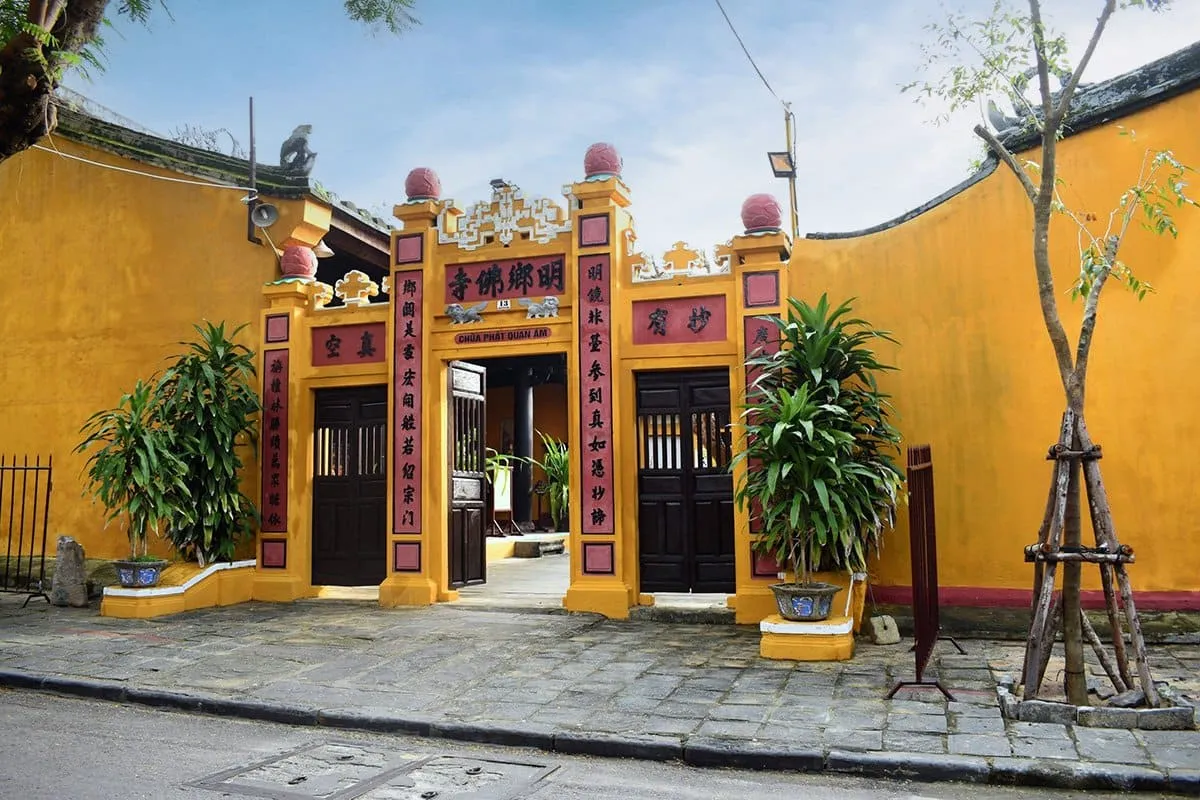
The History of Quan Am Pagoda Hoi An
The origins of Quan Am Pagoda Hoi An are closely tied to the golden era of Hoi An as an international trading port. Although its exact founding date remains uncertain, the pagoda is believed to have been established between the 17th and 18th centuries, when merchants from China, Japan, and other Asian countries settled in the town. Dedicated to Quan Am (Avalokitesvara), the Goddess of Mercy, the temple provided a place where traders, sailors, and local fishermen could pray for protection, calm seas, and safe journeys.
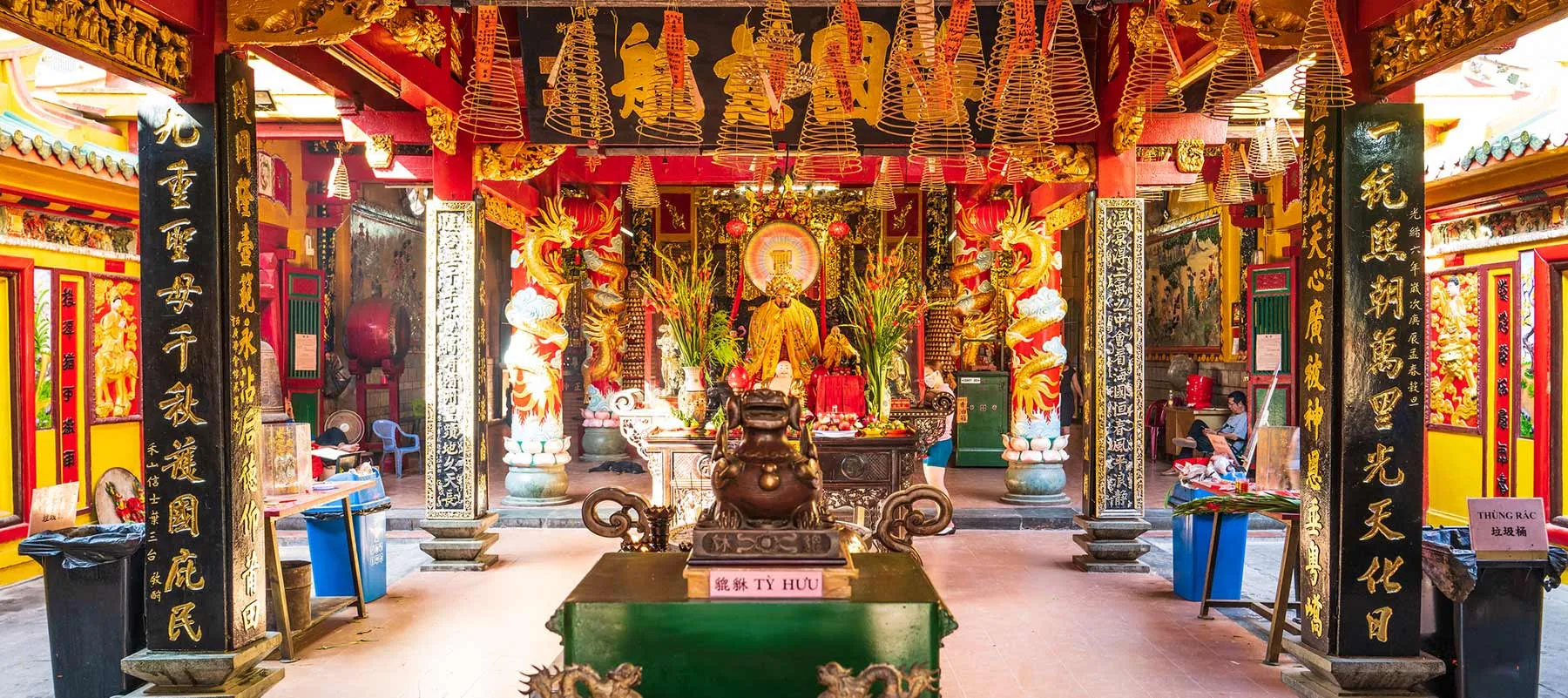
Over the centuries, Quan Am Pagoda has undergone several careful restorations to preserve its original character while remaining an active place of worship. Despite floods, harsh weather, and the passage of time, the local community has continuously maintained this sacred sanctuary. Today, the pagoda offers visitors an authentic glimpse into the religious traditions and architectural heritage that have shaped Hoi An since its flourishing trading-port era.
View more: Visit Tran family Chapel Hoi An: A Cultural Ancestral House Guide
Architecture of Quan Am Pagoda
Beyond its spiritual significance, Quan Am Pagoda Hoi An showcases a harmonious blend of traditional Vietnamese craftsmanship and Chinese architectural influences introduced during Hoi An’s flourishing trading era. Timber frames, clay roof tiles, lime-plastered walls, and intricate wood carvings reflect construction techniques commonly found in the region’s historic religious buildings. Every structural element serves both practical and symbolic purposes, creating a peaceful sanctuary that has endured for centuries.
The Three-Arched Entrance Gate
Approaching Quan Am Pagoda, visitors are welcomed by the traditional Tam Quan, or three-arched entrance gate, a defining feature of Vietnamese Mahayana Buddhist temples. The central arch is traditionally reserved for monks and ceremonial processions, while the two side entrances are used by worshippers and visitors.
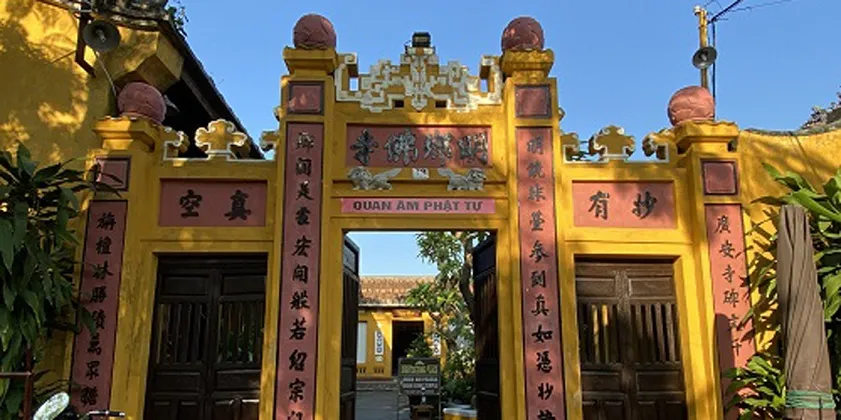
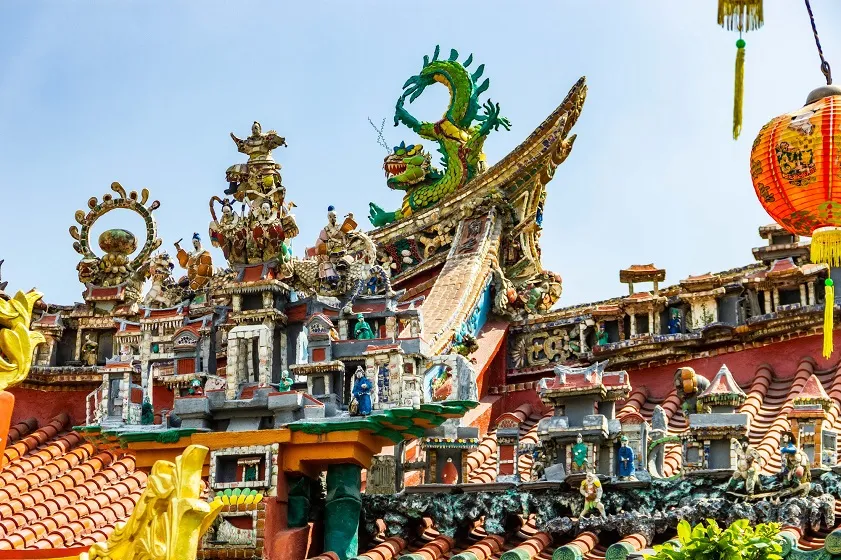
The roof of the gate is decorated with colorful ceramic mosaics featuring dragons, lotus flowers, and other auspicious motifs. Crafted from fragments of pottery and porcelain, these decorative details reflect the remarkable craftsmanship of local artisans. Passing through the Tam Quan symbolizes leaving behind worldly concerns before entering a space dedicated to reflection and spiritual practice.
The Main Worship Hall
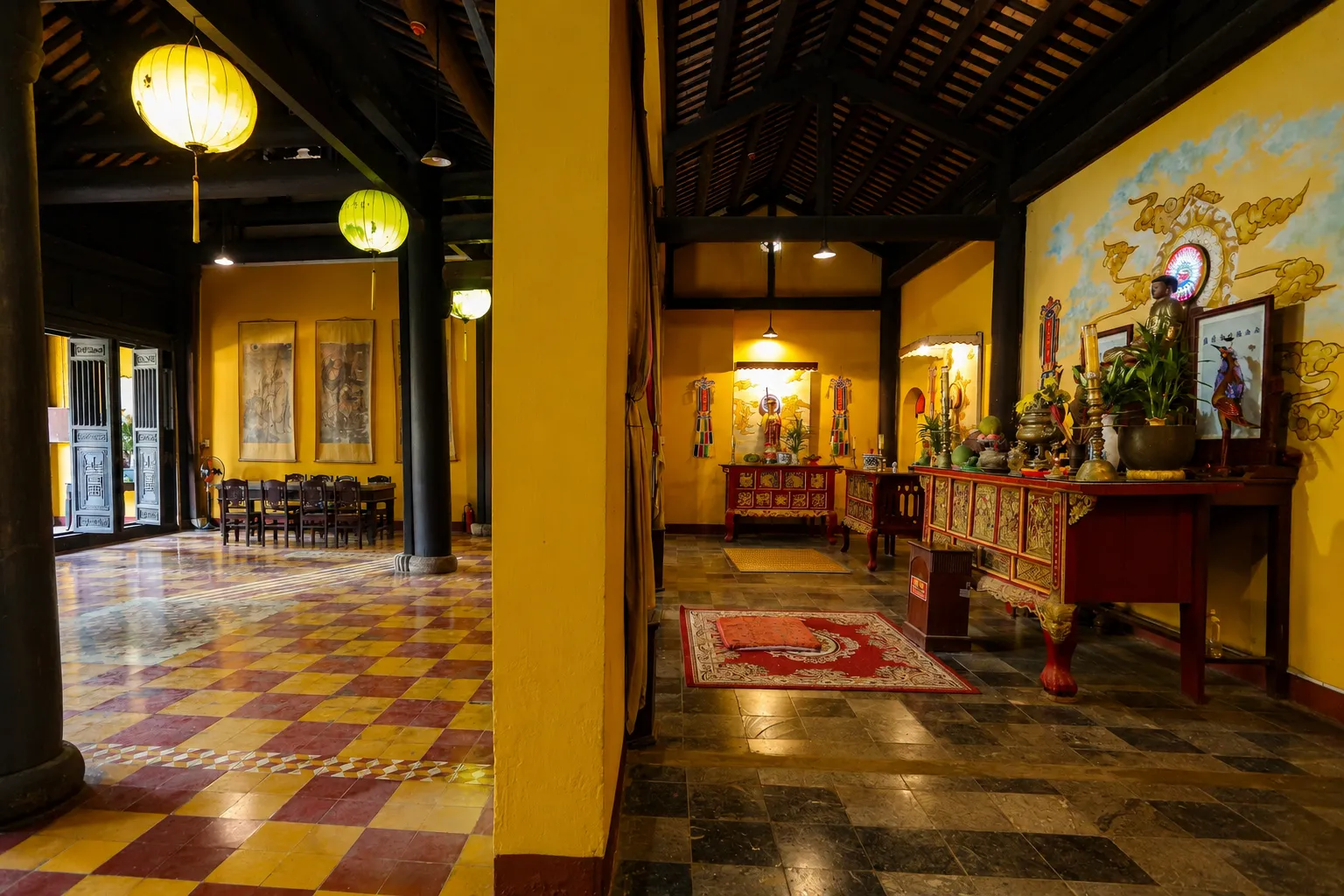
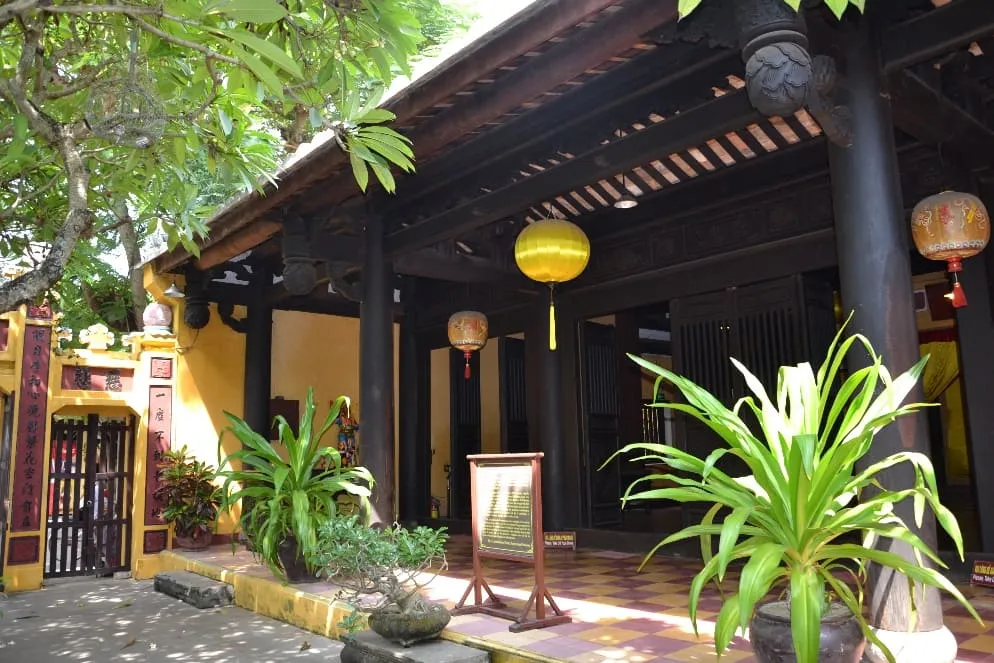
Beyond the courtyard stands the pagoda’s main worship hall, supported by massive dark timber pillars beneath a gently sloping tiled roof. The spacious interior follows traditional feng shui principles, creating a balanced flow of natural light and ventilation while maintaining a cool atmosphere despite Hoi An’s tropical climate.
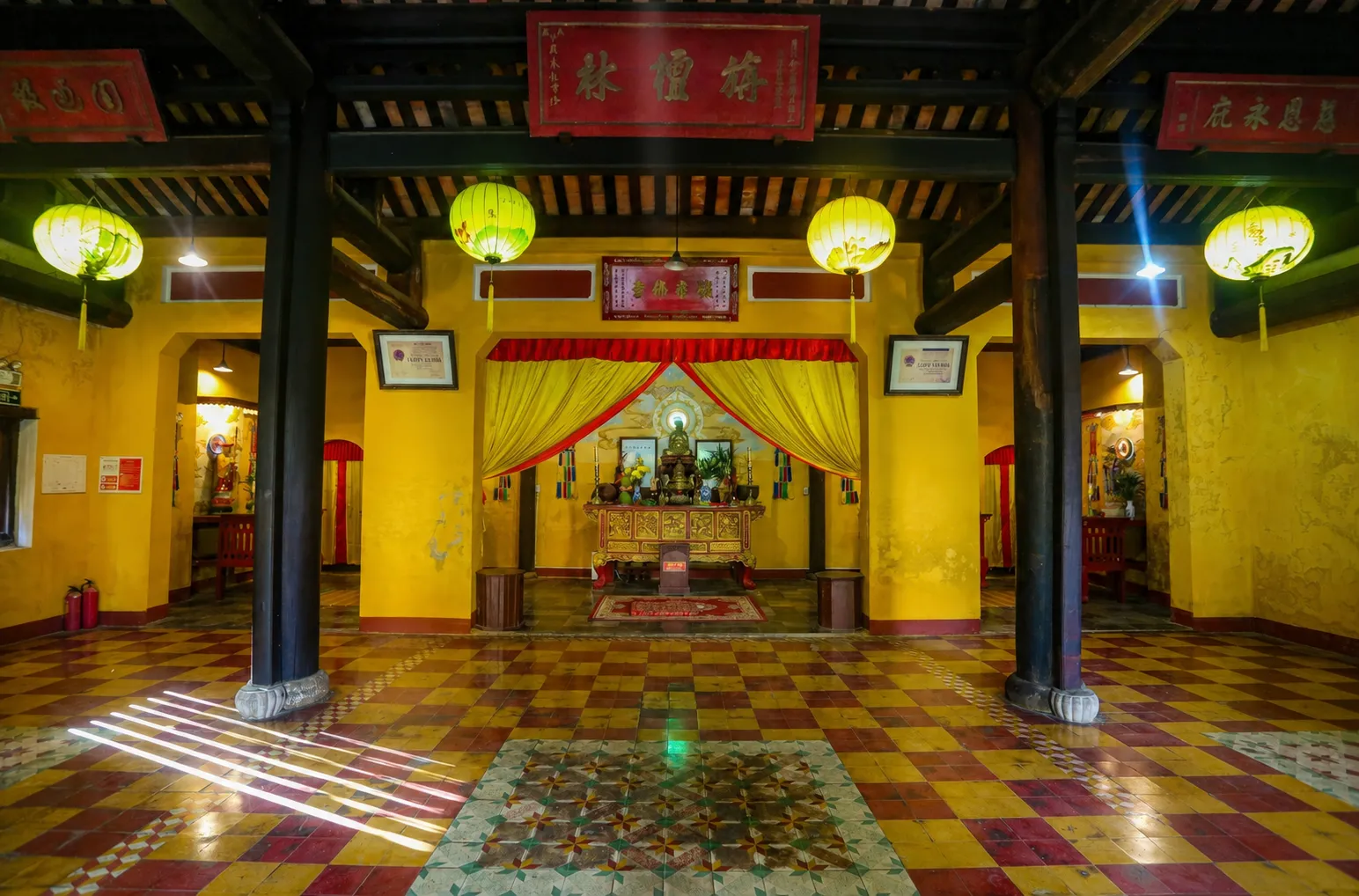
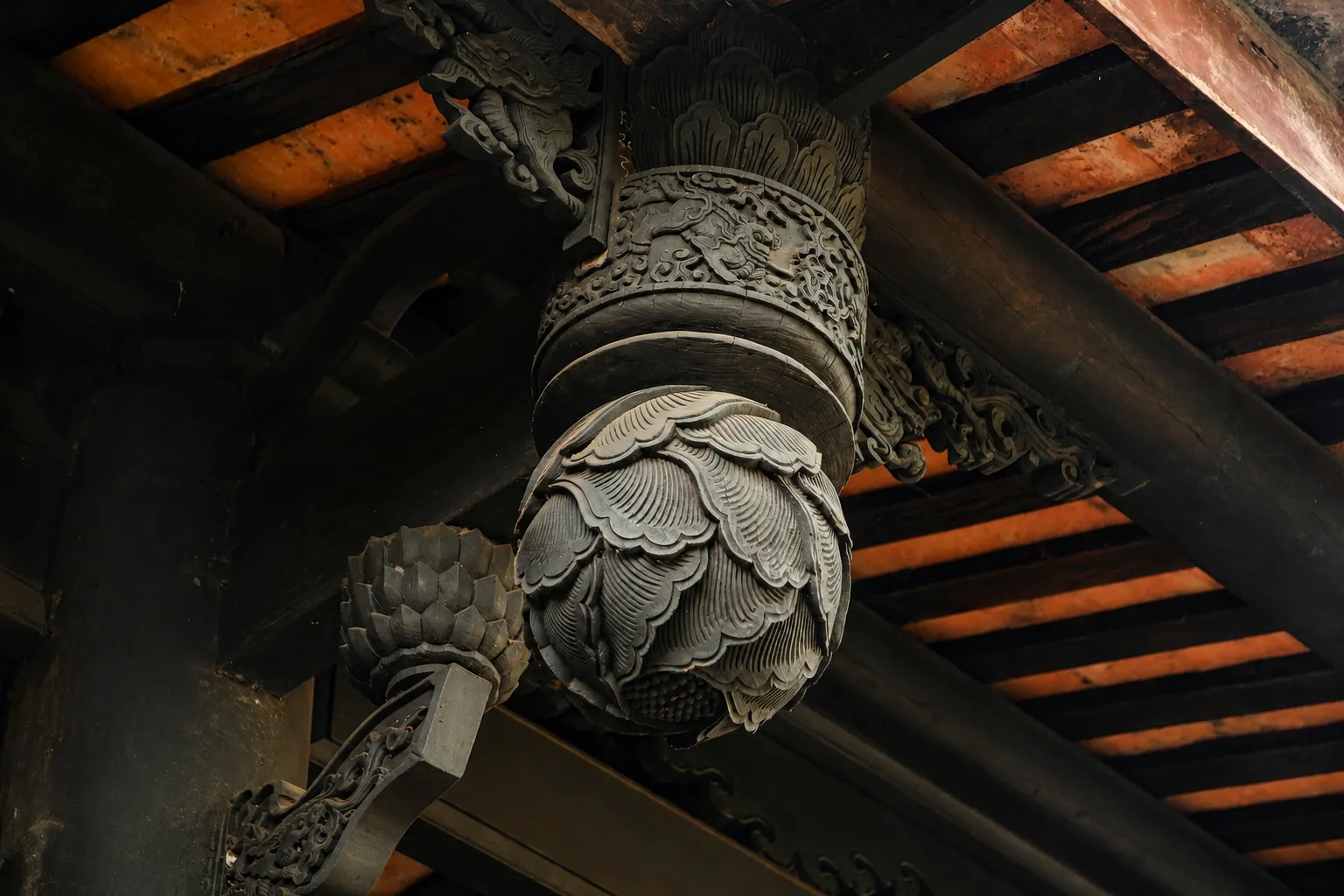
Exposed rafters and beams showcase traditional mortise-and-tenon joinery, allowing the structure to stand for centuries without relying on modern metal nails. This sophisticated construction method demonstrates the enduring skills of Vietnamese craftsmen and has helped the building withstand the region’s humid weather and seasonal storms.
Buddhist Statues and Sacred Altars
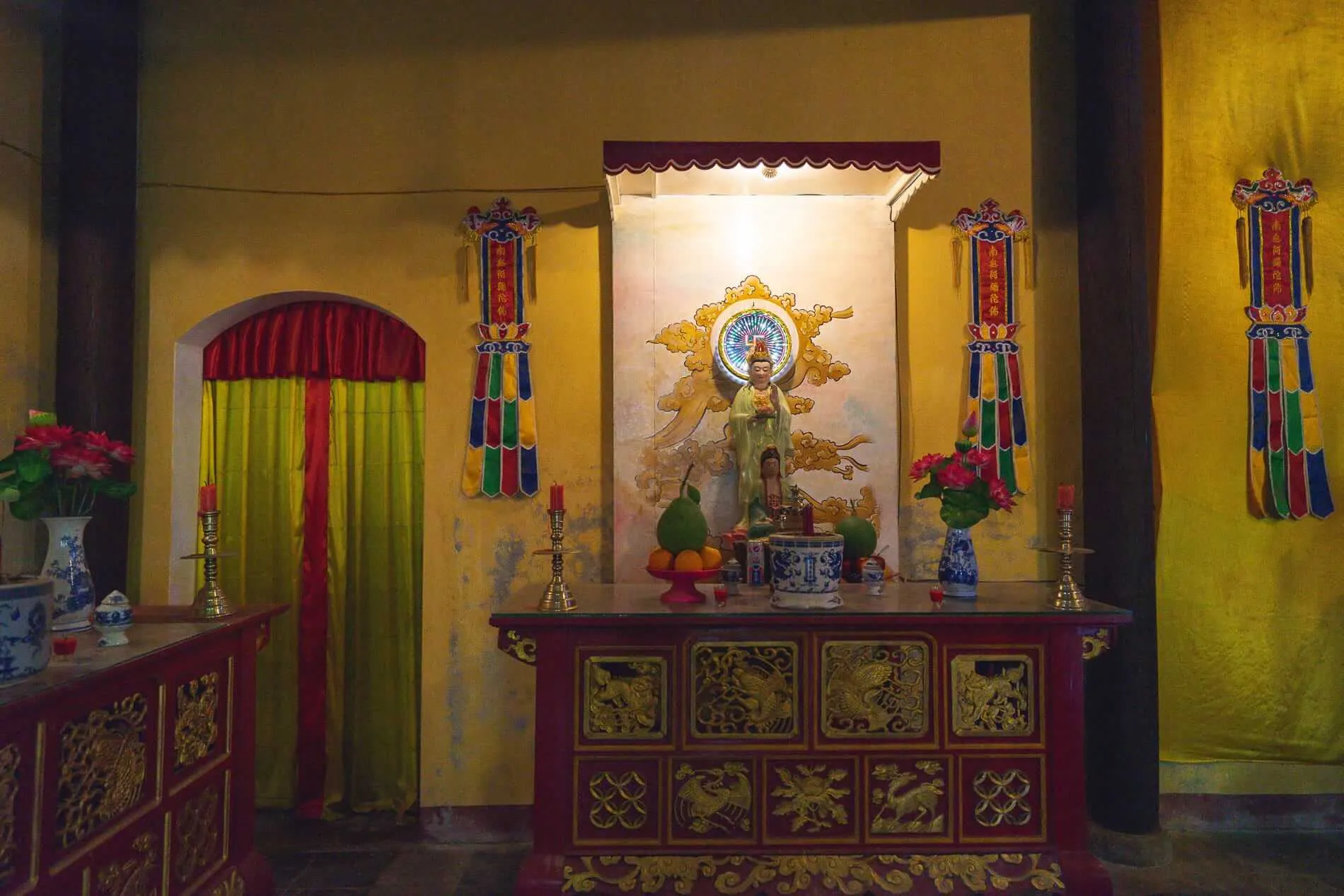
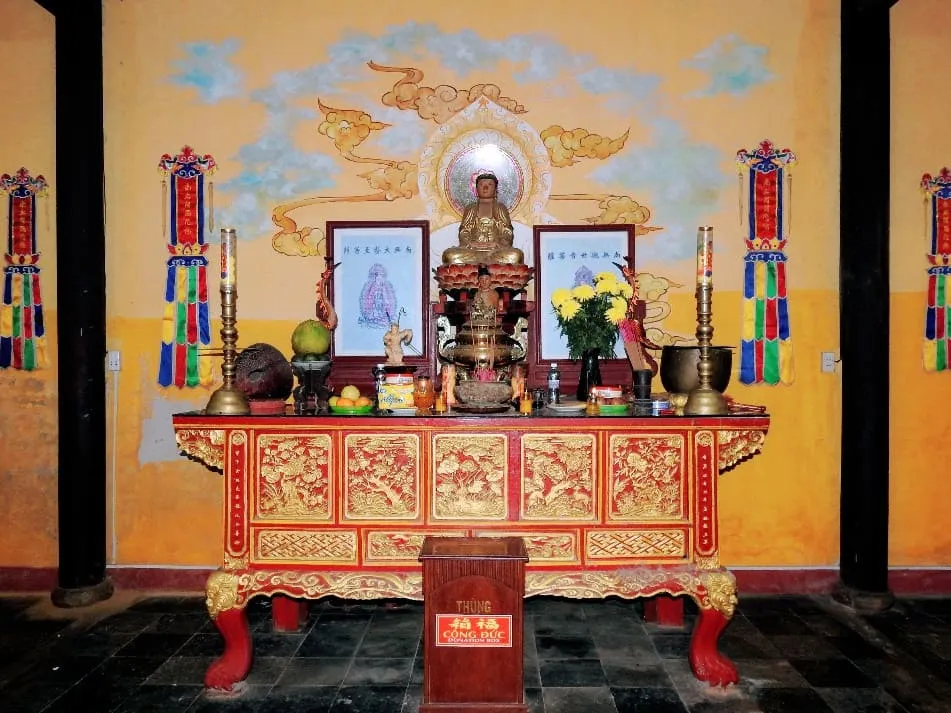
The heart of the pagoda is its beautifully arranged worship space, where carved wooden altars are adorned with brass incense burners, fresh flowers, fruit offerings, and flickering oil lamps. Gilded statues of Quan Am and other Buddhist figures create a serene focal point for daily prayers and meditation.
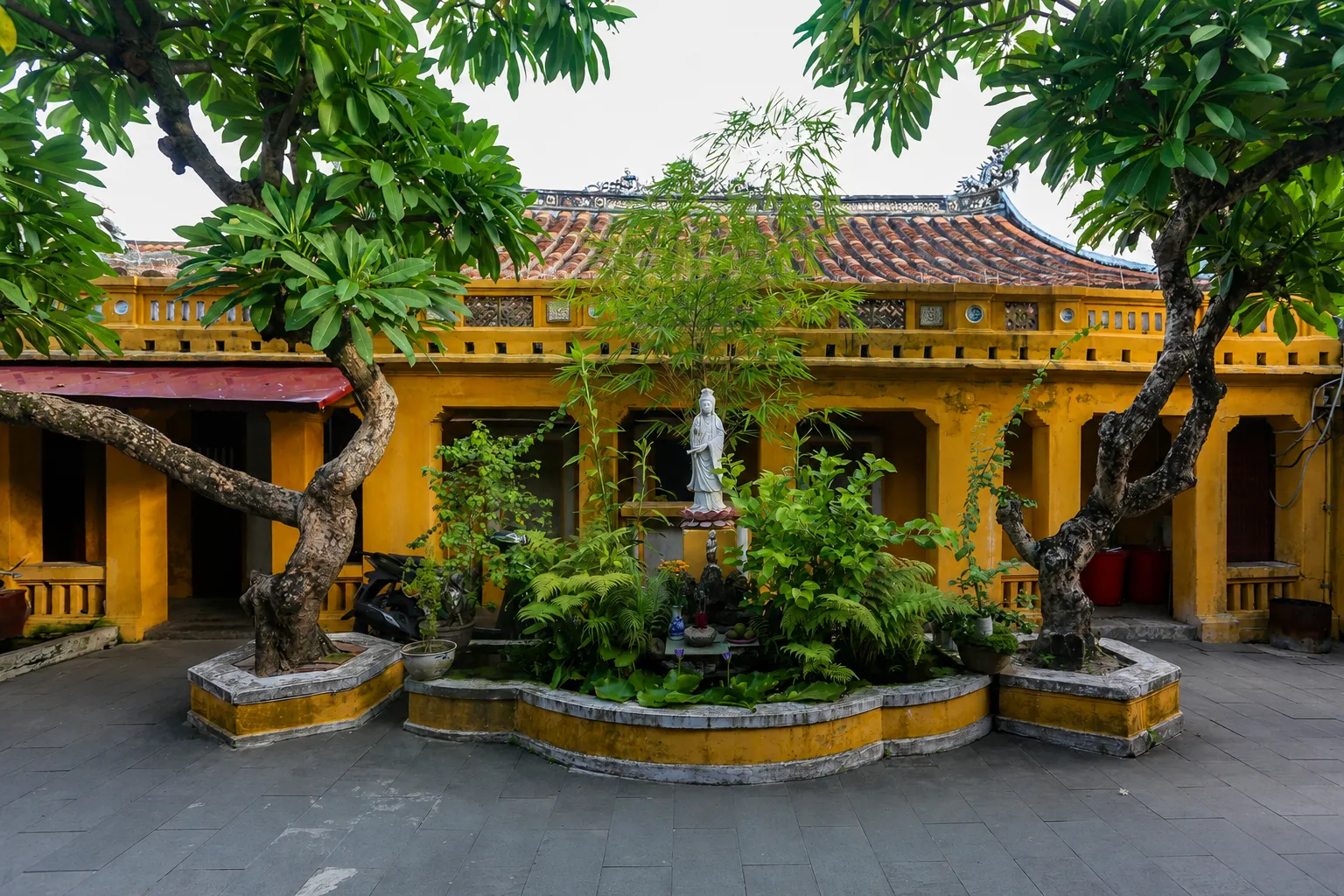
Visitors will often see local residents quietly lighting incense, making offerings, or praying throughout the day. These everyday rituals reinforce that Quan Am Pagoda remains a living spiritual sanctuary rather than simply a historical monument.
Symbolic Details and Chinese Inscriptions
Throughout the pagoda, elegant Chinese calligraphy, lotus carvings, dragons, and other symbolic motifs decorate wooden columns, beams, and roof brackets. The parallel inscriptions praise compassion, wisdom, and moral virtue while reflecting the cultural exchange between Vietnamese and Chinese communities during Hoi An’s prosperous trading era.
Together, these decorative elements create a meaningful architectural language that blends religious symbolism with exceptional craftsmanship, making Quan Am Pagoda one of Hoi An’s most culturally significant spiritual landmarks.


Spiritual Significance of Quan Am Pagoda
Beyond its striking wooden architecture and historical artifacts, the true heart of Quan Am Pagoda Hoi An lies in its active religious life. For centuries, the pagoda has served as an important spiritual center where local residents come to pray, meditate, and preserve long-standing Buddhist traditions. More than a historical landmark, it remains a living place of worship that reflects the enduring cultural heritage of Hoi An.
Worship of the Goddess of Mercy
At the heart of Quan Am Pagoda is the worship of Quan Am (Avalokitesvara), the Bodhisattva of Compassion. In Vietnamese Buddhism, she symbolizes mercy, protection, and unconditional compassion. Many locals visit the pagoda to pray for peace, good health, family wellbeing, and safe journeys.
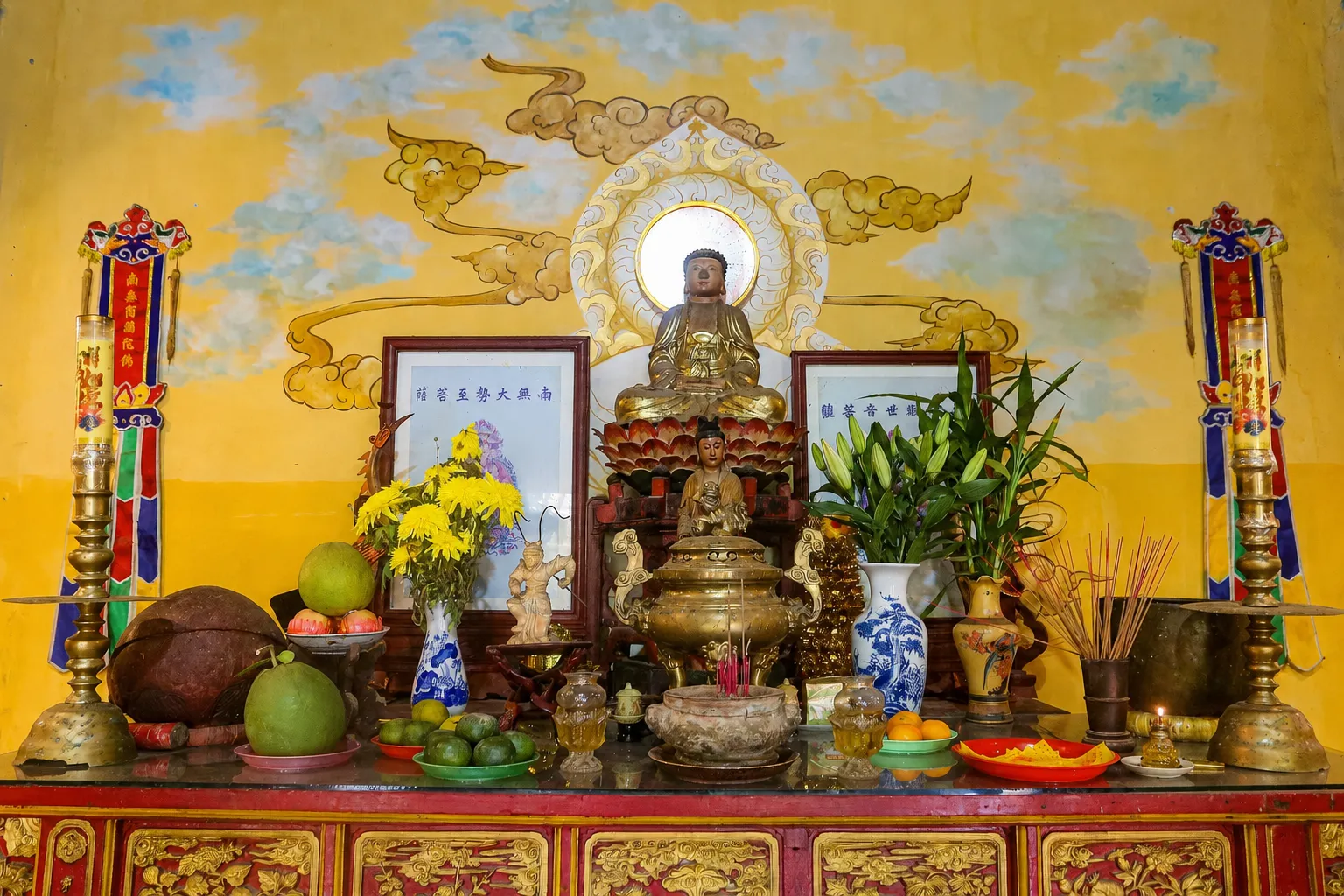
Visitors will often see worshippers lighting incense, bowing respectfully, and offering silent prayers. Observing these everyday rituals provides meaningful insight into the pagoda’s continuing role in local spiritual life. Guests are welcome to watch quietly, but should avoid interrupting ceremonies or taking close-up photographs of people while they are praying.
Important Religious Ceremonies
Quan Am Pagoda becomes especially vibrant on the 1st and 15th days of each lunar month, when local Buddhists gather for chanting ceremonies, vegetarian offerings, and communal prayers. The scent of incense fills the halls as the rhythmic sound of traditional wooden drums accompanies the rituals.
Vesak (Buddha’s Birthday) is one of the most important celebrations of the year. During this festival, colorful Buddhist flags, lanterns, and floral decorations transform the temple into a vibrant spiritual gathering place. Visitors wishing to experience these ceremonies should arrive early, dress modestly, and expect larger local crowds than on regular days.
The Role of the Pagoda in Local Life
Far from being merely a tourist attraction, Quan Am Pagoda remains an active community temple where residents come to pray, make offerings, celebrate Buddhist festivals, and seek spiritual guidance. Elderly locals often gather in the peaceful courtyard, while monks conduct ceremonies and provide religious instruction. This continuing role allows visitors to experience an authentic place of worship rather than simply viewing a preserved historical monument.
What to See Inside Quan Am Pagoda
Exploring the interior of Quan Am Pagoda Hoi An is like stepping into a living museum of Buddhist art and regional heritage. While the exterior captivates with its classic rooflines, the inner halls hold a treasure trove of intricate carvings, sacred shrines, and historical artifacts. Taking the time to wander slowly through these spaces reveals the deep devotion of the local artisans who crafted them.
The Statue of Quan Am
The focal point of any visit is the majestic statue of the Goddess of Mercy herself. She is typically depicted standing on a blooming lotus flower, holding a vase of pure water and a willow branch. Her facial expression is carved with remarkable subtlety, projecting an aura of absolute serenity and quiet understanding.
Traditional Buddhist Altars
Beyond the main deity, the surrounding altars are fascinating studies in religious artistry. You will find shrines dedicated to local earth gods and guardian spirits who protect the temple grounds. Observing the daily ritual of locals arranging fresh lotus flowers and changing the offering water provides a beautiful insight into local devotion.
Historic Steles and Inscriptions
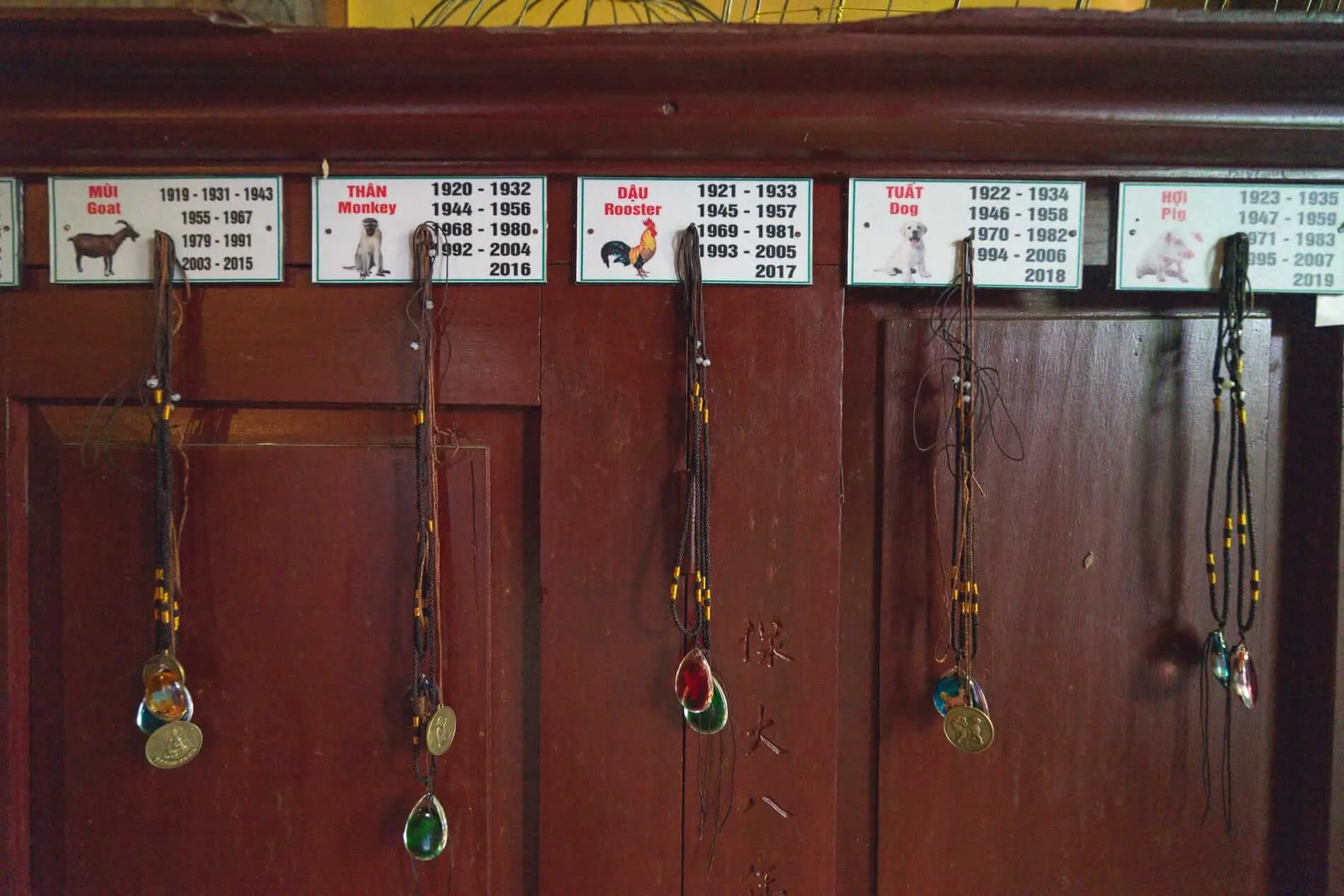
In the corners of Quan Am Pagoda Hoi An, heavy stone steles rest on the backs of carved turtles. These historic markers record the names of donors who funded the pagoda’s construction and subsequent renovations over the centuries. They are crucial historical documents that help researchers understand the socio-economic fabric of ancient Vietnam.
Peaceful Courtyard Spaces
Do not rush back out to the street after viewing the main hall. The courtyard of Quan Am Pagoda Hoi An is a destination in its own right. Filled with carefully pruned bonsai trees, blooming orchids, and miniature rock gardens, it is designed to inspire quiet contemplation and inner peace.
Visiting Quan Am Pagoda: Experience and Highlights
Visiting Quan Am Pagoda Hoi An is about more than admiring its architecture. As an active Buddhist temple, it offers visitors the chance to experience the peaceful atmosphere of daily worship while gaining a deeper appreciation of Hoi An’s spiritual heritage. Whether you are interested in culture, photography, or simply looking for a quiet break from the bustling Ancient Town, the pagoda provides a rewarding and reflective experience.
The Atmosphere Inside the Temple
Stepping through the Tam Quan gate, the sounds of traffic quickly fade into the background, replaced by the gentle scent of incense, birdsong, and the quiet prayers of local worshippers. Compared with many of Hoi An’s more popular attractions, Quan Am Pagoda usually feels calm and uncrowded, allowing visitors to explore at a slower pace. The peaceful surroundings encourage quiet reflection while offering an authentic glimpse into everyday Buddhist life.
How Long to Spend Here
Most visitors spend around 30 to 45 minutes exploring the pagoda. This allows enough time to admire the architecture, observe the sacred altars, stroll through the courtyard, and quietly appreciate the tranquil surroundings without feeling rushed.
Photography Opportunities
Quan Am Pagoda offers excellent photography opportunities thanks to its traditional wooden architecture, colorful altars, ceramic roof details, and beautifully landscaped courtyard. Early morning light creates soft illumination throughout the temple, making it an ideal time for architectural photography. Visitors should avoid using flash inside the prayer halls and remain respectful by not photographing worshippers during religious ceremonies without permission.
Best Time to Visit
Early morning, shortly after the pagoda opens, is generally the best time to visit. The cooler temperatures, gentle sunlight, and smaller number of visitors create a peaceful atmosphere for sightseeing and photography. Visiting on ordinary weekdays also offers a quieter experience, while arriving on the 1st or 15th day of the lunar month allows visitors to witness traditional Buddhist ceremonies, although the temple will be considerably busier with local worshippers.


How to Get to Quan Am Pagoda Hoi An
Reaching the temple is incredibly straightforward if you are already exploring the ancient town. The historic district is flat and highly pedestrian-friendly, making it easy to navigate independently. Depending on your preference and starting point, consider these convenient travel options:
- Walking: The most authentic way to explore. It is free, allows you to discover hidden alleys, and is the best way to enter the pedestrian-only zones where Quan Am Pagoda Hoi An is located.
- Bicycle Rental: Available at most hotels and homestays. Rental fees typically range from $1 to $2 (approx. 25,000 – 50,000 VND) per day. It is a popular and eco-friendly way to get around the town.
- Taxi or Ride-hailing Apps: If coming from beachside resorts or Da Nang, take a taxi to the edge of the pedestrian zone. A short trip within the town usually costs between $2 and $4 (approx. 50,000 – 100,000 VND), depending on your exact pick-up point.
Nearby Attractions Near Quan Am Pagoda
Thanks to its strategic location in the heart of the ancient town, pairing your visit to Quan Am Pagoda Hoi An with other iconic heritage sites is highly recommended. Exploring these neighboring landmarks provides a more comprehensive understanding of the cultural melting pot that shaped this historic trading port.
The Japanese Covered Bridge
Dating back to the 16th century, this iconic pink-hued bridge is arguably the most recognizable symbol of the city. Built by the Japanese merchant community to link their neighborhood with the Chinese quarters, the wooden structure features a small, intricate temple dedicated to the Taoist God of Weather. It stands as a beautiful, enduring representation of architectural and cultural fusion.
- Address: Tran Phu Street, Hoi An Ancient Town
- Opening Hours: Open 24/7 for crossing (the inner temple operates from 8:00 AM to 9:00 PM)
- Entrance Fee: Included in the mandatory Hoi An Ancient Town sightseeing ticket (approx. 120,000 VND or $5)
Phuc Kien Assembly Hall
Originally constructed as a traditional gathering place for the Fujian Chinese community, this vibrant complex later transformed into a stunning temple worshiping Thien Hau, the Goddess of the Sea. Visitors are consistently captivated by its magnificent triple-gate entrance, intricately carved dragon fountains, and the striking spiral incense coils hanging from the courtyard ceiling. It is an absolute must-see for architecture and history enthusiasts.
- Address: 46 Tran Phu Street, Hoi An Ancient Town
- Opening Hours: 8:00 AM – 5:00 PM daily
- Entrance Fee: Included in the mandatory Hoi An Ancient Town sightseeing ticket (approx. 120,000 VND or $5)
Tan Ky Old House
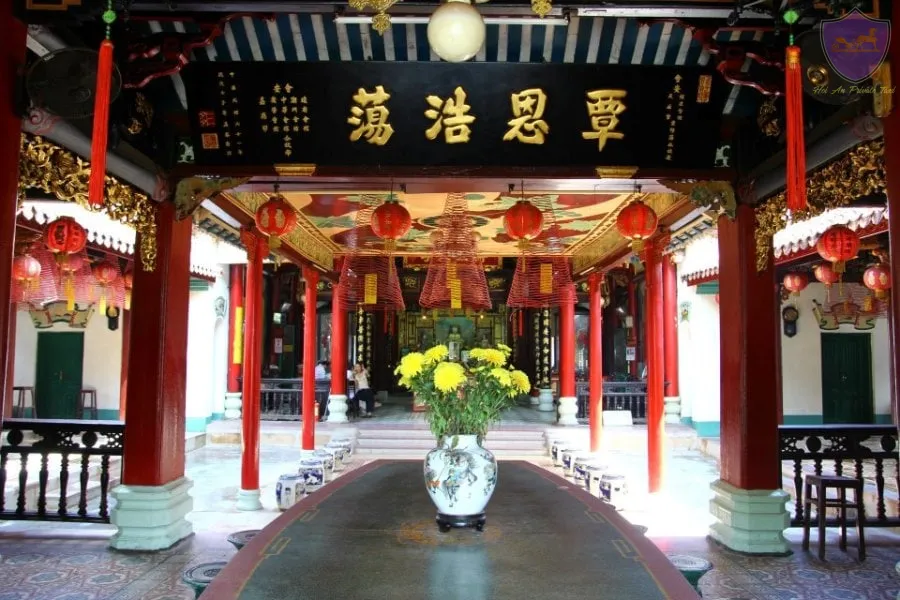
Built over two centuries ago, this impeccably preserved merchant home showcases a brilliant architectural blend of Vietnamese, Japanese, and Chinese influences. Passed down through seven generations of the same local family, the residence offers an intimate glimpse into the prosperous trading era of the 18th century. The ornate wooden balconies and historical flood marks on the walls tell a fascinating story of resilience and heritage.
- Address: 101 Nguyen Thai Hoc Street, Hoi An Ancient Town
- Opening Hours: 8:30 AM – 5:45 PM daily
- Entrance Fee: Included in the mandatory Hoi An Ancient Town sightseeing ticket (approx. 120,000 VND or $5)
Where to stay near Quan Am Pagoda
Choosing the right accommodation can significantly elevate your cultural experience in this heritage city. Travelers seeking easy access to historic sites should look for premium boutique hotels or resorts bordering the pedestrian zone. Staying nearby allows you to visit sanctuaries like Quan Am Pagoda Hoi An early in the morning before the daytime crowds arrive, ensuring a quiet and mindful start to your day.
Allegro Hoi An – A Little Luxury Hotel
Located just steps away from the ancient town boundaries, this boutique property perfectly captures the nostalgic elegance of the historic trading port. The hotel features lantern-lit balconies, warm wooden accents, and a world-class spa that provides the ultimate relaxation after a day of walking. Its prime central location makes it incredibly convenient for travelers who wish to effortlessly immerse themselves in the local culture while enjoying modern luxury.
- Address: 86 Tran Hung Dao Street, Hoi An
- Distance to Pagoda: Approx. 10-minute walk
- Estimated Price: $90 – $150 per night
- Best Suited For: Couples, boutique luxury enthusiasts, and cultural explorers who prefer to stay right on the edge of the vibrant historic center.
Anantara Hoi An Resort
Nestled along the scenic banks of the Thu Bon River, this luxurious retreat offers a seamless blend of French colonial architecture and Vietnamese charm. It is situated just a short stroll from the historic center, allowing guests to easily explore the heritage temples at dawn before retreating to a tranquil riverside oasis. The property is highly praised by international travelers for its exceptional personalized service and lush tropical gardens.
- Address: 1 Pham Hong Thai Street, Hoi An
- Distance to Pagoda: Approx. 15-minute walk
- Estimated Price: $150 – $250 per night
- Best Suited For: Families, luxury travelers, and honeymooners looking for a highly peaceful retreat with premium resort amenities.
Hotel Royal Hoi An – MGallery
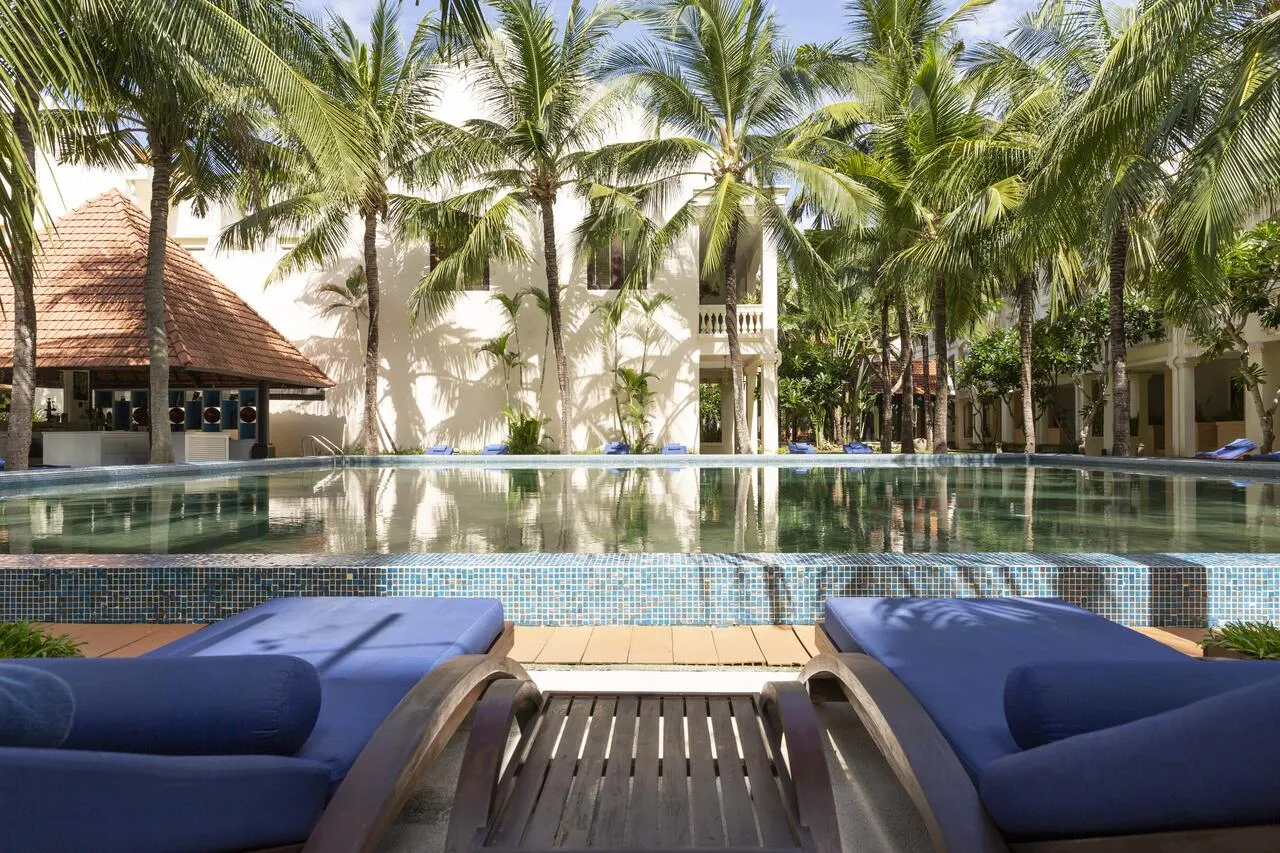
Standing majestically on the banks of the Thu Bon River, this boutique luxury hotel offers a captivating blend of Japanese tradition and Indochine elegance. The property tells the romantic 17th-century story of a Japanese merchant and a Vietnamese princess through its sophisticated decor and art pieces. Guests can enjoy sweeping sunset views from the rooftop pool before taking a short evening stroll to the heritage sanctuaries within the ancient town.
- Address: 39 Dao Duy Tu Street, Hoi An
- Distance to Pagoda: Approx. 12-minute walk
- Estimated Price: $120 – $200 per night
- Best Suited For: Luxury travelers, romantic getaways, and architecture lovers seeking a refined riverside experience.
Travel Tips for Visiting Quan Am Pagoda
Visiting a sacred Buddhist site requires a certain level of cultural awareness. To ensure a welcoming and respectful experience at Quan Am Pagoda Hoi An, keep these practical etiquette tips in mind:
- Dress Modestly: Both men and women should wear clothing that covers their shoulders and knees out of respect for the temple and local worshippers. Carrying a lightweight scarf or shawl is a convenient option if you are visiting during the warmer months.
- Remove Your Footwear if Requested: Some prayer halls or sacred areas may require visitors to remove their shoes before entering. Follow any posted signs or observe the behavior of local worshippers.
- Maintain a Quiet Atmosphere: Speak softly, silence your mobile phone, and avoid loud conversations. Remember that the pagoda is an active place of worship where visitors come to pray and meditate.
- Respect Religious Activities: Avoid walking directly in front of people who are praying, touching statues or altar objects, or interrupting religious ceremonies. If you wish to observe a ceremony, stand quietly at a respectful distance.
- Take Photos Responsibly: Photography is generally permitted in most areas, but avoid using flash inside the worship halls and never photograph monks or worshippers at close range without their permission.
- Consider Making a Small Donation: While entrance is free, voluntary donations are appreciated and help support the ongoing maintenance of the pagoda and its religious activities.
Is Quan Am Pagoda Worth Visiting?
Absolutely. Although Quan Am Pagoda Hoi An is smaller and less visited than some of Hoi An’s famous heritage attractions, its peaceful atmosphere and authentic spiritual character make it one of the town’s most rewarding cultural experiences. As an active Buddhist temple, it offers visitors the opportunity to observe local religious traditions while appreciating centuries of traditional architecture and craftsmanship.
Its convenient location within Hoi An Ancient Town also makes it easy to combine with nearby landmarks such as the Japanese Covered Bridge, Phuc Kien Assembly Hall, and Tan Ky Old House. Whether you are interested in history, Buddhist culture, photography, or simply looking for a quiet escape from the busy streets, Quan Am Pagoda provides a meaningful glimpse into the spiritual heritage that continues to shape Hoi An today.
FAQs About Quan Am Pagoda Hoi An
Do I need a Hoi An Ancient Town ticket to enter Quan Am Pagoda?
Generally, access to this specific pagoda does not require tearing a stub from the mandatory ancient town sightseeing ticket. It operates as a free, public place of worship. However, you should still carry your town ticket with you, as you will need it to walk through the surrounding protected heritage streets.
What should I wear when visiting Quan Am Pagoda?
Modest attire is strictly required. Ensure your shoulders, chest, and knees are fully covered. T-shirts and long trousers or maxi skirts are perfect. Beachwear, tank tops, and short shorts are considered highly disrespectful in Vietnamese Buddhist temples and may result in you being kindly asked to stay outside.
Is Quan Am Pagoda suitable for families and children?
Yes, it is a very safe and welcoming environment for families. However, parents should ensure that young children understand the need for quiet behavior. Running, shouting, or touching the religious artifacts and statues is not permitted inside the sanctuary.
Can visitors take photos inside Quan Am Pagoda?
Photography is generally allowed in the courtyard and main halls. Visitors must refrain from using flash, as it disrupts the peaceful environment and can damage historic paints. Always be mindful not to block the path of locals who are actively praying or making offerings.
Recent Posts






Our Associations


Our Awards








