Popular Tours






Deep in the jungle-clad valley of Quang Nam Province lies a spiritual testament to a lost civilization that rivals the grandeur of Angkor in Cambodia or Bagan in Myanmar. More than ancient ruins, these red-brick towers are enduring traces of Champa royalty and sacred worship. This article explores their history and provides essential guidance for planning a meaningful cultural visit.
My Son Sanctuary At a Glance
Before stepping back in time, here is the essential information to help you plan your visit:
- Location: Duy Phu Commune, Quang Nam (approx. 40 km from Hoi An).
- My Son Sanctuary Entrance Fee: 150,000 VND (approx. $6.00 USD) for foreigners.
- Best Time to Visit: Early morning. A my son sanctuary sunrise tour is highly recommended to avoid the midday heat and tourist crowds.
- How Long to Spend: 2 to 3 hours inside the complex.
- Pro Tip: Always hire a local guide or book a guided My Son Sanctuary tour from Hoi An to truly understand the deep history of these ruins.
Unveiling the My Son Sanctuary History and Champa Civilization
To truly appreciate the stones before you, one must understand the hands that laid them. My Son Sanctuary was the religious and political capital of the Champa Kingdom for nearly a millennium, dating from the 4th to the 13th century. It served a function similar to the Valley of the Kings in Egypt, acting as the site for religious ceremonies and the burial place for Cham royalty and national heroes.
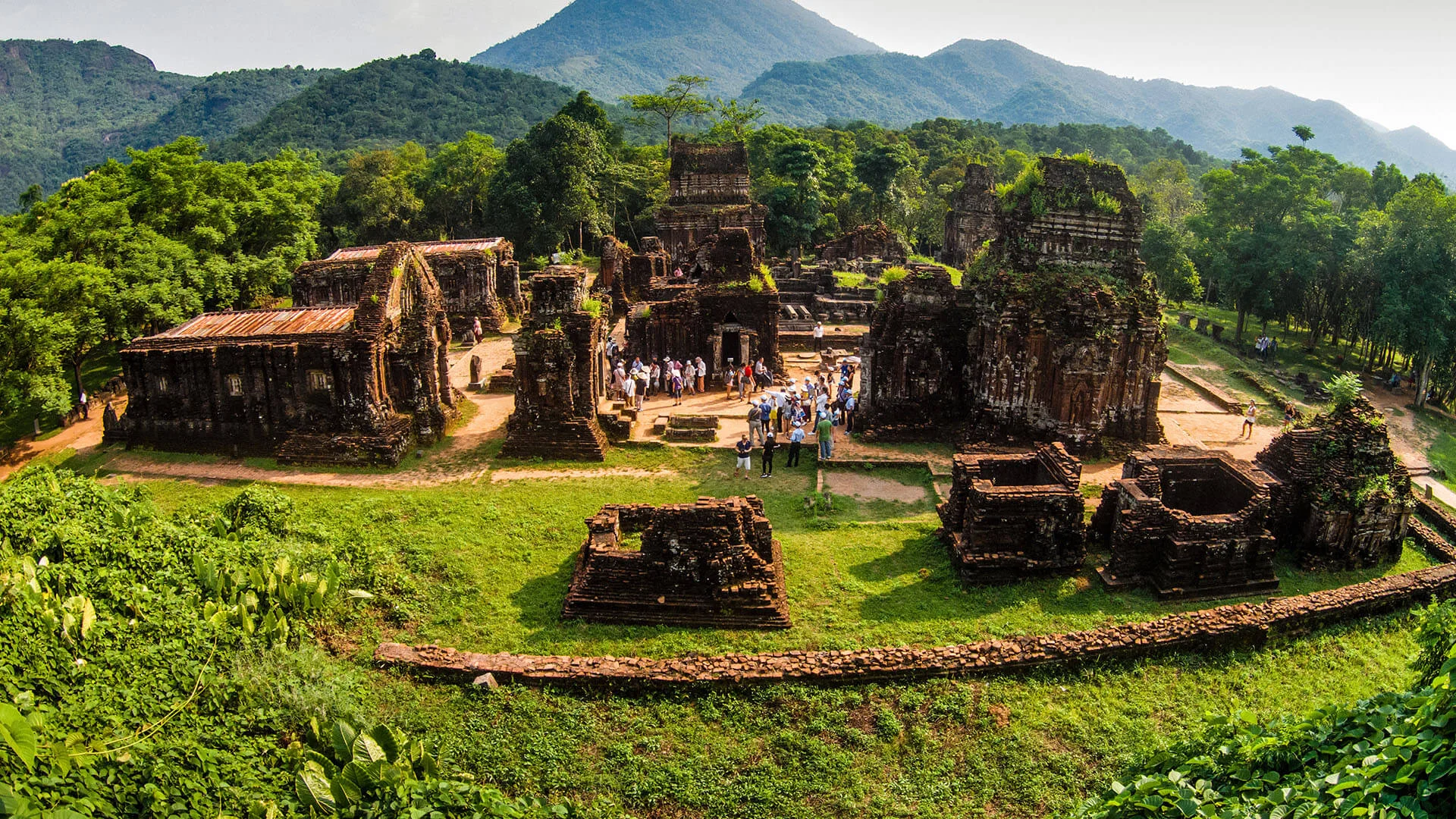
The Champa people were masters of art and architecture, heavily influenced by Hinduism from the Indian subcontinent. The sanctuary is dedicated to the Hindu god Shiva, known here under various local names such as Bhadresvara. The valley is surrounded by mountains that form the shape of a bird’s beak, a geography that was considered sacred and protective by the ancient geomancers.
Throughout its My Son sanctuary history, the site witnessed the rise and fall of various dynasties. Each King who ascended the throne would construct a new tower complex to honor their ancestors and the gods, resulting in over 70 structures at its peak. These towers were not just buildings; they were physical representations of Mount Meru, the center of the Hindu universe and the home of the gods.

Tragically, modern history has also left its mark on this sacred ground. During the Vietnam War, the valley was identified as a Viet Cong base, leading to heavy carpet bombing by American forces in 1969. Giant craters still dot the landscape between the temples, and many magnificent towers were reduced to rubble. Visiting today is a poignant reminder of both the creative power of the ancients and the destructive power of modern warfare.
>>> View more: Hoi An Historical Sites: Top Historic Places You Must Visit
How Long to Get to My Son Sanctuary from Da Nang vs Hoi An
Understanding the geography is crucial for planning your day, as the sanctuary is located inland, away from the coastal resorts. The site is situated in Duy Phu Commune, Duy Xuyen District, Quang Nam Province. It feels remote, which adds to its mystical atmosphere, but it is actually quite accessible from the main tourist hubs.

For travelers departing from Hoi An Ancient Town, the journey is relatively short and scenic. The distance is approximately 40 kilometers (about 25 miles) west. By car, this drive typically takes around 50 minutes to one hour, depending on the traffic leaving the city. The route takes you through charming rural landscapes, passing rice paddies and small markets.
If you are staying in Da Nang City, the commute is slightly longer. The distance is roughly 55 kilometers (34 miles) southwest of the city center. You should budget about one hour and 15 minutes for a one-way trip by private car. The road from Da Nang is well-paved, but it can get busy with trucks and local traffic during peak hours.
Regardless of your starting point, the transition from the bustling city streets to the quiet, green embrace of the Hon Quap (Cat’s Tooth Mountain) valley is striking. It signals a shift from the present day into a deeper, more ancient timeline.
How to Get to My Son Sanctuary: Private Car, Bus, or Motorbike?
Choosing your mode of transport depends largely on your budget, your tolerance for heat, and your desire for comfort. While the roads are generally good, the rural traffic can be unpredictable. Here is a breakdown of the best ways to reach the site.
Taking a Private Car for Comfort and Convenience
For the sophisticated traveler, a private car transfer is the most recommended option. The Vietnamese central region can get incredibly hot, and having an air-conditioned vehicle waiting for you after walking through the humid valley is a luxury you will appreciate.

A private car gives you complete control over your schedule. You can leave as early as you like to beat the crowds or stop for coffee along the Thu Bon River without worrying about a bus schedule. Hoi An Unique Travel can arrange luxury sedans or SUVs with professional drivers who know the safest and most scenic routes.
Joining a Shuttle Bus for Budget Travel
If you are a solo traveler or watching your budget, shuttle buses are a viable alternative. Many tour operators in Hoi An run daily shuttle services that depart in the morning and return in the early afternoon. These are cost-effective, usually priced around $5 to $8 USD per person.

However, be aware that shared shuttles often involve multiple hotel pickups, which can add significant time to your journey. You also lose the flexibility to explore the ruins at your own pace, as you must return to the bus at a set time.
Riding a Motorbike for the Adventurous Soul
For those who crave freedom and a direct connection to the landscape, renting a motorbike is an exhilarating way to learn how to get to My Son sanctuary. The ride takes you off the main highways and through local villages where you can see farmers drying rice and water buffalo grazing.

Rentals cost approximately $5 to $7 USD per day. Ensure you are confident riding in Vietnam traffic and always wear a helmet. The route is fairly straightforward, but having Google Maps and a fully charged phone is essential. Remember to stay hydrated, as the ride back in the midday sun can be draining.
Opening Hours and Updated My Son Sanctuary Entrance Fee
To maintain the preservation of the ruins and fund the ongoing restoration projects, the site operates with specific hours and a ticketing system. The ticket price includes access to the museum, the electric shuttle buggy that takes you from the gate to the ruins, and the Apsara dance performance.
The sanctuary is open daily, including holidays and weekends. The morning hours are the most popular, but the site remains open until the late afternoon for those who prefer the golden hour light.
| Category | Details |
| Opening Hours | Daily from 6:00 AM to 5:00 PM |
| Entrance Fee (Foreigner) | 150,000 VND (Approx. $6.00 USD) |
| Entrance Fee (Local) | 100,000 VND (Approx. $4.00 USD) |
| Includes | Entry, Electric Shuttle, Museum, Performance |
The My Son sanctuary entrance fee is payable at the main gate. Cash is the preferred method of payment, though some counters may accept credit cards. It is always wise to carry small denominations of Vietnamese Dong for purchasing water or souvenirs inside the complex.
Experience the Magic of a My Son Sanctuary Sunrise Tour
There is a profound difference between visiting the ruins at 10:00 AM and arriving at 5:30 AM. Booking a My Son Sanctuary sunrise tour is the ultimate way to experience the site. Not only do you escape the fierce tropical heat and the massive crowds of large bus tours, but you also get to witness the ancient red bricks glowing magnificently as the first light hits the valley. It is a spiritual, peaceful experience that connects you deeply with the original intent of the temple builders.
Marvel at the Ancient Red Brick Architecture
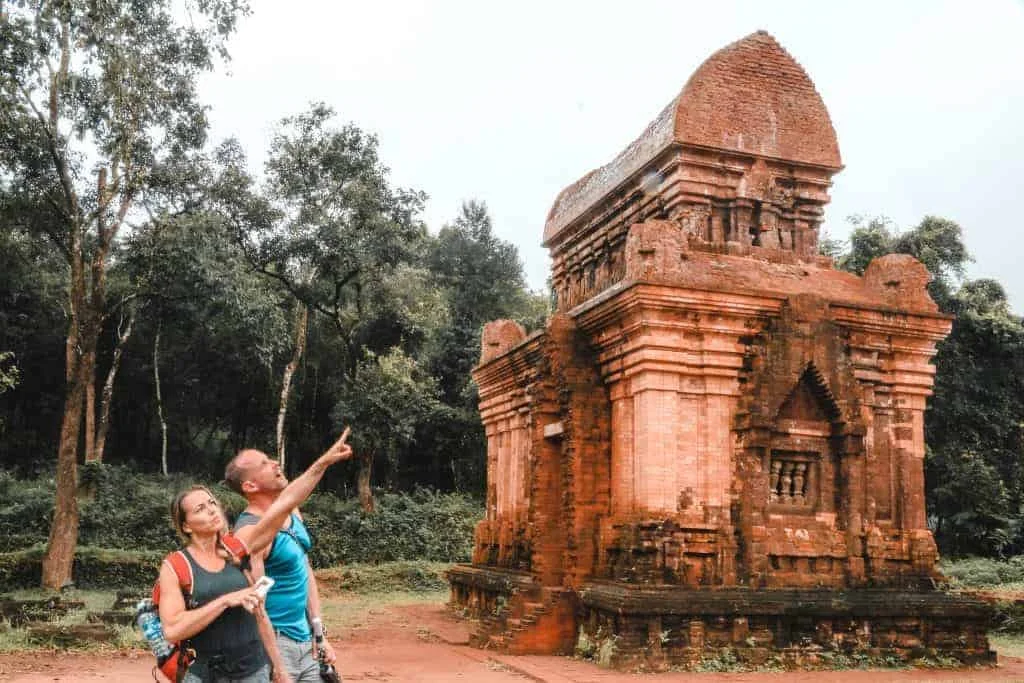
The architectural techniques used to build My Son Sanctuary remain one of history’s great mysteries. The Cham people built these towers using fired red bricks, but they did not use any visible mortar or glue to hold them together. The bricks were ground together so perfectly that not even a knife blade can fit between them.
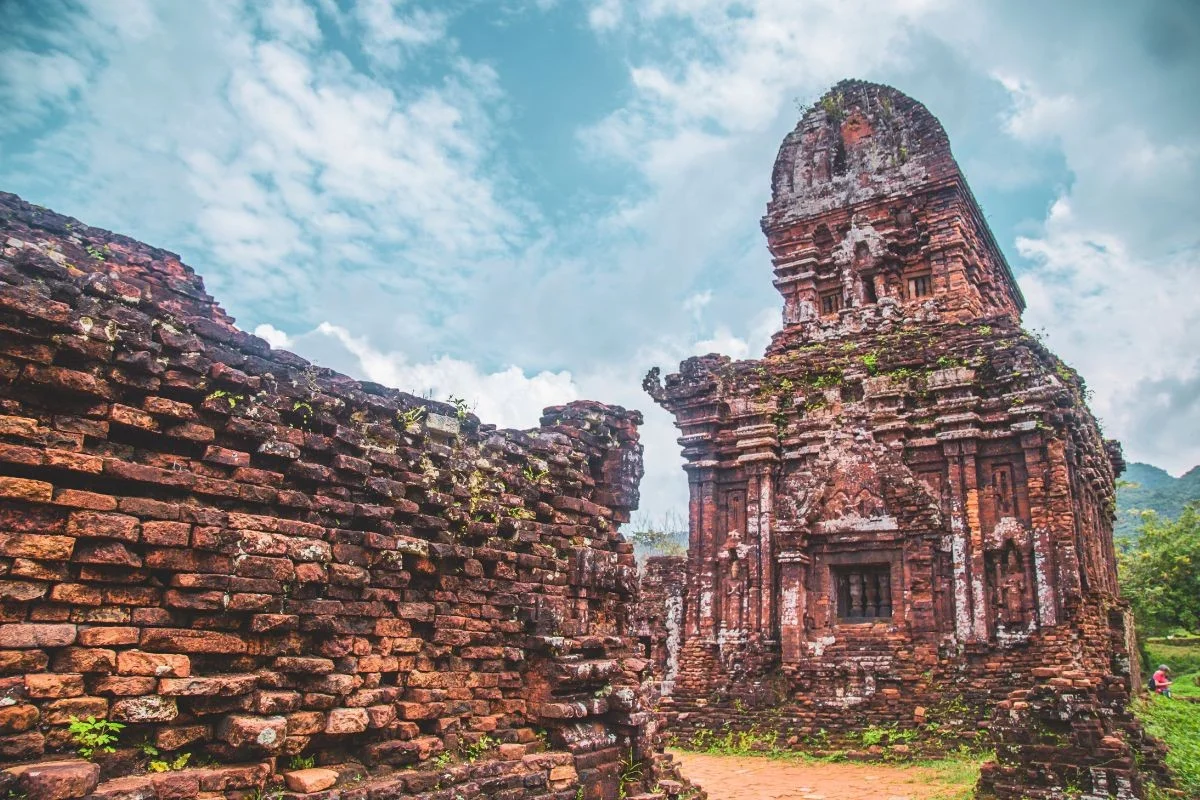
Researchers believe the resin from a local tree was used as a bonding agent, but the exact formula has been lost to time. Furthermore, the bricks were fired at a low temperature, which allowed them to remain porous. Over centuries, they have hardened in the sun, yet they resist the growth of moss and mold better than modern concrete.
As you explore the different groups of towers (labeled Group A through H by French archaeologists), pay attention to the bas-reliefs carved directly into the brick. You will see intricate depictions of dancing apsaras, elephants, lions, and scenes from Hindu mythology. The level of detail achieved on such a difficult medium is a testament to the supreme skill of the Cham artisans.
Watch the Sacred Apsara Dance Performance
A highlight of any visit is the cultural performance held on the stage near the main temple groups. The Champa culture is not dead; it lives on in the descendants of the Cham people, and this performance is a vibrant display of their living heritage.

The show features the traditional Apsara dance, titled “The Soul of the Cham Stone.” Dancers dressed in colorful, traditional silks move with slow, hypnotic grace to the sounds of the Paranung drums and the haunting melody of the Saranai trumpet.
The dance mimics the poses of the stone carvings you see on the temples. It is a tribute to the gods, a prayer for rain and fertility, and a celebration of life. Watching this performance amidst the ruins provides a powerful context to the static stone structures, breathing life and color into the history of the site.
Where to Stay Near My Son Sanctuary: Top Local Picks
Because the sanctuary is located in a rural, jungle-clad valley, your choice of accommodation will define the pace of your trip. Whether you want to wake up right next to the ruins or prefer a comfortable base in Hoi An, here are the specific spots we highly recommend:
Stay Near the Ruins (Duy Phu Commune, Duy Xuyen)
If your main goal is to experience a pristine My Son sanctuary sunrise tour without waking up at 4:00 AM, staying locally is the smartest move. You will be just minutes from the entrance gate.
- My Son Heritage Resort and Spa [Duy Phu, Duy Xuyen]: The most premium option located incredibly close to the sanctuary. It offers a stunning, large pool, lush gardens, and comfortable rooms with views of the mountains. (Prices start from 1,200,000 VND / approx. $48 USD per night).
- My Son Eco Village [Duy Phu, Duy Xuyen]: A more rustic, nature-immersed option featuring charming bungalows built with eco-friendly materials, situated right by a peaceful lake. (Prices start from 600,000 VND / approx. $24 USD per night).
Stay in Hoi An (The Convenient Base)
For the vast majority of travelers, using Hoi An as a base offers the perfect balance of daytime adventure and evening entertainment. When you are ready for history, figuring out how to get to my son sanctuary is incredibly easy from these highly-rated spots:
- La Siesta Hoi An Resort & Spa [Hung Vuong, Thanh Ha, Hoi An]: An award-winning resort just a short distance from the Old Town. With stunning saltwater pools and top-tier service, it is a popular and very accessible pickup spot for a premium my son sanctuary tour from Hoi An. (Prices start from 1,800,000 VND / approx. $75 USD per night).
- Lasenta Boutique Hotel [Ly Thai To, Cam Chau, Hoi An]: Famous for its spectacular infinity pool overlooking endless green rice paddies. It offers a tranquil escape while still being a quick drive from the town center. (Prices start from 1,100,000 VND / approx. $45 USD per night).
- Vinh Hung Heritage Hotel [Tran Phu, Minh An, Hoi An]: If you want to sleep inside a beautifully preserved traditional wooden merchant house right in the heart of the Ancient Town, this offers the ultimate historical immersion before your temple ruins tour. (Prices start from 900,000 VND / approx. $38 USD per night).
Top Destinations to Combine with Your My Son Trip
Since exploring the sanctuary typically takes a half-day, you will have the afternoon free to discover more of the region’s charm. Here are the top spots to add to your itinerary:
- Thanh Ha Pottery Village or Kim Bong Carpentry Village: On your way back to town, stop by one of these traditional craft villages to see artisans shaping clay or carving wood.
- Tra Que Vegetable Village: Swap the jungle ruins for lush organic gardens. Enjoy a late lunch and a relaxing herbal foot massage.
- Cam Thanh Coconut Village: If you want an afternoon of fun and fresh air, a basket boat ride through the nipa palms is the perfect contrast to your historical morning.
Best Restaurants Near My Son Sanctuary
Exploring the ruins is hungry work, and the area around Duy Xuyen district offers some unique culinary delights that you won’t find in Hoi An. Stepping out of the tourist bubble allows you to taste the robust flavors of the countryside.
- Cau Mong Veal (Be Thui Cau Mong) – [National Highway 1A, Dien Phuong, Dien Ban, Quang Nam]: This is the signature dish of the region. Whole calves are roasted over charcoal until the skin is perfectly crispy while the meat remains pink and tender. It is served with rice paper, a mountain of fresh herbs, green bananas, and a pungent dipping sauce made from anchovies and lime. There are dozens of “Be Thui” restaurants along Highway 1A near the turnoff to My Son.
- Mi Quang Phu Chiem – [Phu Chiem Village, Dien Phuong, Dien Ban, Quang Nam]: While you can get Mi Quang noodles anywhere, the version from Phu Chiem village (located on the way to My Son) is legendary. The broth is richer, often cooked with crab and shrimp, and the noodles are fresh and silky. It is a humble, street-side breakfast that packs an incredible flavor punch.
- My Son Restaurant – [My Son Sanctuary Entrance, Duy Phu, Duy Xuyen, Quang Nam]: Located just near the ticket office entrance, this is a convenient option if you want a sit-down meal before or after your tour. They serve decent Vietnamese staples like fried rice and spring rolls. It provides a comfortable, shaded environment to cool down before the drive back.
>>> Discover the detailed list of the best restaurants in Hoi An.

Crucial Travel Tips: Dress Code and Heat Avoidance
Visiting a religious site in a tropical jungle requires some practical preparation. To ensure your visit is respectful and comfortable, keep these tips in mind.
Respect the Sanctity: Dress Code
Although My Son is a ruin, it remains a sacred religious site for the Cham people and Vietnamese culture. Visitors are expected to dress modestly. This means covering your shoulders and knees.
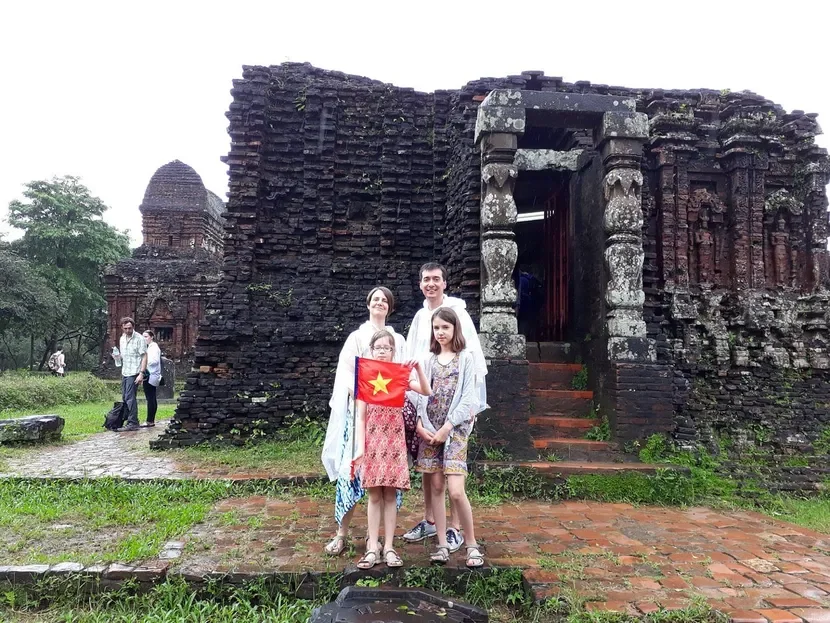
Avoid wearing tank tops, singlets, or very short shorts. A t-shirt and linen trousers or a skirt that reaches the knees are perfect. If you forget, you may be asked to cover up with a sarong, or you might feel out of place among the respectful local visitors. Dressing modestly also offers better protection against the sun and insects.
Beat the Tropical Heat
The sanctuary is located in a valley basin, which means it traps heat and humidity. Midday temperatures can soar, and there is limited shade around the actual temple groups. Heat exhaustion is a real risk for unprepared travelers.
Bring plenty of water, at least one liter per person. Wear a wide-brimmed hat and apply high-SPF sunscreen. A portable handheld fan or a traditional paper fan can be a lifesaver. Pace yourself; there is a fair amount of walking involved, so take frequent breaks in the shaded rest areas provided.
Hiring a Guide is Essential
The stones of My Son do not speak English. While there are some placards, the complex history of the Champa Kingdom, the religious symbolism of the linga and yoni, and the architectural mysteries are best explained by a knowledgeable human guide.
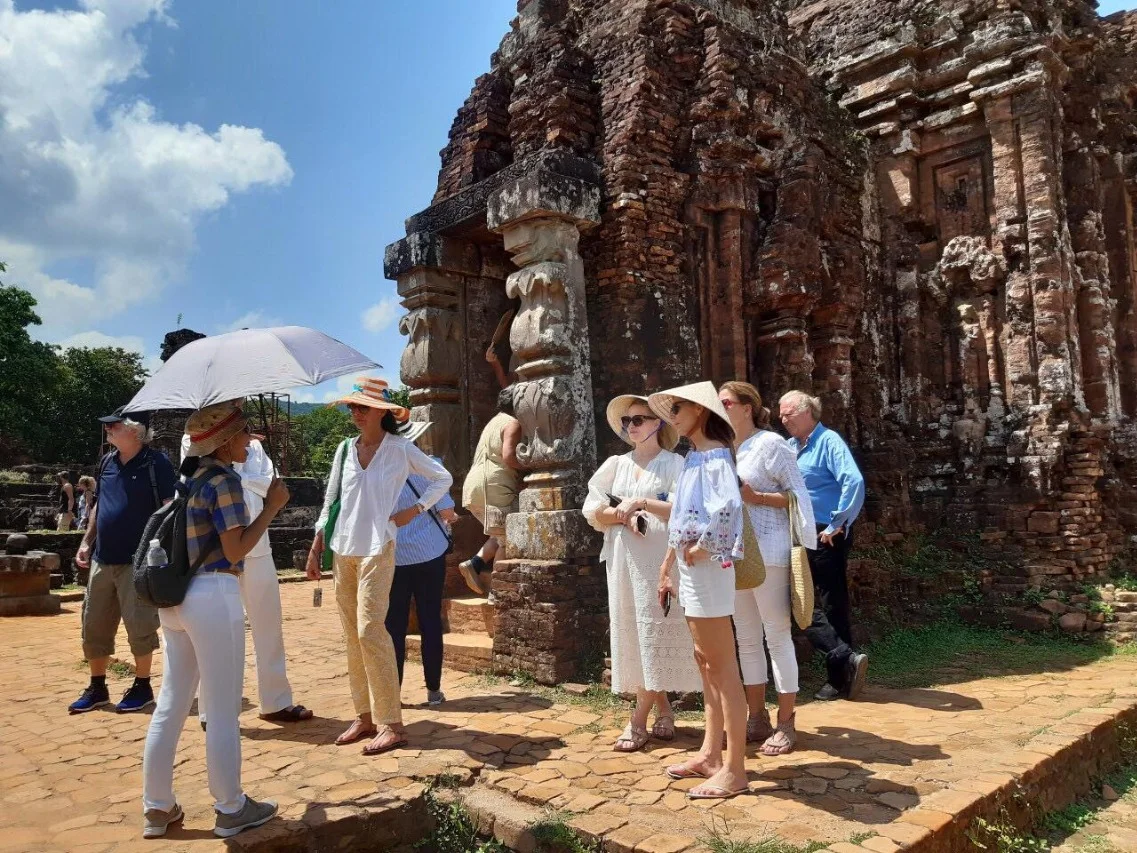
A guide can point out the bomb craters you might miss, explain the difference between the architectural styles of different centuries, and tell the legends of the kings who built them. Without a guide, you are essentially looking at piles of bricks; with a guide, you are looking at a civilization.
Why Explore the Ruins with Hoi An Unique Travel?
You can visit My Son Sanctuary on your own, but to truly unlock the depth of this heritage site, you need a connection that goes beyond a ticket stub. Hoi An Unique Travel specializes in crafting My Son sanctuary tour experiences from Hoi An that cater to the cultural seeker.
We understand that you don’t just want to see; you want to understand. Our guides are experts in Champa history and local culture. We time our tours to avoid the worst of the crowds and the heat, ensuring your experience is intimate and comfortable.
We provide private, air-conditioned transport that picks you up from your hotel lobby, offering a cool sanctuary before and after the jungle trek. We can combine your visit with a local lunch at a hidden gem restaurant or a boat trip back to Hoi An, turning a simple excursion into a full day of discovery.
Let us handle the logistics so you can focus on the mystery. With Hoi An Unique Travel, you are not just a tourist passing through; you are an explorer uncovering the “Angkor Wat” of Vietnam.
Ready to explore My Son the right way? Book now, contact us, or call +84 916 976 731 for a free consultation and personalized tour advice.
>>> View more: Hoi An Tours & Private Luxury Experiences | Hoi An Unique Travel
FAQS About My Son Sanctuary
How much is the My Son Sanctuary entrance fee?
The My Son Sanctuary entrance fee is 150,000 VND (approx. $6.00 USD) for international tourists and 100,000 VND for domestic visitors. This ticket includes the electric buggy ride and the traditional Apsara dance performance.
Is a My Son Sanctuary tour from Hoi An worth it?
Absolutely. Taking a my son sanctuary tour from Hoi An is the most convenient way to explore the site. While it shares similarities with Angkor Wat, My Son offers a unique, intimate look into the Champa civilization’s distinct bricklaying mastery.
What is the best time to visit?
The best time is at dawn. A my son sanctuary sunrise tour allows you to avoid the intense midday heat, skip the massive crowds, and take stunning photos with soft, magical lighting.
How to get to My Son Sanctuary?
If you are wondering how to get to my son sanctuary, you can hire a private car, join a shuttle bus, or ride a motorbike. The drive takes about 1 hour from Hoi An and 1.25 hours from Da Nang.
Recent Posts






Our Associations


Our Awards








