Popular Tours






Just a few kilometers outside the lantern-lit streets of the ancient town lies a sanctuary of emerald greens and aromatic scents that feels worlds away from the tourist trail. This is a place where centuries of agricultural tradition continue to thrive, offering visitors a chance to connect with the earth and the soul of Vietnamese cuisine. In this article, we invite you to step into the verdant rows of Tra Que Vegetable Village and discover the secrets of organic farming that have sustained generations.
Tra Que Vegetable Village At a Glance: Essential Info
Before diving into the details, here is a quick overview to help you plan your visit:
- Location: Cam Ha Commune, Hoi An (approx. 3km from the Old Town).
- Tra Que Village Entrance Fee: 35,000 VND (approx. $1.50 USD).
- Best Time to Visit: 7:00 AM – 9:00 AM or after 3:30 PM.
- Top Activities: Farming experience Hoi An, herbal foot massage, and taking a Tra Que vegetable village cooking class.
- Recommended Duration: 2 to 4 hours (half-day trip).
History of Tra Que Vegetable Village
The history of this lush enclave is as rich as the soil that sustains it. Originally, the ancestors of the current villagers were fishermen who navigated the De Vong River and the nearby lagoons. However, they soon discovered that the unique composition of the land here, enriched by the river sediment, was exceptionally fertile for agriculture.
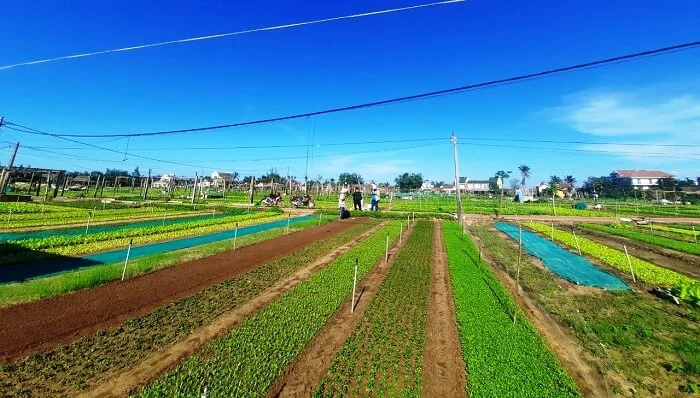
Over three centuries ago, these fishermen traded their nets for hoes and began cultivating the land. They initially grew various crops, but they quickly realized that aromatic herbs thrived particularly well in this specific microclimate. The village was originally named Nhu Que, representing the scent of vegetables that smelled as sweet as cinnamon.
In the 19th century, a Nguyen Dynasty king visited the area and was captivated by the distinct flavor of a local vegetable that tasted like tea and had the aroma of cinnamon. He bestowed the name Tra Que upon the village, combining “Tra” (tea) and “Que” (cinnamon). This royal endorsement cemented the village’s reputation, a legacy that the farmers proudly uphold to this day.
Distance to Tra Que: From Hoi An Old Town and Da Nang
Located in Cam Ha Commune, the village enjoys a strategic position that makes it easily accessible yet blissfully secluded. It sits like a green lung between the historic town center and the sandy coastline. This proximity allows travelers to easily integrate a visit into a half-day itinerary.
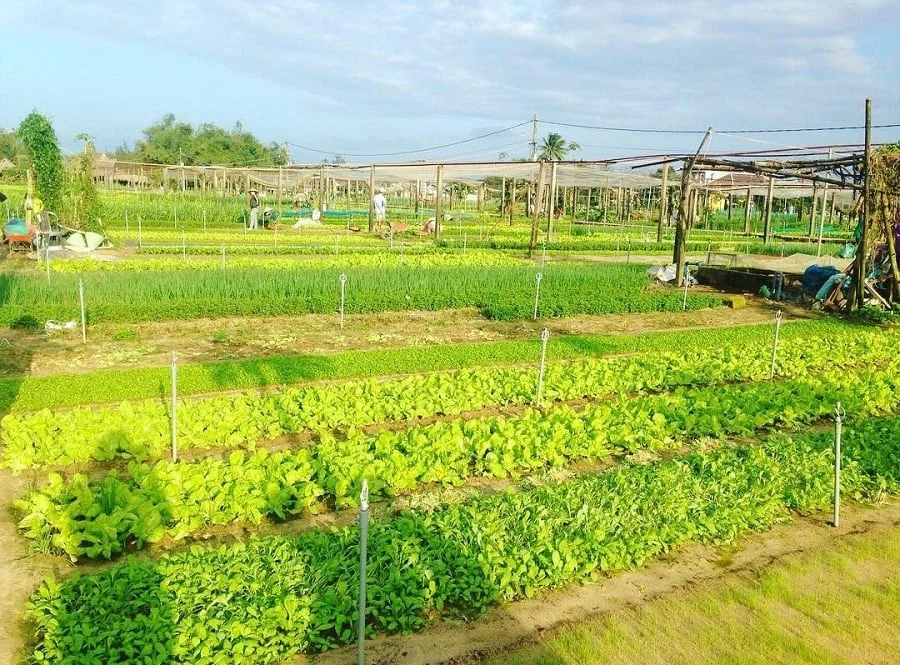
From the heart of Hoi An Ancient Town, the distance is approximately 3 kilometers (about 1.8 miles). It is a short and pleasant journey that transitions from yellow heritage walls to endless horizons of green rice paddies and vegetable beds. The route is flat and scenic, making it a favorite for slow travel enthusiasts.
For travelers coming from Da Nang City, the journey is slightly longer but equally straightforward. The village is located about 25 kilometers (15.5 miles) south of the city center. The drive takes you along the stunning coastal road, offering views of the marble mountains and the East Sea before turning inland toward the tranquility of Cam Ha.


How to Get to Tra Que Vegetable Village: Bike, Taxi, or Walk?
Choosing your mode of transport is the first step in your adventure, and each option offers a different perspective on the local landscape. The road to Tra Que Vegetable Village is paved and well-maintained, ensuring a smooth journey regardless of your choice.
By Bicycle
This is undoubtedly the most popular and romantic way to reach the village. Cycling allows you to immerse yourself in the countryside atmosphere, feeling the breeze and smelling the rice fields along the way. Most hotels in Hoi An offer complimentary bicycles, or you can rent one for a nominal fee of around $1 to $2 USD per day.
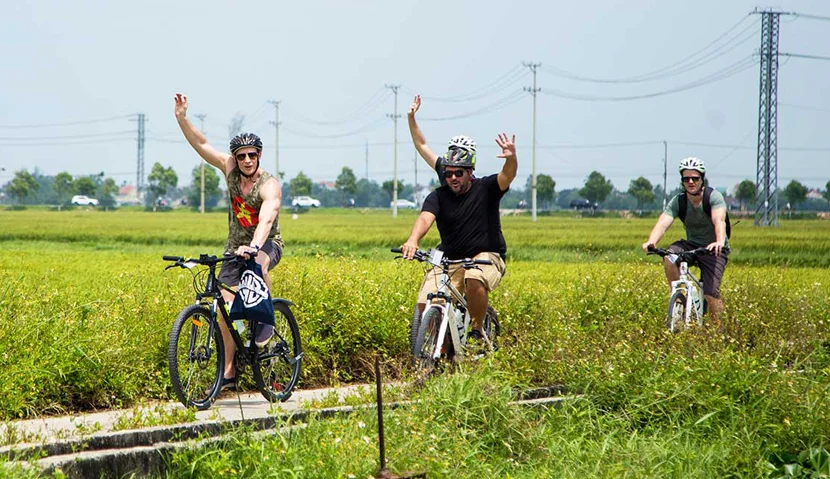
The ride from the Old Town takes approximately 15 to 20 minutes at a leisurely pace. You will pedal past grazing water buffalo and local houses, giving you a glimpse into daily life outside the tourist hub. Parking your bike at the village entrance is safe and usually costs a small fee of about 5,000 VND (approx. $0.20 USD).
By Taxi or Ride-Hailing App
For those who prefer comfort or are traveling during the heat of the day, a taxi or a Grab car is an excellent option. A ride from Hoi An center will cost approximately $3 to $4 USD. From Da Nang, a private car or taxi transfer will range between $12 to $15 USD one way.

This option is particularly recommended for families with small children or seniors who might find the heat challenging. It ensures you arrive fresh and ready to explore the gardens. Want to skip the planning? Let Hoi An Unique Travel arrange private, air-conditioned transfers as part of our comprehensive, hassle-free tour packages.
By Motorbike

If you crave a bit more speed and freedom, renting a motorbike is a great way to go. It gives you the flexibility to explore the surrounding lanes and venture further to An Bang Beach afterwards. Rentals cost between $5 to $7 USD per day. Ensure you are comfortable driving in Vietnam traffic before choosing this option.
>>> View more: Signature Vintage Hoi An Vespa Tour: Countryside & Islands
Opening Hours and Tra Que Village Entrance Fee
To maintain the landscape and support the local farming community, the village has established a formal ticketing system. The funds collected go directly toward infrastructure maintenance and supporting the households that tend to these gardens daily.
The village is generally open to visitors from early morning until sunset. However, the best activity takes place during the cooler hours when farmers are most active.
Visiting Information
| Category | Details |
| Opening Hours | Daily from 7:00 AM to 5:00 PM |
| Peak Activity | 7:00 AM – 9:00 AM and 3:30 PM – 5:30 PM |
| Entrance Fee | 35,000 VND per person (Approx. $1.50 USD) |
| Includes | Entry to the gardens and a guided walk |
Paying the Tra Que village entrance fee is a small contribution that makes a significant impact on preserving this cultural heritage. It ensures that the farmers can continue their traditional methods without succumbing to the pressure of industrial agriculture.
>>> Ready to reconnect with nature? Join the Regenerative Gardening Workshop from Hoi An, Vietnam today.
Top Things to Do in Tra Que Vegetable Village
Visiting this green oasis is not a passive activity; it is an invitation to engage your senses and get your hands dirty. The village offers a variety of interactive experiences that bridge the gap between traveler and local.
Try an Authentic Farming Experience Hoi An at Tra Que Village
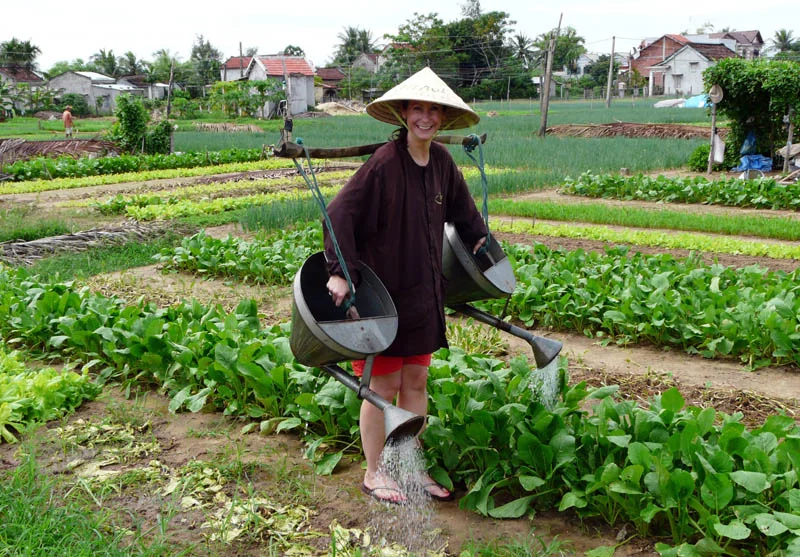
There is no better way to understand the life of a Vietnamese farmer than to step into their shoes, quite literally. You can trade your street clothes for the traditional brown “ba ba” farming pajamas and a conical hat. This farming experience Hoi An is both educational and humbling, offering deep insight into the labor of love required to grow food.
>>> View more: Authentic Local Tour Hoi An: Go Noi Agriculture & Heritage
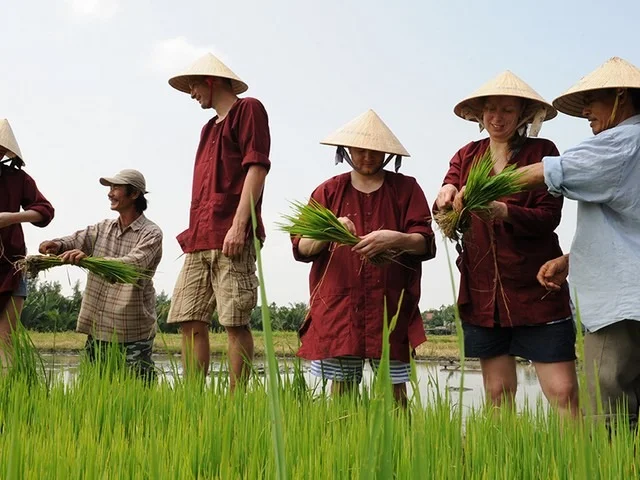
Guided by a local farmer, you will learn the entire process of cultivation. It begins with preparing the soil, raking it into smooth, elevated beds that ensure proper drainage. You will then learn how to fertilize the land using the seaweed harvested from the lagoon, a technique unique to this region.
Next comes the planting. You will carefully sow baby seedlings or seeds into the prepared earth. The most iconic and challenging part of the experience is watering the crops. You will learn to balance two large watering cans suspended from a bamboo yoke across your shoulder.
Walking between the rows while water showers down from the cans requires rhythm and balance. It makes for a fantastic photo opportunity, but more importantly, it fosters a profound appreciation for the physical strength of the farmers who do this every day under the tropical sun.
>>> View more: Eco-Luxury Hoi An Farming and Fishing Tour
Join a Tra Que Vegetable Village Cooking Class
After harvesting fresh ingredients from the garden, the next logical step is to learn how to transform them into delicious local delicacies. A Tra Que vegetable village cooking class is a highlight for culinary enthusiasts. These classes are often held in open-air gazebos right amidst the gardens, providing an inspiring backdrop for your culinary creation.

The class typically begins with a tour of the garden to identify and pick specific herbs. You will learn to distinguish between different types of basil, mint, coriander, and scallions. The chef will explain the medicinal properties of these herbs and how they balance the flavors in Vietnamese cuisine.
One of the signature dishes you will likely learn to make is Tam Huu. This dish is unique to Tra Que and translates to “Three Friends.” It consists of a prawn, a slice of pork belly, and a stalk of local basil, all tied together with a green onion.
The symbolism represents the harmony between the land (pork/basil) and the water (shrimp), as well as the bond of friendship. You might also learn to make Banh Xeo (savory pancakes), using the fresh greens you picked to wrap the crispy crepes. The experience concludes with a communal meal where you enjoy the fruits of your labor.
Practical Information for the Farming & Cooking Tour:
- Duration: 4 to 5 hours of immersive cultural and culinary experience.
- Tour Price: 1,600,000 VND (approx. $63 USD) per person.
- Pro Tip: Booking the all-inclusive 4-5 hour package with Hoi An Unique Travel at 1,600,000 VND ensures both the hands-on farming activities and the cooking class are seamlessly integrated. We handle all the logistics, allowing you to fully enjoy the authentic countryside vibe.
View more:
- Premium Cooking Class Hoi An: Organic Farm & Basket Boat Adventure
- Boutique Hoi An Cooking Class: Garden-to-Table with Madame Van
- Hoi An Cooking Class: Market Visit, Basket Boat & Organic Farm
Take Photos at the Rustic Tra Que Water Wheel
For photography lovers, the village offers endless inspiration, but one landmark stands out as a symbol of the rural charm. The Tra Que water wheel is a rustic wooden structure located near the entrance of the village. It sits by a small pond or channel, originally designed to help irrigate the fields.
>>> View more: Signature Hoi An Handicraft Tours: Tra Nhieu Village & Boat Trip

While modern irrigation has largely taken over, the water wheel remains a poignant reminder of the past. The weathered wood against the vibrant green backdrop of the vegetable beds creates a stunning contrast. It is particularly beautiful during the golden hour, just before sunset.
When the light softens, the reflection of the wheel in the water and the long shadows cast across the neatly arranged rows of vegetables create a painterly scene. It is the perfect spot to capture a memory that summarizes the peaceful essence of the Vietnamese countryside.
Enjoy a Relaxing Herbal Foot Massage
After a session of farming and walking, your muscles might feel a bit weary. Fortunately, the village has a remedy rooted in its own produce. Many local households and tour operators offer a specialized herbal foot massage service that utilizes the very plants grown in the surrounding soil.

The treatment begins with a foot soak in warm water infused with lemongrass, basil, and medicinal herbs harvested from the garden. This soak helps to improve circulation and reduce inflammation. It is followed by an acupressure massage that targets specific points on the feet to release tension.
This isn’t just a spa treatment; it is a demonstration of the medicinal value of the Tra Que herbs. The farmers believe that these plants heal from the inside out and the outside in. Relaxing in a thatched-roof hut with a cool breeze, while the scent of crushed herbs fills the air, is the ultimate way to wind down your visit.
Explore the Surrounding Lagoon by Basket Boat
While the vegetables are the main attraction, the adjacent De Vong River and wetlands offer another layer of exploration. Some tours in the village include a short excursion on a traditional bamboo basket boat. These round boats are iconic to Central Vietnam.

Paddling through the calm waters of the nipa palm forest provides a stark contrast to the open vegetable fields. You can watch locals fishing or harvesting the river weeds that are used to fertilize the Tra Que gardens. It connects the dots between the river and the farm, showing the complete ecosystem of the village.
Join the Hoi An Lantern Making Class & Tra Que Farming Tour or the Eco-Luxury Farming and Fishing Tour to admire the peaceful beauty of Tra Que Vegetable Village
Best Restaurants Near Tra Que Vegetable Village

Culinary exploration in Tra Que is not limited to cooking classes. The area is dotted with charming local eateries that serve farm-to-table dishes in their most authentic form.
- Baby Mustard Restaurant – [Tra Que Vegetable Village, Cam Ha, Hoi An]: Nestled on the edge of the vegetable patches, this restaurant is a favorite among travelers seeking a quiet, romantic atmosphere. The setting is intimate, with tables overlooking the greens. Their menu highlights the local produce, and the grilled fish wrapped in banana leaf is a standout dish that perfectly utilizes the local herbs.
- Kumquat BBQ Restaurant – [Tra Que Vegetable Village, Cam Ha, Hoi An]: For those looking for a slightly more polished dining experience without losing the rustic charm, Kumquat is an excellent choice. The owner is passionate about the village’s history and often shares stories with guests. Their BBQ pork, served with fresh rice paper and Tra Que greens, is legendary.
- Tra Que Water Wheel Restaurant – [Tra Que Vegetable Village, Cam Ha, Hoi An]: Located right next to the iconic water wheel, this establishment offers both great views and great food. It is a larger venue, making it suitable for groups. They serve a comprehensive menu of Hoi An specialties, including Cao Lau and Mi Quang, all garnished generously with the village’s signature herbs.
- Moc Restaurant – [Tra Que Vegetable Village, Cam Ha, Hoi An]: A bit more hidden, this place offers a truly local vibe. It is unpretentious and focuses entirely on the flavor of the food. The prices here are very reasonable, making it a great stop for budget travelers who want to taste the real Tra Que without the tourist markup.
>>> Discover more great dining spots in this list of the best restaurants in Hoi An.
Top Attractions Near Tra Que Vegetable Village to Explore Next
Since a visit to the gardens and a Tra Que vegetable village cooking class usually takes a half-day, you have the perfect opportunity to explore more of the region. The village is perfectly sandwiched between the historic center and the coastline, making it incredibly easy to combine your farming adventure with these nearby highlights:
- An Bang Beach (approx. 2.5 km away): Just a short 10-minute bicycle ride from the vegetable fields, this is the most logical next stop. After sweating it out during your farming experience Hoi An, head here to cool off in the ocean, relax on the soft white sand, and enjoy a cocktail at a beachfront club.
- Hoi An Ancient Town (approx. 3 km away): Head south back into town for the late afternoon. As the sun sets, the ancient architecture glows, and the streets light up with thousands of colorful lanterns—a perfect contrast to the quiet morning farm life.
- Bay Mau Coconut Forest / Cam Thanh (approx. 7 km away): Want the ultimate eco-tourism day out? Combine your organic farming morning with an afternoon navigating the emerald nipa palm canals in a traditional basket boat.
- Hoi An Silk Village (approx. 4 km away): If you are fascinated by local traditions, this is a great stop. You can learn about the ancient craft of silk weaving, see the silkworms, and discover how traditional Vietnamese garments are made.
Travel Tips for Visiting Tra Que Vegetable Village
Plan ahead to make the most of Tra Que’s peaceful farm life and hands-on experiences. The tips below cover timing, etiquette, and practical advice, read on through each section for details.
Best Time of Day to Visit
To fully appreciate the beauty of Tra Que Vegetable Village without battling heat exhaustion, timing is everything. The early morning, between 7:00 AM and 9:00 AM, is magical. The light is soft, the dew is still on the leaves, and the farmers are most active.

Alternatively, the late afternoon from 3:30 PM onwards offers a cooling breeze and a stunning sunset. Avoid the hours between 11:00 AM and 2:00 PM, as the sun is directly overhead, and there is very little shade in the open fields.
Dress Code and Preparation
There is no strict dress code, but practicality should be your priority. Wear lightweight, breathable clothing. If you plan to participate in the farming experience, avoid white clothes as the soil can stain.

Comfortable, closed-toe shoes or sturdy sandals are recommended for walking on the dirt paths. Bring a hat, sunglasses, and plenty of sunscreen. Insect repellent is also a good idea, as the lush vegetation can attract mosquitoes, especially in the late afternoon.
Interact with the Locals Respectfully
The residents of Tra Que are incredibly friendly and proud of their heritage. A smile and a simple “Xin Chao” (Hello) go a long way. When taking photos of farmers at work, it is polite to ask for permission or gesture to your camera first.
Most farmers are happy to pose, but it is important to respect their workflow. If you are exploring independently, stick to the designated paths to avoid stepping on the carefully cultivated vegetable beds. This shows respect for the hard labor that goes into every inch of this land.


Why Should You Explore Tra Que Vegetable Village with Hoi An Unique Travel?
While it is possible to visit Tra Que independently, navigating the language barrier and unlocking the deeper stories of the village can be challenging on your own. This is where Hoi An Unique Travel steps in to elevate your experience from a simple sightseeing trip to a profound cultural immersion.
Our local guides are not just translators; they are storytellers who have deep connections with the families in Tra Que. We take you beyond the standard tourist path, introducing you to the elders who hold the history of the land. With us, you don’t just watch the farming; you understand the philosophy behind it.
We arrange seamless logistics, from private bicycles or air-conditioned transfers to curated cooking classes with the best local chefs. We ensure that your interaction with the village is sustainable and directly benefits the local community. Let us handle the details so you can focus on the sights, smells, and tastes of this green paradise.
Ready to explore? Book Now or Contact Us to reserve your spot today. Call +84 916 976 731 for a free consultation.
>>> View more: Hoi An Tours & Private Luxury Experiences | Hoi An Unique Travel
FAQS About Tra Que Vegetable Village
Do you have to pay a Tra Que village entrance fee?
Yes, there is a small Tra Que village entrance fee of 35,000 VND (approx. $1.50 USD) per person. This contribution goes directly to the local community to help maintain the gardens and pathways. Good to know: If you book the comprehensive 4-to-5-hour tour with Hoi An Unique Travel, this entrance ticket is already included in the 1,600,000 VND price.
What to do in Tra Que Vegetable Village?
The village is perfect for interactive experiences. Must-do activities include joining a hands-on farming experience Hoi An (where you rake, plant, and water the crops), preparing authentic local dishes in a Tra Que vegetable village cooking class, enjoying a relaxing herbal foot massage, and taking beautiful sunset photos by the rustic Tra Que water wheel.
What is the best time to visit Tra Que village?
For the best weather, plan your trip during the dry season from February to August. On a daily basis, the ideal times to visit are early morning (7:00 AM – 9:00 AM) or late afternoon (3:30 PM – 5:30 PM). This allows you to avoid the midday heat and see the farmers actively tending to their lush green fields.
Can tourists visit Tra Que village on their own?
Absolutely! You are very welcome to cycle or take a Grab to explore the paths independently. However, because the farmers speak limited English, booking a guided tour is highly recommended if you want to deeply understand the local culture, learn the history, and participate seamlessly in the farming and cooking activities without language barriers.
What traditional methods are used in Tra Que village?
The farmers strictly adhere to organic methods that have been passed down for over 300 years. They avoid chemical fertilizers and pesticides completely. Instead, they enrich the soil using a specific type of seaweed harvested from the local De Vong lagoon. This natural technique is what gives the vegetables here their unique, intense flavor and aromatic scent.
Recent Posts






Our Associations


Our Awards








