Popular Tours






Just three kilometers west of the bustling ancient trading port lies a tranquil hamlet where the earth itself seems to breathe. Here, the rhythmic thumping of foot-powered wheels and the earthy scent of wet clay tell the story of a craft that has shaped the region’s identity for centuries. In this article, let’s discover the secrets of Thanh Ha Pottery Village Hoi An and the artisans who turn river mud into timeless art.
Thanh Ha Pottery Village At a Glance
Short on time? Here is a quick summary of the essentials before you visit the village:
- Location: Thanh Ha Ward, Hoi An (approx. 3 km from the Ancient Town).
- Thanh Ha Pottery Village Entrance Fee: 35,000 VND (approx. $1.40 USD) for adults.
- Opening Hours: 8:00 AM to 5:30 PM daily.
- Top Activities: Visiting the Terracotta Park, watching artisans, and taking a hands-on pottery class hoi an.
- How to Get There: We recommend a scenic boat ride from the Old Town or a short bicycle trip.
Thanh Ha Pottery Village Hoi An History
The history of Thanh Ha Pottery Village, Hoi An, is as rich and layered as the sediment of the Thu Bon River. Established in the 16th century, this village originated from migrants leaving Thanh Hoa province in the north to settle in the fertile lands of the south. They brought with them ancestral techniques that would soon become essential to the architectural landscape of central Vietnam.

During the Nguyen Dynasty, the craftsmen of Thanh Ha were highly respected and sought after. Their reputation was so profound that they were summoned to the imperial capital of Hue to create decorative roof tiles and ceramic details for the royal palaces. If you look closely at the mossy tiled roofs of the Old Town’s heritage houses today, you are looking at the enduring legacy of Thanh Ha.

The village thrived because of its proximity to the river, which provided both the raw material and the means of transport. The clay here is distinctively brown, sticky, and malleable, harvested directly from the riverbed. This natural resource allows the pottery to achieve a durability and rich color that sets it apart from other ceramic centers in Vietnam.
Today, walking through the brick-paved lanes feels like stepping back in time. You will see elderly artisans, some in their eighties, sitting at wooden wheels that are spun not by electricity, but by the rhythmic kicking of a partner’s foot. This human connection to the machine is the heartbeat of the village.
>>> Discover the Art of Hoi An – Join the Hoi An Handicraft Tours today.
Getting to Thanh Ha from Hoi An Old Town and Da Nang
Understanding the geography is the first step to a stress-free cultural excursion. The pottery village is located in Thanh Ha Ward, situated right on the banks of the Thu Bon River. Its location is strategic, sitting between the heritage center and the wider countryside.
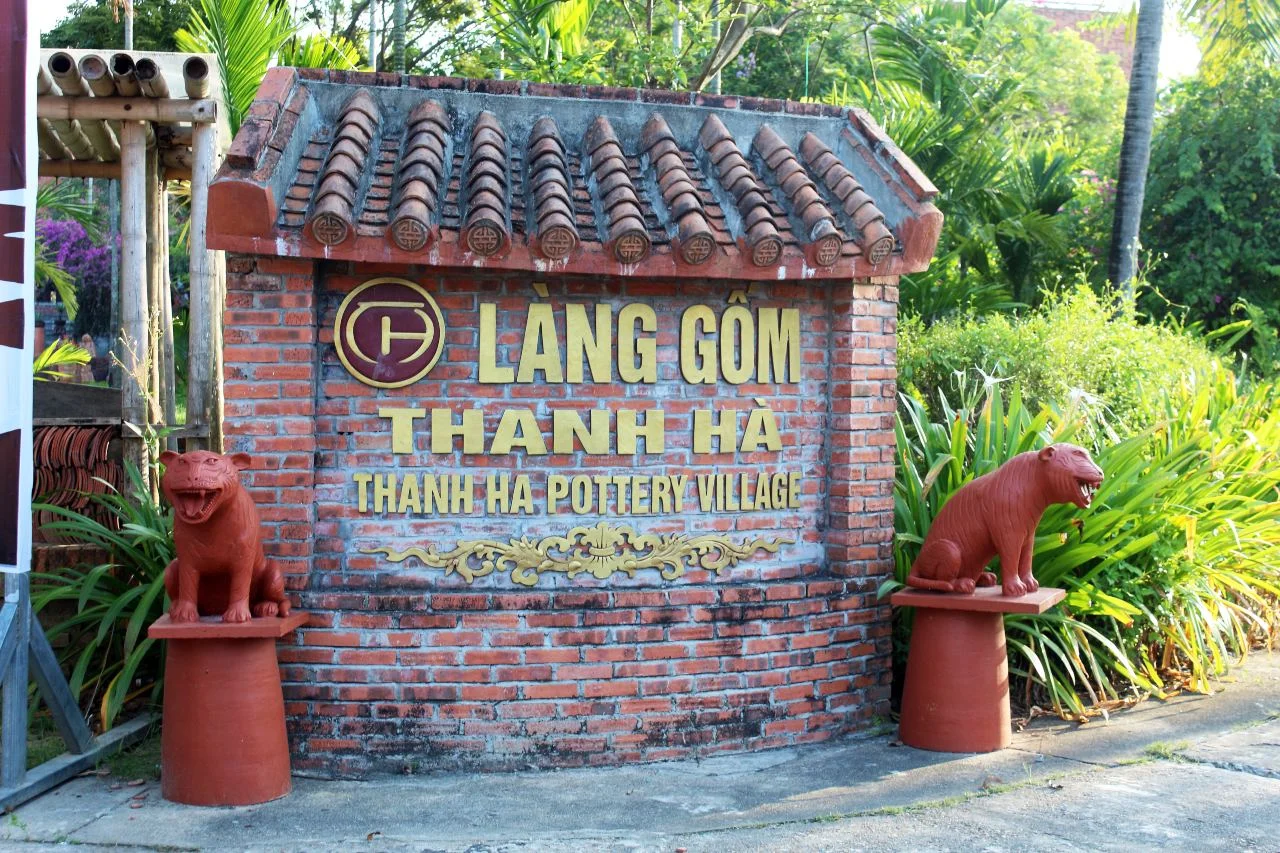
From the heart of the Old Town, the distance is approximately 3 kilometers (about 1.9 miles). This short distance makes it an incredibly accessible half-day trip for those staying near the Japanese Bridge or the central market. You can easily combine a morning here with an afternoon at the beach.
For travelers coming from Da Nang City, the journey is slightly longer but equally straightforward. The village is roughly 30 kilometers (about 19 miles) south of the coastal city. The drive typically takes 45 minutes to an hour, depending on traffic conditions along the coastal road.
Many visitors choose to stop here on their way from Da Nang to Hoi An ancient town. It serves as a perfect introduction to the artisanal culture of the region before entering the main tourist hub. The transition from the modern high-rises of Da Nang to the red brick kilns of Thanh Ha offers a striking contrast.
>>> View more: Hoi An Historical Sites: Top Historic Places You Must Visit
How to Get to Thanh Ha Pottery Village by Boat, Bike, or Bus
The journey to the village can be as memorable as the destination itself. There are several ways to navigate the route, catering to different travel styles and budgets. Knowing how to get to Thanh Ha Pottery Village efficiently will help you maximize your time.
The Romantic River Route
Arriving by boat is arguably the most atmospheric way to approach the village. You can hire a private wooden boat from the Bach Dang wharf in the Old Town. As you drift upstream on the Thu Bon River, you can witness the local fishing life and enjoy the cool breeze.

The boat ride typically takes about 30 minutes. Approaching the village from the water gives you a unique perspective of the terracotta park and the riverside workshops. It connects you to the historical trade routes that once made this village prosperous.
The Active Cycling Route
For those who prefer to be active, renting a bicycle is a fantastic option. Most hotels in town provide bikes for free or for a nominal fee of around $1 USD per day. The route follows the riverbank and passes through quiet suburban neighborhoods.

Cycling takes about 15 to 20 minutes from the center. The roads are relatively flat and paved, making it an easy ride even for beginners. You will have the freedom to stop and take photos of the river views or the local shrines along the way.
Discover Thanh Ha Pottery Village and the peaceful countryside of Hoi An through the Hoi An Cycling Tour.
The Local Public Transport Option
For the intrepid budget traveler, taking the bus to Thanh Ha Pottery Village is a possibility, though it requires some patience. The public bus route #1 from Da Nang to Hoi An passes near the turnoff for the village. However, it does not drop you at the gate.

You would need to get off at the nearest bus stop on Hung Vuong Street and walk or take a taxi for the remaining kilometer. While economical, costing less than $1 USD, it is often less convenient than a private transfer or motorbike rental. Hoi An Unique Travel recommends private transport for a seamless experience, especially during the hot summer months.
Thanh Ha Pottery Village Entrance Fee and Opening Hours
To support the local community and maintain the village infrastructure, a ticket is required for entry. The Thanh Ha pottery village entrance fee goes directly towards funding the conservation of the craft and supporting the households that open their doors to visitors.
| Category | Details |
| Opening Hours | Daily from 8:00 AM to 5:30 PM |
| Peak Visiting Time | 9:00 AM – 11:00 AM and 3:00 PM – 5:00 PM |
| Adult Ticket Price | 35,000 VND (Approx. $1.40 USD) |
| Child Ticket Price | 15,000 VND (Approx. $0.60 USD) |
| Ticket Inclusion | Entry, transit by electric buggy, and a small souvenir |
The Thanh Ha pottery village entrance fee is modest considering the access it grants. Your ticket allows you to wander freely, observe the artisans, and visit the main temples within the village. Furthermore, each ticket holder is entitled to a small ceramic gift—usually a whistle in the shape of an animal—to take home as a keepsake.
Must-Do Activities in the Pottery Village
This is not a “look but don’t touch” kind of museum. The village is an interactive playground where you are encouraged to get your hands dirty.
Explore the Miniature World at Thanh Ha Terracotta Park
Dominating the landscape is the impressive Thanh Ha Terracotta Park. This museum and outdoor exhibition space covers nearly 6,000 square meters and is a marvel of architectural design. The buildings themselves are constructed from the very terracotta produced in the village, creating a unified aesthetic.
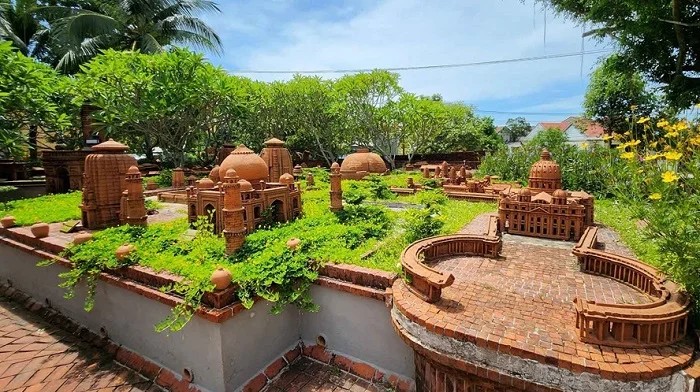
Inside, you will find a fascinating “World in Miniature” section. Here, famous architectural wonders from around the globe have been recreated entirely out of clay. You can walk past a knee-high Leaning Tower of Pisa, a miniature Taj Mahal, and a scaled-down Sydney Opera House.
It is a surreal and photogenic experience. The park also houses a museum detailing the history of the craft, showcasing ancient artifacts and explaining the evolution of the firing techniques. It provides crucial context to the sights you will see in the family workshops outside.
Create Your Own Masterpiece in a Pottery Class Hoi An
Watching the masters is inspiring, but sitting at the wheel yourself is transformative. Participating in a pottery class Hoi An is the highlight of any visit. You will be guided by a local artisan who has likely been shaping clay since childhood.
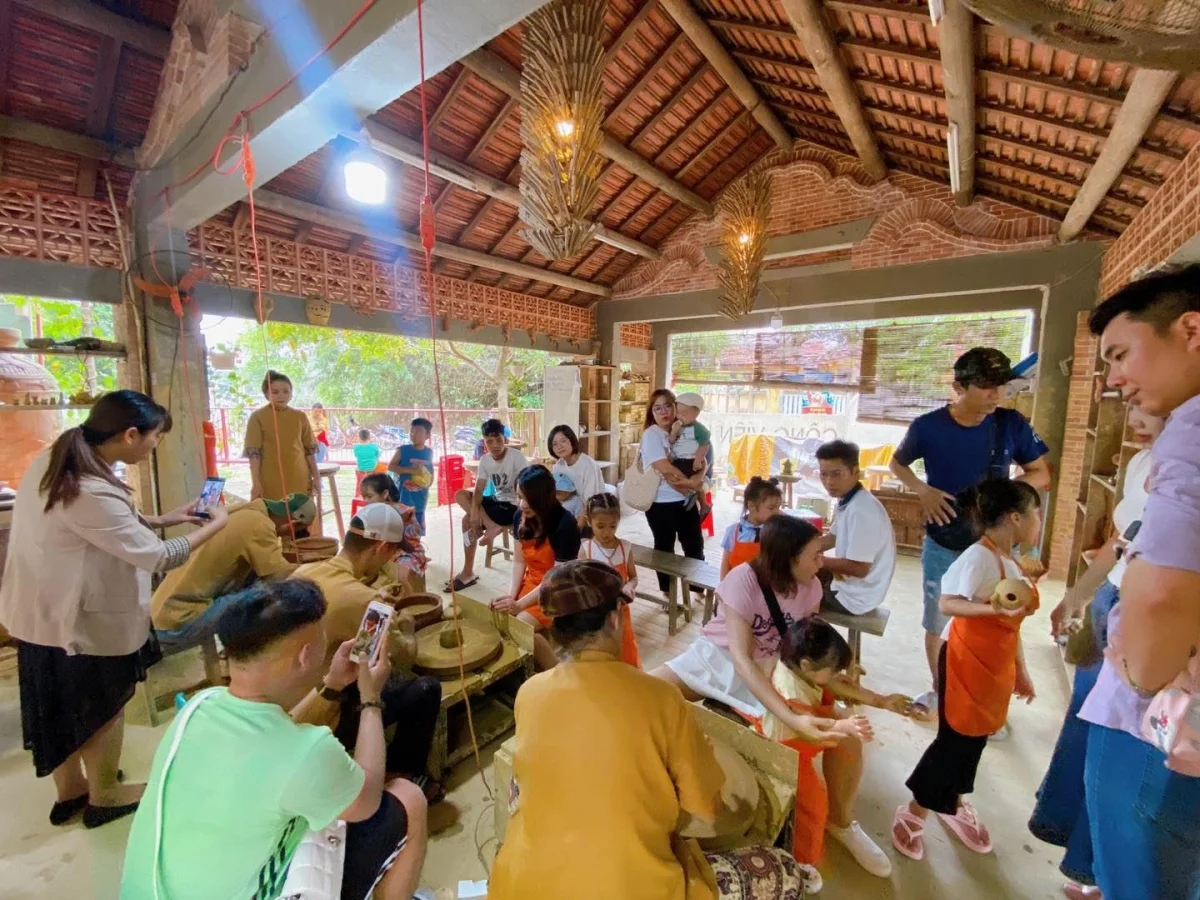
The experience starts with kneading the clay to remove air bubbles. Then, you sit at the wheel. While the artisan spins the wheel with their foot or an electric motor, you will learn to center the clay and pull the walls up to form a shape.
It is much harder than it looks. The clay can be slippery and rebellious, but the guidance of the teacher ensures you end up with a recognizable bowl, vase, or cup. There is a primal satisfaction in feeling the formless earth take shape between your fingers.
After shaping, you can decorate your piece with simple carvings. While you usually cannot fire and glaze your item in a single short visit due to drying times, the experience of creation is the true souvenir. It connects you physically to the 500-year history of Thanh Ha Pottery Village Hoi An.
>>> From lantern making to farm visits and boat rides – Experience the Exclusive Hoi An Handicraft Tours.
Perfect Combo: Thanh Ha Pottery Village and Lantern Making Workshop
For a comprehensive day of creativity, many cultural seekers combine their trip with another iconic craft. The Thanh Ha Pottery Village and lantern making workshop combo is a popular itinerary offered by Hoi An Unique Travel. It balances the earthy, grounding nature of pottery with the colorful, delicate art of silk lanterns.

After spending the morning covered in brown clay, you can clean up and head to a lantern studio. Here, you will work with bamboo frames and vibrant silks. The precision required to glue the fabric onto the frame complements the fluid shaping of the pottery.
This combination gives you a holistic view of the region’s artistic heritage. You experience the two materials that literally build and light up the town: the terracotta roof tiles and the silk lanterns. It is a perfect day for families and couples who want to make meaningful, handmade gifts.
Local Delicacies: Restaurants and Snacks Around Thanh Ha Village

Exploring the village works up an appetite, and fortunately, the area offers some rustic culinary gems. The food here is unpretentious, cheap, and deeply flavorful.
- Banh Dap (Smashing Rice Paper): This is the signature snack of the area. It consists of a sheet of wet rice noodle placed over a crispy grilled rice cracker. You smash them together with your hand and dip the pieces into a pungent sauce made from fermented fish and chili. The texture is a delightful mix of crunch and chew.
- Cao Lau: While famous in the Old Town, the Cao Lau in Thanh Ha has a distinct local touch. The noodles are said to be soaked in water mixed with ash from the local trees, giving them a unique texture. Enjoying a bowl by the river adds to the authenticity.
- Xi Ma (Black Sesame Soup): For a sweet treat, look for the vendors selling this warm, thick black soup. Made from black sesame seeds, sugar, and pennywort, it is a healthy and comforting dessert. It is not too sweet and provides a quick energy boost for more walking.
- Riverfront Cafes: Along the Thu Bon River, there are several family-run cafes with hammocks. Ordering a fresh coconut or a “Ca Phe Sua Da” (iced coffee with condensed milk) here allows you to rest while watching the fishing boats glide by. The breeze off the water is the best natural air conditioning.
>> Explore more local flavors through this guide to Hoi An street food.
>>> Turn kitchen waste into something useful – Experience the Eco Enzyme workshop in Hoi An.
Top Attractions to Combine with Your Thanh Ha Visit
Since exploring the pottery village and taking a class usually takes a half-day, you can easily combine your visit with other nearby historical and cultural sites:
- Kim Bong Carpentry Village: After exploring the art of clay, cross the river to discover the art of wood. Kim Bong artisans built the architectural soul of the Old Town.
- My Son Sanctuary: For a deeper historical dive, book a trip to these ancient Champa ruins. The red brick towers here share a spiritual connection with the terracotta of Thanh Ha.
- Hoi An Ancient Town: Head back into the center for the evening. Walk under the glowing lanterns and spot the ancient mossy roof tiles that were fired right here in Thanh Ha centuries ago.
Where to Stay Near Thanh Ha Pottery Village Hoi An
Because the village is located just 3 kilometers west of the historic center, staying in this area offers the perfect combination of peaceful riverside living and easy access to the town. The accommodations around Thanh Ha lean toward luxury wellness resorts and cozy, art-focused homestays.
Here are the top local places to stay, with estimated starting prices:
- La Siesta Hoi An Resort & Spa [Hung Vuong, Thanh Ha]: Located on the border of the Thanh Ha district, this award-winning resort is a paradise for travelers. It features stunning saltwater pools, a luxury spa, and lush tropical gardens. It is an ideal base for exploring the pottery village and a perfect pickup spot for any guided tour. (Prices typically start from 1,800,000 VND / approx. $72 USD per night).
- Hoi An Silk Marina Resort & Spa [Nguyen Phuc Chu, Thanh Ha]: Situated right on the banks of the Thu Bon River, this resort offers spectacular waterfront views. You can easily watch local boats glide by, echoing the historical trading heritage of the pottery village. (Prices start from 1,200,000 VND / approx. $48 USD per night).
- Thanh Ha Terracotta Homestay [Thanh Chiem, Thanh Ha]: For a budget-friendly and highly authentic experience, this family-run homestay puts you right in the neighborhood. The owners are deeply connected to the local community, and staying here allows you to walk to the workshops and the Terracotta Park in just minutes. (Prices start from 400,000 VND / approx. $16 USD per night).
Pro Travel Tips: Best Time to Visit and Packing Pottery Souvenirs
A successful trip requires a bit of strategy. Here are some insider tips to ensure your visit to Thanh Ha Pottery Village Hoi An is smooth and enjoyable.
Timing Your Visit
The village is an open-air destination, meaning you are exposed to the elements. The midday sun in Central Vietnam can be intense. We strongly recommend arriving early in the morning, around 8:30 AM, when the workshops are just opening and the air is fresh.

Alternatively, a late afternoon visit around 3:30 PM offers softer light for photography and a cooler temperature. Avoid the lunch hour (11:30 AM to 1:30 PM) as many artisans take a siesta, and the village can feel quiet and dormant.
Handling and Shipping Souvenirs
You will likely want to buy some pottery, but weight and fragility are concerns. For small items like whistles, Ocarinas, or small cups, simply wrap them in your clothes inside your suitcase. They are surprisingly sturdy.
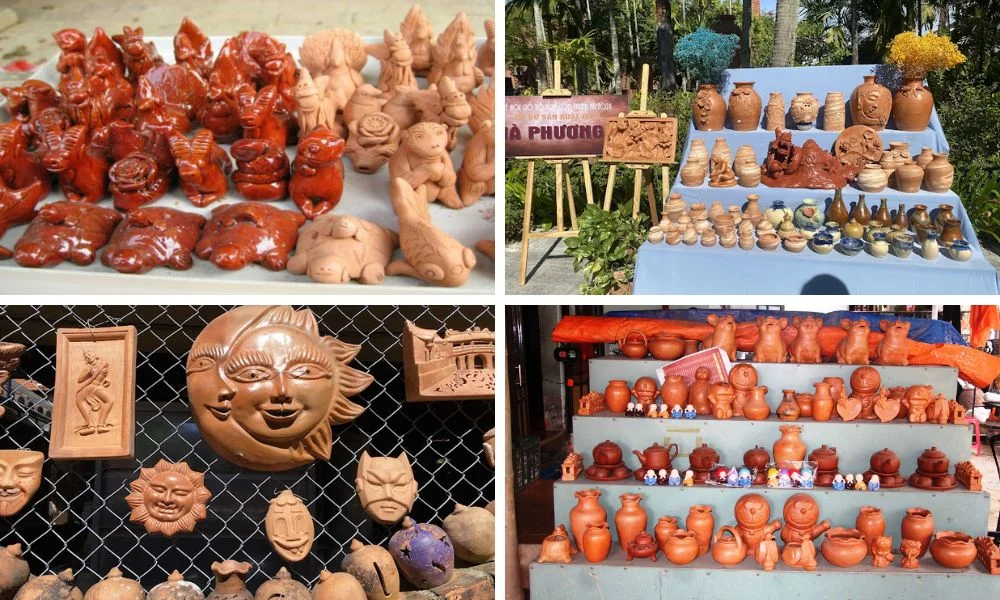
If you fall in love with a large vase or a set of dinnerware, ask the shop about shipping. Many larger workshops are accustomed to international tourists and can arrange shipping to your home country. Alternatively, Hoi An Unique Travel can assist in packaging and shipping logistics if you are on one of our tours.
Dress for the Occasion
Pottery is a messy business. If you plan to sit at the wheel, avoid wearing white or delicate fabrics. The red clay can stain. Wear comfortable clothes that you don’t mind getting a little dusty.
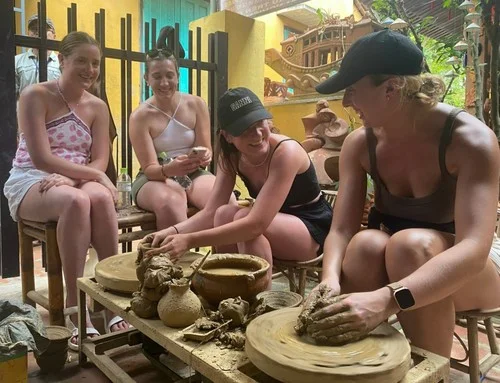
Comfortable walking shoes are also a must. The paths are paved with bricks, which can be uneven. A hat and sunglasses are essential protection against the sun as you move between the different houses and kilns.
Explore the traditional pottery art of Thanh Ha Village through this Hoi An Handicraft Tour.
Why Choose a Pottery Tour with Hoi An Unique Travel?
You can certainly walk into Thanh Ha Pottery Village Hoi An alone, but you might miss the soul of the place. Hoi An Unique Travel offers more than just transportation; we offer connection. We take you into the homes of the oldest artisan families, not just the commercial showrooms.
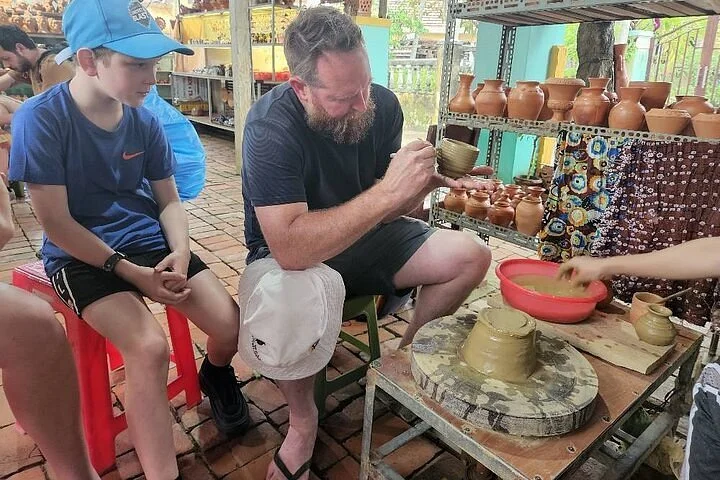
Our guides act as cultural bridges. They translate the stories of the elders who remember the village before tourism arrived. They explain the technical nuances of the kiln firing process that a casual observer would miss.
We handle all the logistics, from the Thanh Ha Pottery Village entrance fee to arranging private boat transfers. We ensure you get a fair price on souvenirs and have the best seat in the house for the pottery class. With us, you are not just a spectator; you are a guest of the village.
Don’t let this authentic experience slip away. Book Now or Contact Us today to start planning your journey. Have questions? Call us for a free consultation at +84 916 976 731.
>>> View more: Hoi An Tours & Private Luxury Experiences | Hoi An Unique Travel
FAQS About Thanh Ha Pottery Village
How much is the Thanh Ha Pottery Village entrance fee?
The thanh ha pottery village entrance fee is 35,000 VND (approx. $1.40 USD) for adults and 15,000 VND (approx. $0.60 USD) for children. This ticket includes an electric buggy transfer and a small ceramic souvenir.
How to get to Thanh Ha Pottery Village from Hoi An Old Town?
If you are wondering how to get to thanh ha pottery village, you have several easy options. It is located just 3 kilometers away. You can take a 15-minute bicycle ride, hire a taxi, or enjoy a scenic 30-minute boat ride up the Thu Bon River.
Can visitors make their own pottery?
Yes! Joining a pottery class in Hoi An right in the village is the most popular activity. Almost every workshop invites tourists to sit at the wheel, where a local artisan will guide you in shaping your own bowl, cup, or vase.
What is the best combo tour to do?
For a full cultural day, we highly recommend the thanh ha pottery village and lantern-making workshop combo. It perfectly balances the earthy craft of shaping clay with the colorful art of crafting traditional silk lanterns.
Recent Posts






Our Associations


Our Awards








