Popular Tours






Have you ever wondered how Hoi An became one of Southeast Asia’s most important trading ports? The Museum of Trade Ceramics offers valuable insight into the town’s maritime history through a remarkable collection of ceramics and archaeological artifacts. Housed in a preserved heritage building, the museum helps visitors understand the international trade networks that shaped Hoi An between the 15th and 17th centuries.
An Overview of the Museum of Trade Ceramics
Housed within a beautifully preserved two-story timber building in the heart of the pedestrian zone, the Museum of Trade Ceramics serves as a quiet repository for thousands of ancient pottery fragments. Dating from the 13th to the 17th centuries, this collection reveals the fascinating story of early globalization, long before modern shipping routes connected the East and West.
For travelers planning a visit, here are the practical details you need to know:
- Location: 80 Tran Phu Street, Hoi An Ancient Town
- Opening Hours: 7:00 AM to 9:00 PM daily
- Admission: Access is included with the standard Hoi An Old Town entrance ticket (120,000 VND), which allows entry to five heritage sites of your choice.

History of Museum of Trade Ceramics Hoi An
During its golden age between the 16th and 17th centuries, Hoi An (formerly known as Faifo) developed into one of Southeast Asia’s most important international trading ports. Merchant vessels from Japan, China, India, and Europe regularly anchored along the Thu Bon River, exchanging silk, spices, porcelain, and other valuable goods before continuing their voyages with the seasonal monsoon winds.
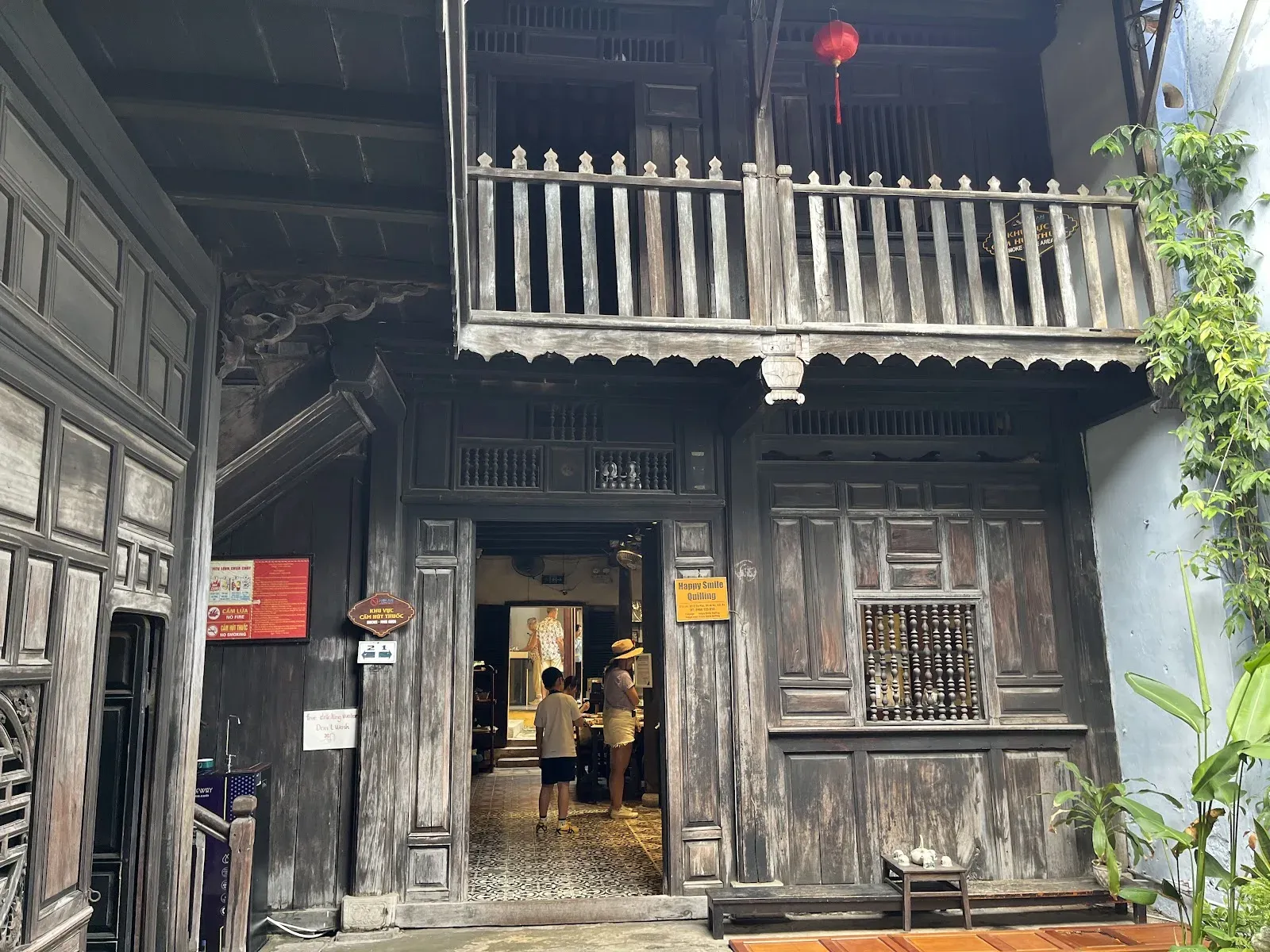
Centuries of maritime commerce left behind countless ceramic artifacts beneath the ancient town and in nearby shipwrecks around the Cham Islands. To preserve these archaeological discoveries and highlight Hoi An’s role in regional and international trade, the Museum of Trade Ceramics was established in 1995 with support from Vietnamese experts and Japanese researchers. Today, its collection provides valuable insight into the commercial networks and cultural exchanges that shaped Hoi An into a UNESCO World Heritage destination.
View more: Hoi An Historical Sites: Top Historic Places You Must Visit


Museum of Trade Ceramics Highlights
Stepping into the exhibition rooms of the Museum of Trade Ceramics feels like piecing together a massive, cross-cultural historical puzzle. The artifacts displayed here go far beyond simple decoration. Instead, they serve as tangible evidence of the vast global maritime networks that converged on this small stretch of the Thu Bon River hundreds of years ago.
Archaeological Ceramic Collections
What makes the Museum of Trade Ceramics Hoi An so captivating is its direct connection to the ground beneath your feet. The main displays feature delicate shards and meticulously restored pieces excavated directly from the ancient foundations of the old town itself.
>>> View more: Nguyen Tuong Family Chapel Hoi An: A Cultural Heritage House
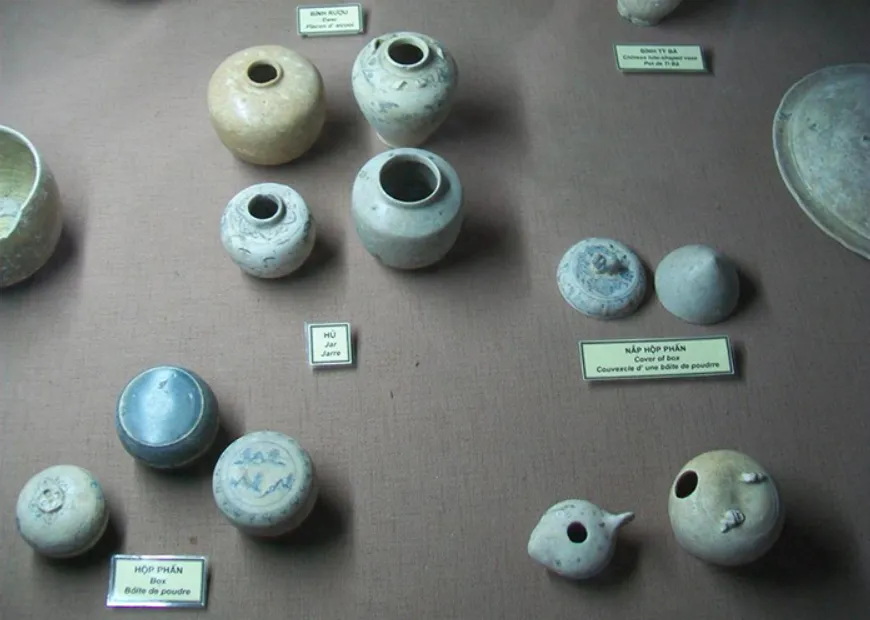
As you browse the wider exhibits within the Museum of Trade Ceramics, you will notice distinct styles originating from the Middle East, Tang dynasty China, and feudal Japan. Each piece displays distinctive glazes, decorative patterns, and manufacturing techniques that help researchers identify its place of origin and illustrate the diversity of goods traded through Hoi An.
>>> View more: Cam Pho Communal House: History, Entrance Fee & Visitor Guide
Shipwreck Artifacts from Cham Islands
Just off the coast lies the Cu Lao Cham archipelago, a treacherous maritime area where many heavily laden merchant vessels met their end. The museum houses fascinating cargo recovered directly from these sunken shipwrecks. These underwater archaeological discoveries provide valuable evidence of the maritime trade routes that once connected Hoi An with ports across Asia and beyond.
View more: Quan Am Pagoda Hoi An: History, Architecture & Visitor Guide

Traditional Wooden Heritage Architecture
Beyond the ceramic collection, the heritage house itself is one of the museum’s most valuable exhibits. Its preserved wooden architecture offers insight into the design of traditional merchant homes in Hoi An. Built in the late 19th century, this perfectly preserved merchant home offers visitors a seamless dual cultural experience.

You will find yourself admiring ancient maritime pottery while standing inside a true masterclass of regional carpentry. The building’s historical residential layout, complete with an airy open central courtyard, provides a vivid glimpse into the daily lives of Hoi An’s prosperous merchant elite.
Cultural Exchange Exhibits
Beyond the tangible pottery fragments, the Museum of Trade Ceramics Hoi An features detailed architectural sketches and historical documents that map out early maritime trade routes. These fascinating exhibits illustrate how foreign merchants—particularly from Japan and China—gradually established localized settlements along the riverbanks.
Architecture of the Museum
Many travelers visit the museum of trade ceramics primarily to admire its classic timber architecture rather than the pottery. The building exemplifies the ingenious ways local builders adapted to a challenging tropical climate while accommodating bustling commercial needs.
Traditional Hoi An Wooden House Design
Serving as a prime example of local architecture, the Museum of Trade Ceramics follows a classic tubular layout that stretches deep from the bustling commercial street all the way to a quiet back alley. Thick ironwood columns support the entire framework, resting securely on intricately carved stone bases specifically designed to prevent moisture damage and wood rot during the region’s historical annual river floods.

Central Courtyard Layout
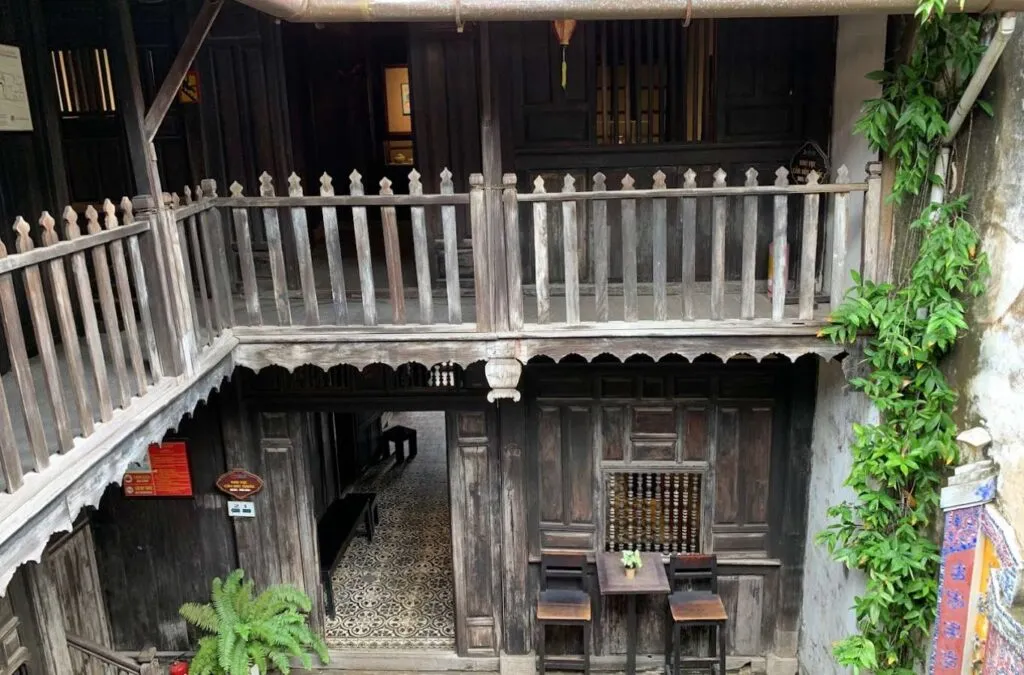
A defining feature of these wealthy merchant homes is the open-air courtyard situated in the middle of the property. This unroofed space allows heavy tropical rain to drain away efficiently. More importantly, it pulls natural daylight down into the deep, windowless interior rooms, bringing natural light and ventilation into the deep interior rooms while helping regulate indoor temperatures.

Upper Floor Exhibition Space
Climbing the creaky, incredibly steep wooden staircase reveals another fascinating layer of the Museum of Trade Ceramics. Historically, local merchants used this upper level to safely store their most valuable goods away from the rising river floodwaters.

Today, this space hosts delicate display cabinets filled with ancient pottery. More importantly for photographers, it offers a beautiful open vantage point looking out over the iconic, moss-covered tiled roofs of the neighboring heritage houses.
Natural Ventilation Structure
Before modern air conditioning, merchants relied entirely on intelligent architectural airflow. The high ceilings, slatted wooden windows, and courtyard drafts create a cooling cross-breeze. This passive cooling design kept both the inhabitants and their perishable trading goods comfortable during the sweltering summer months.

What to Expect When Visiting the Museum
A stop at the Museum of Trade Ceramics offers a tranquil departure from the bustling riverside cafes and crowded photo spots just outside its doors. Knowing how to mindfully navigate this intimate space ensures you get the most out of your entrance ticket without ever feeling rushed.
Atmosphere and Experience
The ambiance inside the Museum of Trade Ceramics is hushed, naturally dim, and deeply atmospheric. The rich scent of aged timber fills the air from the very moment you step inside the heritage building.
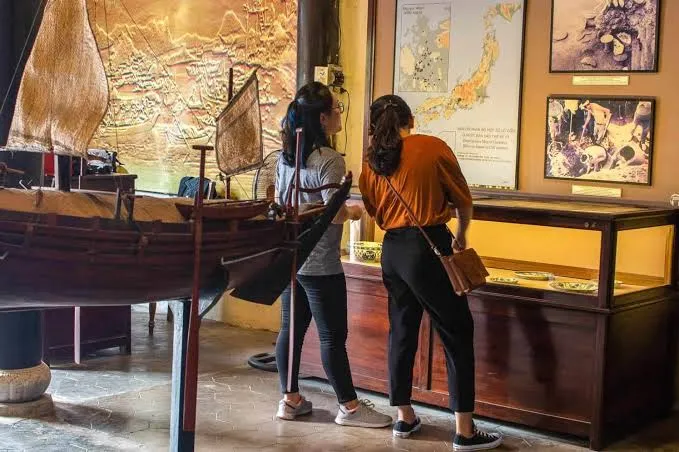
Beneath your feet, the slightly uneven floorboards serve as a physical reminder of the town’s prosperous past. They silently echo the countless merchant footsteps that have crossed this exact threshold over the past two centuries.
How Long to Spend
For most travelers, thirty to forty-five minutes is ample time to fully explore the Museum of Trade Ceramics, appreciating both its delicate artifacts and the remarkably preserved wooden architecture. However, if you hold a deep interest in historical maritime trade, you may find yourself lingering slightly longer to absorb the detailed English placards accompanying the various cross-cultural displays.
Visitor Flow
Begin your journey in the front commercial room before proceeding past the sunny courtyard to the rear living quarters. Take the wooden stairs to the upper balcony, where you can view the exhibits in chronological order. Finally, you will descend back toward the front entrance, completing a natural loop of the property.
Photography Notes
While the dim interior lighting inside the Museum of Trade Ceramics Hoi An makes standard smartphone photography slightly challenging, bringing a camera with good low-light capabilities will beautifully capture the building’s moody atmosphere. In our experience, the most photogenic spots remain the sunlit, moss-covered central courtyard and the second-floor balcony, which offers a stunning open vantage point directly over the iconic yellow walls of Tran Phu Street.

Accessibility
Because the museum is housed in a historic wooden merchant house, visitors should expect narrow passageways, uneven flooring, and steep wooden staircases. As a result, accessibility may be limited for wheelchair users and visitors with reduced mobility. Those requiring step-free access are encouraged to check with the museum staff before visiting.
How to Get to the Museum of Trade Ceramics in Hoi An
Finding the building is incredibly straightforward, as it sits right on the main pedestrian thoroughfare of the Old Town. Since motorized vehicles are strictly banned within this heritage zone during most of the day, your journey will inevitably conclude with a relaxed, pleasant stroll.
Depending on your starting point, here are the most convenient ways to reach the pedestrian boundary before walking to the museum:
- Private Transfer or Taxi (from Da Nang): For a comfortable, air-conditioned ride directly to the Old Town’s edge, a private car or trusted local taxi is ideal. Estimated cost: 350,000 – 450,000 VND per trip.
- Ride-Hailing or Electric Buggy (within Hoi An): If you are staying at a beach resort or just outside the center, booking a Grab car or a local electric buggy to the nearest ticket booth is a quick, breezy option. Estimated cost: 50,000 – 100,000 VND depending on distance.
- Bicycle: Embracing slow travel, many visitors prefer cycling to the designated parking areas just outside the walking streets. Many premium boutique hotels offer bicycles on a complimentary basis. Estimated rental cost: 30,000 – 50,000 VND per day.
- On Foot (Within the Pedestrian Zone): From the iconic Japanese Covered Bridge, simply walk east along Tran Phu Street for about five minutes. The entrance will be on your left, easily identifiable by its carved wooden signage and wide-open traditional façade.
Best Time to Visit the Museum of Trade Ceramics
The museum is open daily from 7:00 AM to 9:00 PM, giving visitors plenty of flexibility when planning their itinerary. Early morning is generally the best time to visit, as the Old Town is quieter and the soft natural light enhances the atmosphere inside the historic wooden house. Late afternoon is another pleasant option, offering cooler temperatures after exploring the surrounding attractions.
If you visit during the Hoi An Lantern Festival, held on the 14th day of each lunar month, the museum provides a peaceful cultural stop before enjoying the evening celebrations. Visitors traveling during the rainy season (September to January) should be aware that heavy rainfall may occasionally affect access to parts of the Ancient Town.
Avoid visiting around midday, especially during the summer months, when temperatures are at their highest and Tran Phu Street is often busier with tour groups. Early morning or late afternoon generally provides a more comfortable and enjoyable experience.


Where to Stay Near the Museum of Trade Ceramics
Staying within walking distance of the Museum of Trade Ceramics allows you to experience the ancient town’s quiet morning charm long before the massive crowds of day-trippers arrive. Consider booking premium boutique heritage hotels located just on the fringe of the pedestrian walking zone. Properties situated along the Thu Bon River or near the adjacent An Hoi Islet offer luxurious comfort while keeping you intimately connected to the city’s historical heartbeat.
Anantara Hoi An Resort
Anantara provides a lush, colonial-style retreat overlooking the river, beautifully blending French, Dutch, and Vietnamese architectural influences. It is perfectly positioned for travelers seeking sustainable luxury and serene garden settings just steps away from the bustling heritage streets.
- Location: 1 Pham Hong Thai Street, Hoi An (approx. 10 minutes walking to the museum)
- Starting Price: 5,500,000 VND / night
- Check-in / Check-out: 3:00 PM / 12:00 PM
- Best Suited For: Eco-conscious luxury travelers and couples seeking a serene, nature-immersed retreat without sacrificing proximity to the old town.
Little Riverside Hoi An
Embracing authentic local design, this elegant boutique property sits directly on the banks of the Thu Bon River. The sunrise views from their rooftop infinity pool are spectacular, offering a tranquil escape after a long day of cultural exploration.
- Location: 9 Phan Boi Chau Street, Hoi An (approx. 7 minutes walking to the museum)
- Starting Price: 3,200,000 VND / night
- Check-in / Check-out: 2:00 PM / 12:00 PM
- Best Suited For: Cultural explorers and boutique hotel enthusiasts who appreciate authentic Vietnamese architecture and intimate, quiet environments.

Hotel Royal Hoi An – MGallery
This grand property tells the romantic historical story of Japanese merchant Sotaro and Princess Wakaku, perfectly complementing the cross-cultural trade themes found inside the museum. It features opulent design, world-class amenities, and the highest rooftop bar in the area for stunning sunset panoramas.
- Location: 39 Dao Duy Tu Street, Hoi An (approx. 12 minutes walking to the museum)
- Starting Price: 3,800,000 VND / night
- Check-in / Check-out: 2:00 PM / 12:00 PM
- Best Suited For: Honeymooners and discerning luxury seekers desiring world-class amenities, opulent design, and vibrant sunset views.
Nearby Attractions Near Museum of Trade Ceramics Hoi An, Vietnam
Because exploring the exhibits at the Museum of Trade Ceramics Hoi An generally takes under an hour, this stop pairs beautifully with other surrounding heritage sites. All located within a few hundred meters along the pedestrian streets, these landmarks allow you to build a seamless cultural walking tour.
Japanese Covered Bridge (Chua Cau)
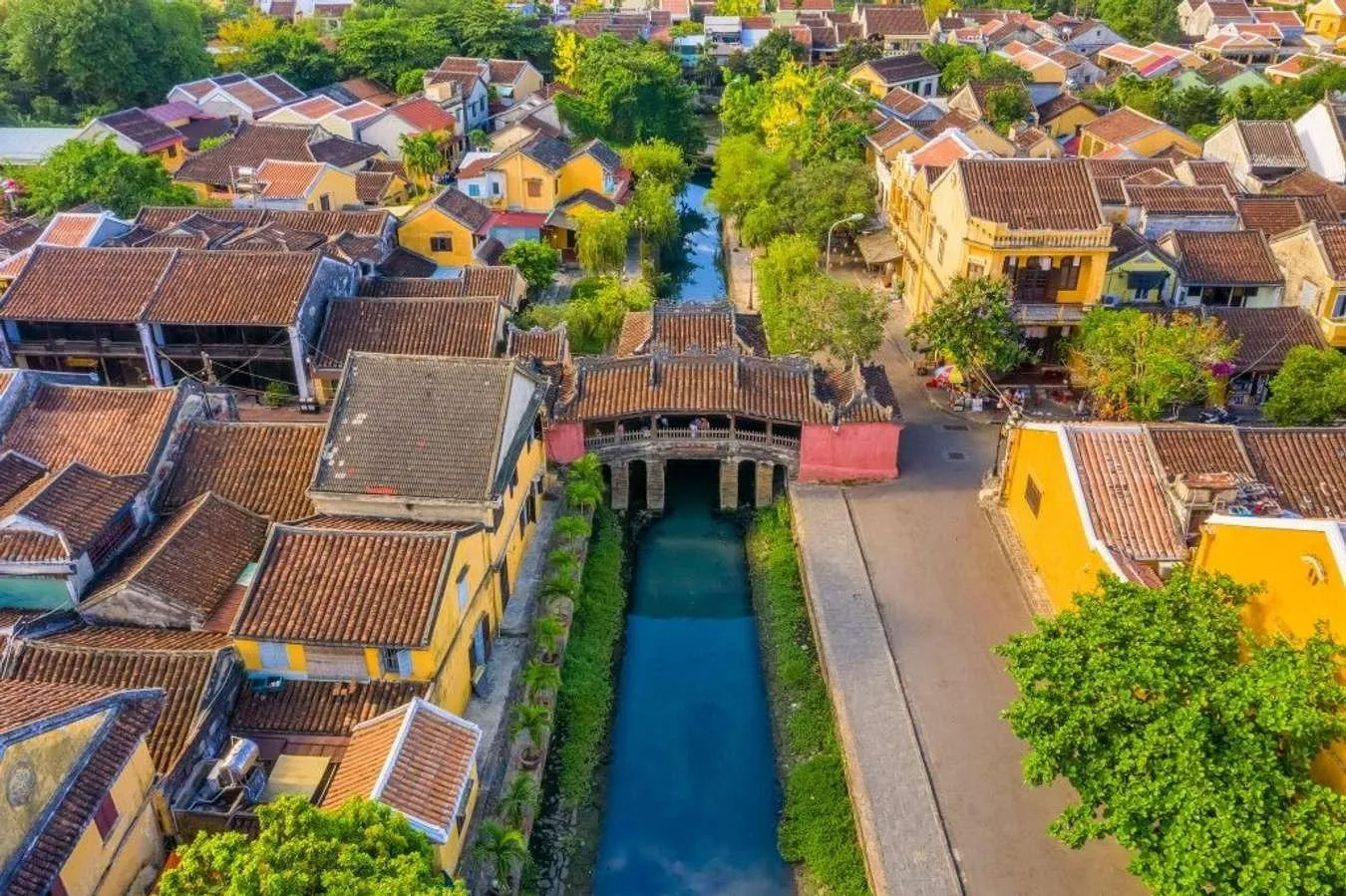
Located just a short stroll west down the main street, this iconic 16th-century bridge serves as the enduring symbol of the town’s historical Japanese settlement. The weathered wooden structure arches gracefully over a small canal, featuring a beautifully preserved interior temple dedicated to the Taoist God of Weather.
- Address: Intersection of Tran Phu and Nguyen Thi Minh Khai Streets
- Opening Hours: 7:00 AM to 9:00 PM daily
- Admission: Included with the standard Hoi An Old Town ticket (requires one tear-off stub)
Fujian Assembly Hall (Phuc Kien)
Situated merely moments away from the museum, this vibrant assembly hall stands as a spectacular testament to the local Chinese merchant community’s rich heritage. Beyond its imposing, colorful entrance gates, you will discover tranquil courtyards, intricate dragon carvings, and massive incense coils gently smoking beneath the main ceiling.
- Address: 46 Tran Phu Street, Hoi An
- Opening Hours: 7:00 AM to 5:00 PM daily
- Admission: Included with the standard Hoi An Old Town ticket (requires one tear-off stub)
Tan Ky Old House
Tucked away on the adjacent street, this two-century-old merchant home is a masterclass in remarkably preserved residential architecture. As you wander through its dark wooden interior, you can admire exquisite structural details that reflect a seamless, harmonious blend of Vietnamese, Japanese, and Chinese design influences.
- Address: 101 Nguyen Thai Hoc Street, Hoi An
- Opening Hours: 8:30 AM to 5:30 PM daily
- Admission: Included with the standard Hoi An Old Town ticket (requires one tear-off stub)
Travel Tips for Visiting the museum
To make the most of your visit to the Museum of Trade Ceramics, a little preparation can greatly enhance your experience. As the museum is housed inside a well-preserved historic merchant house, visitors should be mindful of both the building’s original architecture and the cultural setting.
- Bring Your Old Town Ticket: Admission is included with the Hoi An Ancient Town entrance ticket. One ticket stub will be collected when you enter the museum, so keep it readily accessible.
- Wear Comfortable Shoes: The original wooden staircases are narrow, steep, and can become slippery, especially during humid or rainy weather. Comfortable footwear with good grip is recommended.
- Be Aware of Accessibility: Because the museum occupies a historic wooden house, visitors should expect narrow passageways and steep staircases. Wheelchair accessibility and stroller access are limited.
- Respect the Quiet Environment: The museum is a peaceful heritage site. Speak softly, silence your mobile phone, and avoid disturbing other visitors while they explore the exhibits.
- Bring Water During Hot Weather: Exploring Hoi An’s pedestrian streets can be hot, particularly from late morning through the afternoon. Carrying a reusable water bottle will help you stay comfortable throughout your visit.
- Take Photos Responsibly: Photography is generally permitted, but avoid using flash to help preserve the artifacts and maintain a pleasant experience for everyone. The central courtyard and upper-floor balcony offer some of the best natural lighting for photographs.
Is the Museum of Trade Ceramics Worth Visiting?
Yes. Although smaller than some of Hoi An’s other heritage attractions, the Museum of Trade Ceramics offers valuable insight into the town’s history as one of Southeast Asia’s most important trading ports. Its archaeological collections, traditional merchant-house architecture, and informative exhibits provide a deeper understanding of the cultural exchanges that shaped Hoi An over several centuries.
For travelers interested in history, architecture, and local heritage, the museum is a worthwhile stop that complements visits to nearby attractions such as the Japanese Covered Bridge, Tan Ky Old House, and Fujian Assembly Hall.
Decoding History and Growth with Hoi An Unique Travel
At Hoi An Unique Travel, we believe that history is the ultimate case study for modern growth. With over a decade of professional expertise and a portfolio of industry-recognized awards, we do not just guide you through locations; we curate profound narratives that link the ancient merchant spirit to the dynamics of today’s professional landscape.
Our professional Hoi An tours are meticulously designed for the discerning traveler who values substance over spectacle. We don’t just show you the location—we provide the historical context, the nuances of international trade networks, and the “connective tissue” that links Hoi An’s golden era to the principles of sustainable development. Whether you are analyzing the craftsmanship of ancient ceramics or seeking deep insights into the region’s cultural evolution, we provide the expert perspective that turns a standard visit into an immersive intellectual journey.
Click here to explore our exclusive Hoi An tours and let us redefine your cultural experience.
FAQs About Museum of Trade Ceramics
What can I see inside the Museum of Trade Ceramics?
The museum displays hundreds of ceramic artifacts dating from the 13th to the 17th centuries, including bowls, jars, plates, and pottery fragments recovered from archaeological excavations in Hoi An and nearby shipwrecks around the Cham Islands. Visitors can also admire the museum’s well-preserved traditional wooden merchant house, which is an important heritage attraction in its own right.
Is the Museum of Trade Ceramics included in the Hoi An Ancient Town ticket?
Yes. Admission is included with the standard Hoi An Ancient Town entrance ticket. One of the ticket’s tear-off stubs is used when you enter the museum, so no additional admission fee is required.
How long should I spend at the museum?
Most visitors spend around 30 to 45 minutes exploring the exhibitions and the historic building. History enthusiasts may wish to stay longer to read the interpretive displays and learn more about Hoi An’s maritime trading history.
Why are ceramics important in Hoi An’s history?
Ceramics were among the most valuable goods traded through Hoi An during its peak as an international trading port between the 15th and 17th centuries. The artifacts preserved in the museum provide archaeological evidence of the extensive maritime trade networks that connected Hoi An with China, Japan, Southeast Asia, the Middle East, and Europe.
Recent Posts






Our Associations


Our Awards








