Popular Tours






Exploring the rich multicultural heritage of the ancient port town becomes a truly captivating experience when you step beyond the vibrant lantern-lit streets and into its historic sanctuaries. A visit to the Cantonese Assembly Hall allows travelers to witness the breathtaking 19th-century Chinese architecture and the fascinating legacy of the Guangdong merchant community. In this comprehensive guide by Hoi An Unique Travel, you will discover everything from ticket prices and opening hours to the best historical highlights, ensuring a smooth and enriching cultural journey.
Overview of Cantonese Assembly Hall
Situated in the heart of the UNESCO World Heritage site of Hoi An Ancient Town, the Cantonese Assembly Hall stands as a vibrant and enduring testament to the city’s rich, multicultural past. Originally constructed as a gathering place for Chinese merchants navigating the bustling trade routes of Southeast Asia, this remarkable structure has gracefully evolved into one of the most celebrated historical landmarks in Central Vietnam.
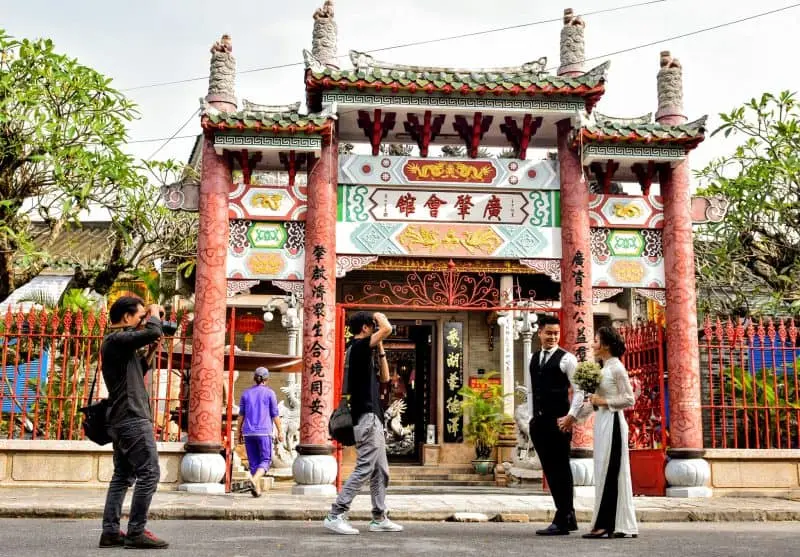
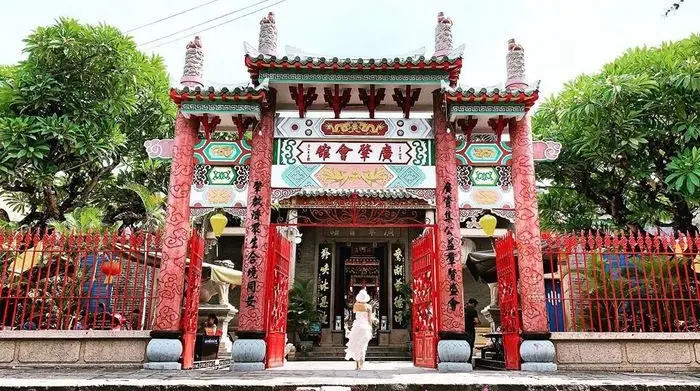
Also widely recognized as the Assembly Hall of Cantonese Chinese Congregation, the building immediately captures the attention of passersby with its striking crimson and gold facade, intricate ceramic mosaics, and an unmistakable aura of solemn antiquity. The hall is not just a building; it is a meticulously preserved time capsule that reflects the profound influence of the Chinese diaspora on the region’s development. For any traveler planning a trip to this ancient port city, adding the Cantonese Assembly Hall Hoi An to your itinerary is essential for a deep dive into the architectural and cultural synthesis that defines Hoi An today.
Hoi An Cantonese Assembly Hall Opening Hours and Ticket Price
Planning your visit to the Cantonese Assembly Hall requires knowing a few practical details to ensure a seamless and enjoyable experience. Because it is one of the premier historical sites in the city, it operates under the standardized ticketing system of the Old Town.
- Opening Hours: The assembly hall welcomes visitors daily from 8:00 AM to 5:00 PM. If you prefer a quieter, more intimate viewing experience, arriving right at opening time is highly recommended. The early morning light also provides the best natural illumination for photography before the larger guided tour groups arrive later in the morning.
- Ticket Price: Entrance to the Cantonese Assembly Hall is not sold separately; instead, it is included in the comprehensive Hoi An Old Town general admission ticket. This ticket costs 120,000 VND (approximately $5 USD) for international tourists and 80,000 VND for domestic visitors. The ticket provides you with tear-away stubs that grant access to five different designated heritage sites within the Old Town, making it a highly cost-effective way to explore the area’s rich history.
History & Cultural Significance of Cantonese Assembly Hall Hoi An
To truly appreciate this site, one must delve into its fascinating origins. Constructed in 1885 by a thriving community of Chinese expatriates hailing from Guangdong (Canton) province, the Cantonese Assembly Hall was initially built to serve as a vital communal and commercial hub. During Hoi An’s golden age as a bustling international trading port from the 15th to the 19th centuries, merchants needed a secure place to hold meetings, negotiate trade deals, and support one another in a foreign land.
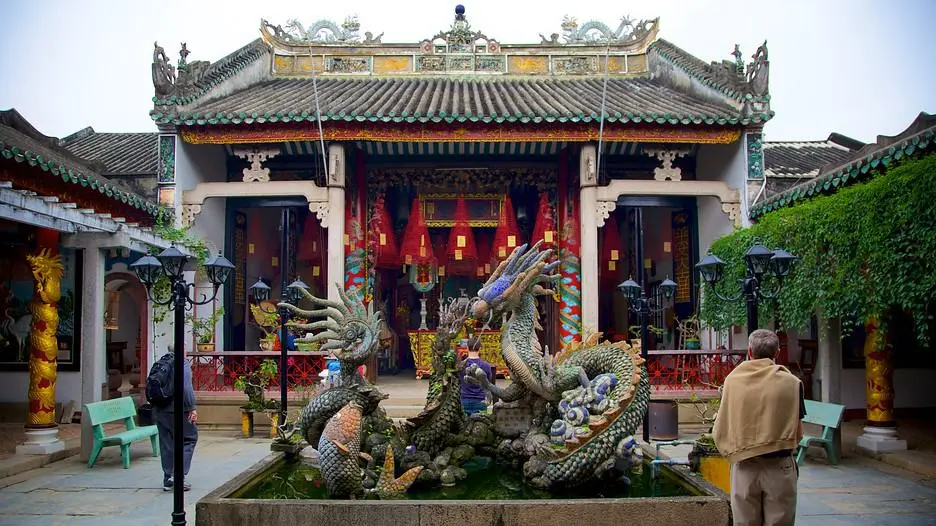
More than just a commercial center, the assembly hall of the Cantonese Chinese congregation holds deep spiritual and social significance. It was purposefully dedicated to the worship of two primary deities. First is Thien Hau, the revered Goddess of the Sea, whom the merchants prayed to for safe passage across the treacherous ocean trade routes. Second is Quan Cong (Guan Yu), an esteemed ancient Chinese general who symbolizes loyalty, integrity, and justice—virtues that were considered paramount in business dealings. Over the decades, the hall has meticulously preserved its historical artifacts, records, and traditions, acting as a living, breathing museum of the Cantonese diaspora and their enduring legacy in Vietnam.
Architecture & Highlights of Cantonese Assembly Hall
The architectural layout of the Cantonese Assembly Hall is a masterful display of traditional Chinese spatial design, blended seamlessly with the localized nuances of Vietnamese craftsmanship. Remarkably, historical records indicate that many of the building’s original materials, including heavy wooden beams, ornate stone pillars, and intricate ceramic tiles, were crafted in China and transported to Hoi An Ancient town via merchant ships.
The structure follows a standard layout featuring a grand three-entrance gate (known as Tam Quan), a lush central courtyard, and the solemn main sanctuary at the rear. The roofing is a spectacular sight, covered in classic yin-yang tiles and heavily decorated with mythical creatures like dragons, unicorns, and phoenixes, all meticulously crafted from colorful glazed pottery. The intricate wood carvings that adorn the interior altars, supporting columns, and ceiling beams showcase the exceptional, painstaking skill of the artisans of that era. Every corner of the hall is designed to balance Feng Shui principles, ensuring harmony between nature and the spiritual realm.


How do I get to the Cantonese Assembly Hall in Hoi An?
Getting to this historical gem is incredibly straightforward, thanks to its prime location. The Cantonese Assembly Hall is prominently situated at 176 Tran Phu Street, which serves as one of the main pedestrian arteries running directly through the heart of the Ancient Town.
Since motorized vehicles, including cars and motorbikes, are strictly restricted within the Old Town during specific hours to preserve the pedestrian-friendly atmosphere, you have a few excellent transportation options:
- On Foot: If you are staying within or near the ancient quarter, walking is the best way to reach the hall. It allows for a highly scenic stroll through the iconic lantern-lined streets surrounded by golden-yellow heritage houses.
- By Bicycle: Many local hotels and homestays offer bicycles for rent or even for free. Riding a bike is a popular, relaxing, and eco-friendly way to navigate the flat streets of Hoi An before parking near the pedestrian zone.
- By Taxi or Ride-Hailing (Grab): If your accommodation is located further away, such as near the beach or outside the city center, you can easily take a taxi or book a Grab car. The driver will drop you off at the edge of the pedestrian zone. From there, it is just a short 5-to-10-minute walk to the assembly hall.
Best Things to Do at Cantonese Assembly Hall Hoi An
The Cantonese Assembly Hall Hoi An is rich with visual and historical details. To make the most of your visit, here are the top activities and sights you should prioritize while exploring the grounds.
Admire the Iconic Dragon Statue
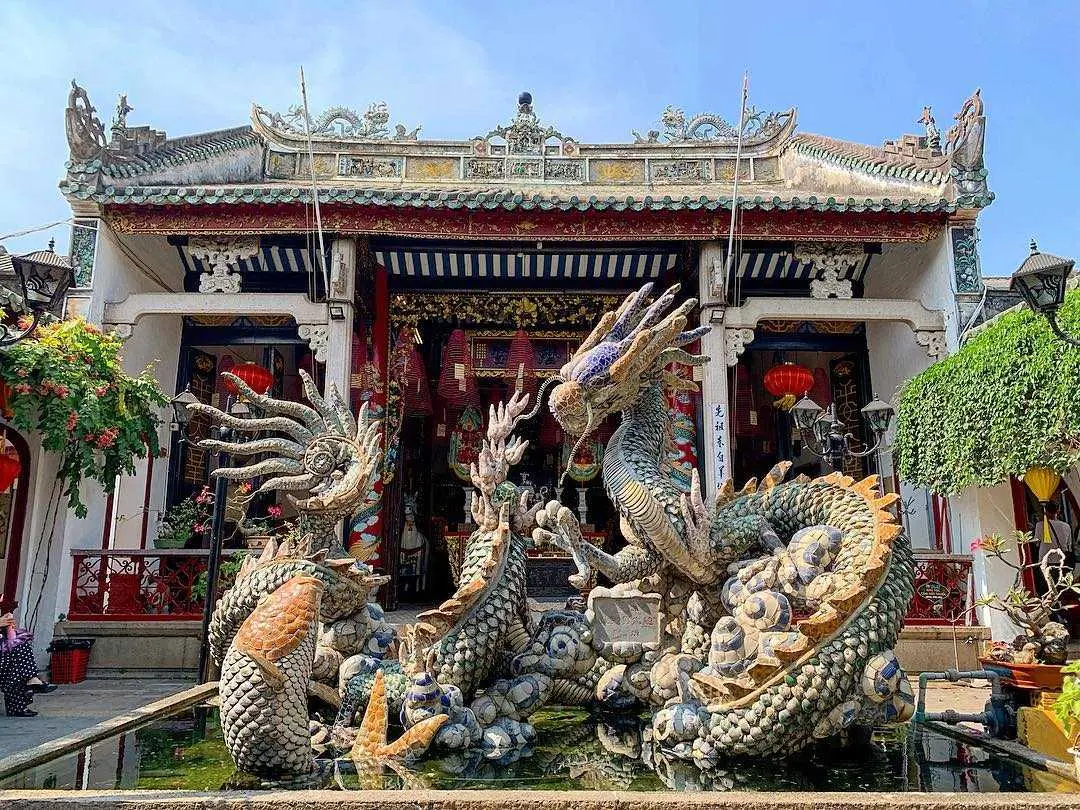
The undisputed centerpiece of the Assembly Hall of the Cantonese Chinese Congregation is the spectacular dragon fountain located squarely in the courtyard. This massive, sinuous dragon statue is constructed entirely of delicate pottery shards and colorful mosaic pieces. In Chinese mythology, the dragon represents supreme power, nobility, and good fortune. This mesmerizing focal point captures the imagination of every visitor and stands as a masterclass in traditional mosaic artistry.
Explore the Main Hall and Altar
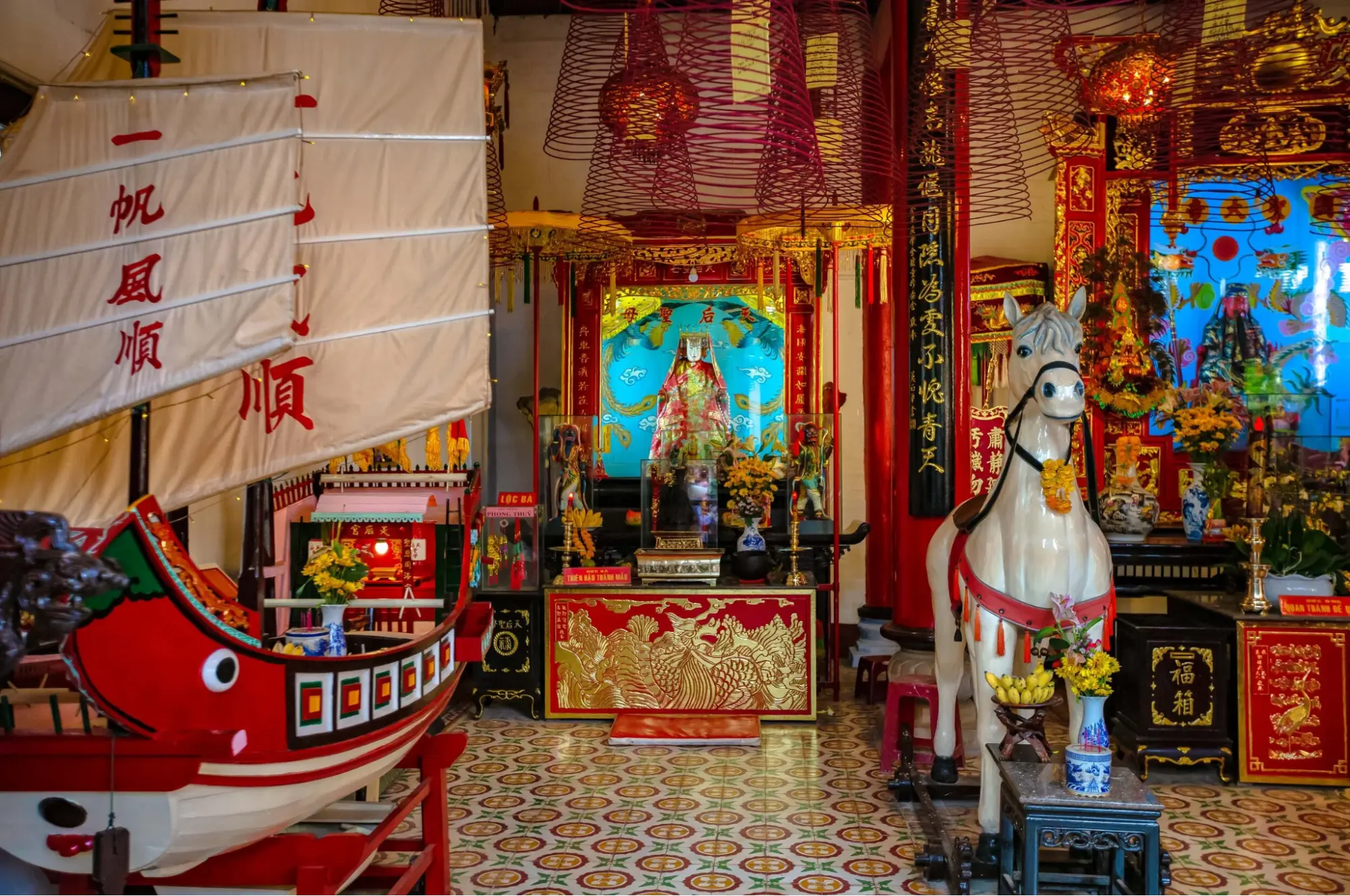
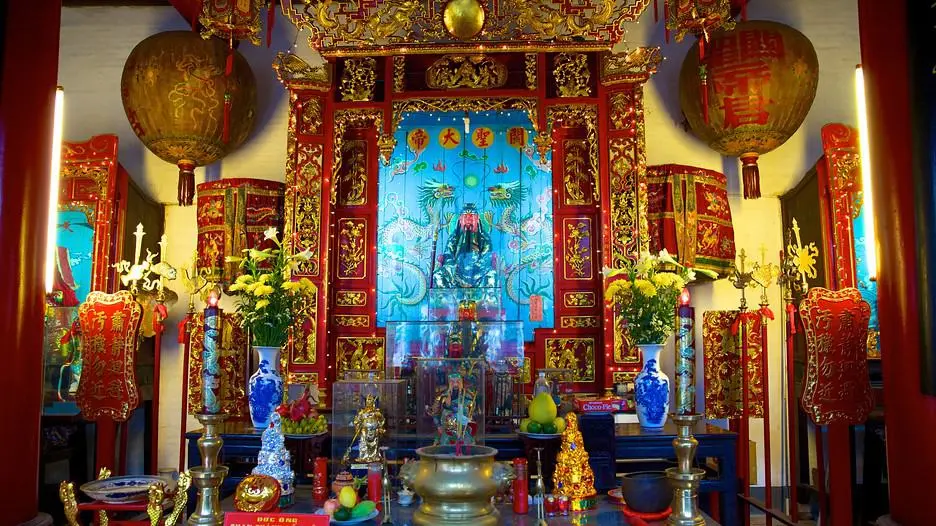
Step deeper into the dimly lit main sanctuary of the Hoi An Cantonese Assembly Hall to witness the magnificent, ornate altars. The central shrine is dedicated to Quan Cong, flanked by statues of his loyal companions and horses. The atmosphere here is deeply spiritual, often heavy with the scent of burning sandalwood and large incense coils hanging from the ceiling, creating an ethereal and contemplative environment that transports you back in time.
Walk Through the Courtyard
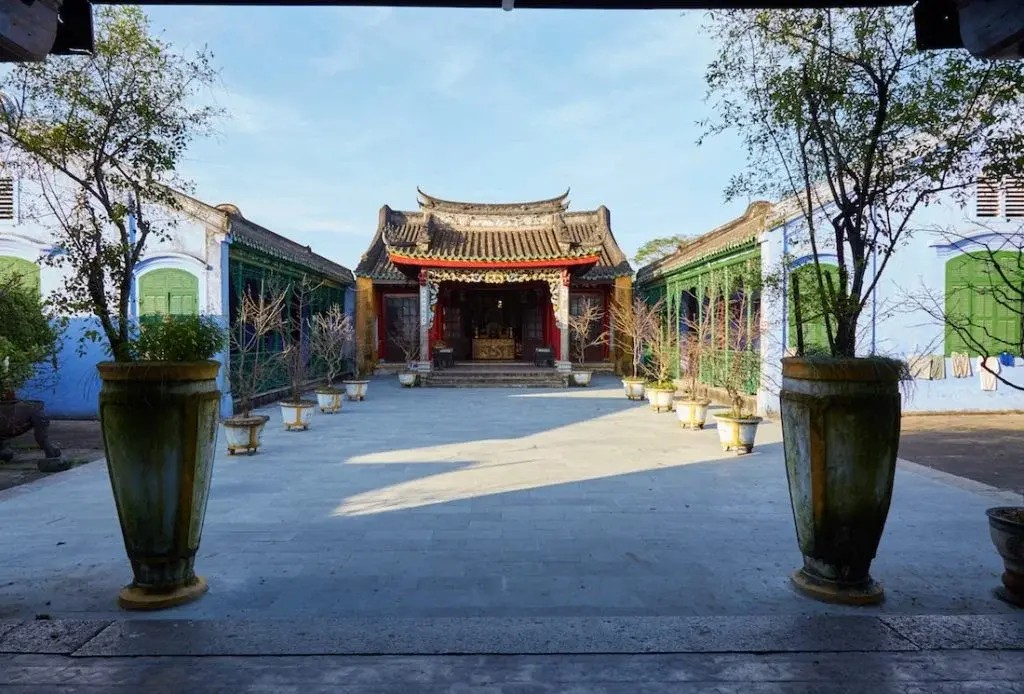
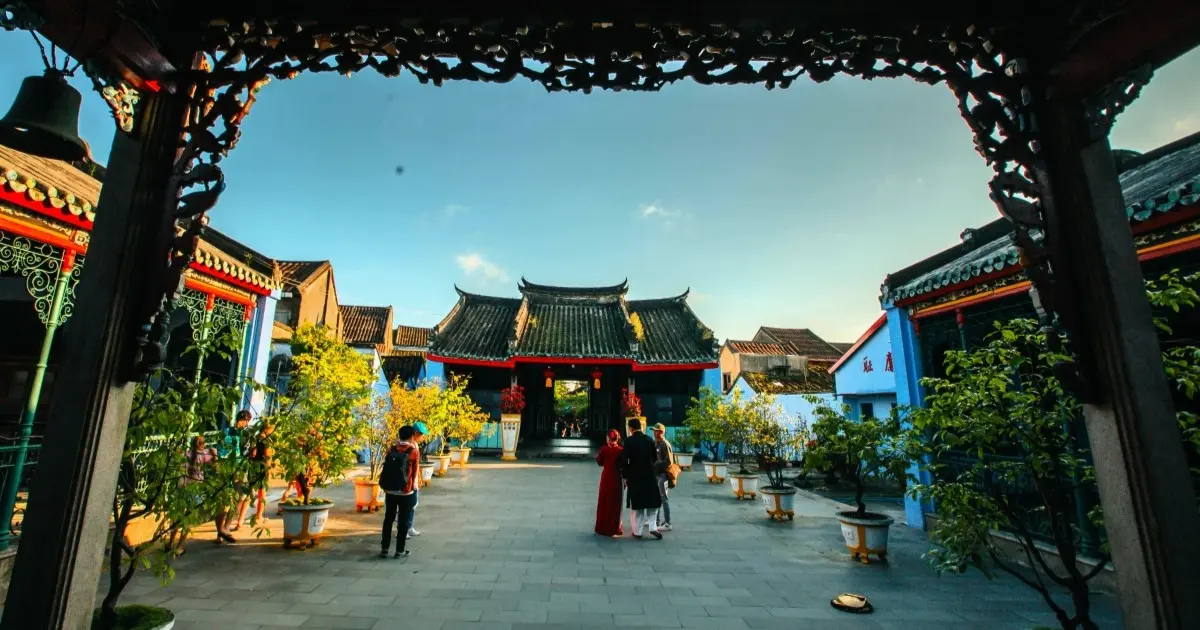
The interior courtyard of the Cantonese Assembly Hall acts as a tranquil, sound-dampening buffer between the bustling street outside and the sacred main hall. It is beautifully landscaped with ornamental plants, ancient bonsai trees, and traditional stone seating areas. It is the perfect spot to pause, catch your breath, and appreciate the meticulous architectural details and the peaceful ambiance surrounding you.
Take Stunning Photos
With its vibrant crimson walls, golden Chinese calligraphy, cascading red paper lanterns, and intricate tile work, the Hoi An Cantonese Assembly Hall is an absolute dream for photographers. The contrast between the weathered ancient wooden textures and the bright, reflective ceramic details provides an incredible, culturally rich backdrop for your travel photography.
Learn About Chinese Culture in Hoi An
Take the time to examine the numerous historical artifacts scattered throughout the halls. These include ancient watercolor paintings, massive bronze censers, and carved stone steles that document the history and contributions of the Cantonese community. It offers a profound, educational look into how Chinese traditions were proudly maintained and adapted over centuries in Central Vietnam.

Best Time to Visit Hoi An Cantonese Assembly Hall
Visiting at the right time makes your trip much more enjoyable. Try to explore the Cantonese Assembly Hall in Hoi An early in the morning, right after it opens at 8:00 AM or later in the afternoon, around 5:00 PM. The sunlight is softer during these hours, giving you great natural lighting for photos and cooler weather for walking around the ancient town.
If you are looking at the best months to go, aim for February to July. This is the dry season in Central Vietnam. Traveling during these months means you get clear blue skies and avoid the heavy rain that usually hits the region later in the year.
Where to stay near the Cantonese Assembly Hall
Staying in the vicinity of the Cantonese Assembly Hall means you are positioning yourself right in the cultural heartbeat of the city. Whether you are looking for a lavish riverside escape or a cozy historic inn, the surrounding Ancient Town and Hoai River banks have plenty of excellent options:
Luxury & 5-Star Riverside Resorts: For a world-class experience, properties like Anantara Hoi An Resort or Hotel Royal Hoi An Danang, The Legacy Riverfront Resort & Spa offer elegant rooms, pristine pools, and beautiful river views. These are perfect for travelers wanting luxury and serenity just a short, scenic walk from the assembly hall.
- Anantara Hoi An Resort: 1 Pham Hong Thai Street. Estimated Price: 5,500,000 – 7,500,000 VND / night.
- Hotel Royal Hoi An Danang, The Legacy Riverfront Resort & Spa: 39 Dao Duy Tu Street. Estimated Price: 2,500,000 – 4,000,000 VND / night.
Boutique Hotels & Spas: If you want an upscale atmosphere with local charm, boutique options like Laluna Hoi An Riverside Hotel & Spa and Hoi An Historic Hotel offer a fantastic balance of comfort, wellness facilities, and immediate access to the vibrant lantern-lit streets.
- Laluna Hoi An Riverside Hotel & Spa: 12 Nguyen Du Street. Estimated Price: 1,000,000 – 1,800,000 VND / night.
- Hoi An Historic Hotel: 10 Tran Hung Dao Street. Estimated Price: 1,500,000 – 2,500,000 VND / night.
Heritage & Old Town Inns: For those seeking an authentic, immersive vibe right in the action, staying at local favorites like Vinh Hung Old Town Hotel, Vinh Hung Library Hotel, or the nearby Vinh Hung Riverside Resort & Spa provides a cozy, traditional atmosphere. Choosing accommodation within the Ancient Town allows you to step out of your door directly into the magical, historical neighborhood every evening.
- Vinh Hung Old Town Hotel: 109 Ngo Quyen Street. Estimated Price: 800,000 – 1,200,000 VND / night.
- Vinh Hung Library Hotel: 96 Ba Trieu Street. Estimated Price: 800,000 – 1,200,000 VND / night.
- Vinh Hung Riverside Resort & Spa: 111 Ngo Quyen Street. Estimated Price: 1,500,000 – 2,500,000 VND / night.
Nearby Attractions to Cantonese Assembly Hall
Because of its central location, once you have thoroughly explored the Cantonese Assembly Hall, several other must-see cultural attractions are literally just a stone’s throw away.
The Japanese Covered Bridge (Chua Cau)
Located just a few minutes’ walk further down Tran Phu Street, the Pagoda Bridge serves as the historical symbol of Hoi An. This iconic 17th-century architectural marvel is beautifully illuminated at night, making it a perfect follow-up to your assembly hall visit.
- Address: Nguyen Thi Minh Khai Street, Hoi An Ancient Town.
- Opening Hours: 9:00 AM – 10:00 PM daily.
- Ticket Price: Access to the bridge and its inner temple is included in the general Hoi An Ancient Town entrance ticket (120,000 VND for international visitors / 80,000 VND for domestic visitors).
Fujian Assembly Hall (Phuc Kien)
Another magnificent Chinese congregation hall located on the same street is the Fujian Assembly Hall. It is slightly larger, highly ornate, and offers a great opportunity to compare the architectural styles of different Chinese provinces after seeing the Cantonese Assembly Hall in Hoi An.
- Address: 46 Tran Phu Street, Hoi An Ancient Town.
- Opening Hours: 7:00 AM – 6:00 PM daily.
- Ticket Price: Access is included in the general Hoi An Ancient Town entrance ticket (120,000 VND for international visitors / 80,000 VND for domestic visitors).
Here is a quick comparison to help you spot the differences:
| Architectural Feature | Cantonese Assembly Hall (Guangdong) | Fujian Assembly Hall (Phuc Kien) |
| Primary Deity | Guan Gong (Symbolizing loyalty and martial arts) | Thien Hau (Goddess of the Sea) |
| Roof Design | Sturdy, structured, with more subtle curves | Dramatic, sweeping “swallow-tail” curved ridges |
| Ornamentation | Heavy use of stone pillars and robust wood carvings | Flamboyant porcelain mosaics and elaborate dragons |
| Color Palette | Deep reds, dark woods, and natural stone hues | Vibrant pinks, bright greens, and striking yellows |
| Overall Vibe | Grounded, martial, and intensely atmospheric | Grand, highly ornate, and deeply maritime |
Hoi An Night Market
Located just across the An Hoi Bridge, the bustling Hoi An night market is the perfect place to explore after sunset. It is famous for its glowing lantern stalls, delicious local street food, and handcrafted souvenirs.
- Address: Nguyen Hoang Street, An Hoi Islet, Hoi An.
- Opening Hours: 5:00 PM – 10:00 PM daily.
- Ticket Price: Free entry (you only pay for the food, shopping, or services you choose to experience).


Tips for Visiting Hoi An Cantonese Assembly Hall
To ensure your visit is respectful, comfortable, and fulfilling, keep these practical tips in mind:
- Dress Modestly: Because this hall functions as a place of active spiritual worship and respect for ancestors, it is highly recommended to wear clothing that covers your shoulders and knees.
- Be Mindful of Noise: Keep your voice down, especially while exploring the main sanctuary and altar areas, to maintain the solemn, respectful atmosphere for locals who may be there to pray.
- Incense Offerings: You can participate in local traditions by purchasing large spiral incense coils to hang from the ceiling. Many visitors attach a small piece of red paper written with their prayers for health, wealth, or safe travels to the incense.
- Protect Against the Heat: The central courtyard is open to the elements. If visiting during the middle of the day, bring a hat, stay hydrated, and apply sunscreen.
Redefining Exploration: The Art of Authentic Heritage with Hoi An Unique Travel
In an era where travel has become transactional, we bring back the element of discovery. At Hoi An Unique Travel, we translate the complex history of the ancient town into curated narratives. With over ten years of mastery in destination management and a legacy defined by multiple industry awards, we move beyond the superficial—we provide an immersive intellectual and cultural journey.
Why Leading Travelers Choose Us:
-
Strategic Depth: We view every site not just as a location, but as a case study in resilience and trade. Through our specialized Hoi An tours, we dissect the layers of history, connecting you with the authentic spirit of the merchant class and local artisans that remains hidden to the casual observer.
-
Precision and Quality: Excellence is our default. Our track record of accolades reflects an unwavering commitment to precision and operational perfection, ensuring that every detail of your itinerary is executed with the rigor of a professional firm.
-
Sustainable Impact: We operate with a “Long-term Value” mindset. Our approach ensures that every experience contributes to the sustainable preservation of the town, directly supporting the local ecosystems and heritage guardians.
-
Customized Frameworks: We recognize that no two travelers are alike. Whether you require a high-touch, private historical analysis or a bespoke cultural immersion, our frameworks are agile enough to be tailored specifically to your intellectual curiosity and personal goals.
Heritage is more than a destination; it is an intelligence to be decoded. If you are seeking a journey that values substance over spectacle, it is time to experience the difference.
Explore our range of professional Hoi An tours here and elevate your perspective.
FAQs About Hoi An Cantonese Assembly Hall
Can I visit Cantonese Assembly Hall without a guide?
Yes, you can easily explore the site independently. There are several informational plaques available in multiple languages, and the layout of the hall is very straightforward to navigate. However, hiring a local, knowledgeable guide can significantly enrich your experience by providing deeper historical context, sharing local legends, and interpreting the complex symbolic meanings behind the carvings and architecture.
How long should I spend visiting the assembly hall?
A typical visit lasts between 30 to 45 minutes. This timeframe gives you ample opportunity to admire the incredible mosaic dragon statue, explore the intricate altars, take memorable photographs, and soak in the peaceful courtyard ambiance without feeling rushed.
Is Cantonese Assembly Hall easy to reach from the center of Hoi An?
Absolutely. It is located directly on Tran Phu Street, which is the most famous and central thoroughfare in the Ancient Town. Because it is surrounded by other major historical sites, boutique shops, and traditional cafes, you will inevitably pass right by its striking entrance while exploring the pedestrian zone.
Recent Posts






Our Associations


Our Awards








