Popular Tours






Stepping away from the bustling silk shops and lantern-lit riverfront reveals a quieter, more authentic side of the Ancient Town. Tucked beneath the shade of ancient banyan trees, the Cam Pho communal house offers a rare glimpse into traditional Vietnamese village life before the era of international trade. At Hoi An Unique Travel, we believe that understanding a destination requires exploring its foundational roots. Unlike the ornate Chinese assembly halls, this centuries-old sanctuary remains a living center for local spirituality. Here is everything you need to experience this remarkable heritage site properly.
An Introduction to the Cam Pho Communal House Hoi An
Situated quietly in the western quarter of the Ancient Town, the Cam Pho communal house stands as a proud testament to indigenous Vietnamese culture. Local residents refer to this beautifully preserved site simply as Dinh Cam Pho. It functions as both a spiritual sanctuary and a traditional meeting place for village elders. Travelers seeking an escape from the busy central market will find a profound sense of peace within its shaded courtyards.
Before stepping inside the Cam Pho communal house Hoi An, keep these practical details in mind to help plan your visit:
- Address: 52 Nguyen Thi Minh Khai Street, Hoi An.
- Opening Hours: 8:00 AM to 5:30 PM daily.
- Entrance Fee: Requires one tear-off stub from the comprehensive Hoi An Old Town ticket (120,000 VND for international visitors).
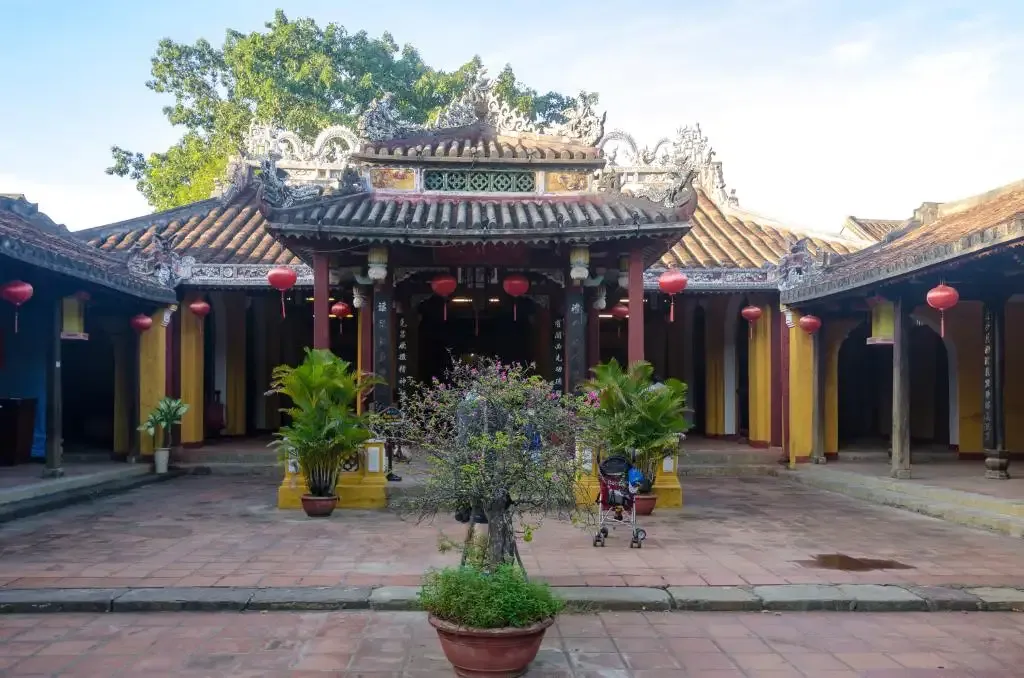
Arriving early in the morning guarantees a serene atmosphere, allowing you to appreciate the intricate wooden carvings and historical details without the distraction of large tour groups.
History of Cam Pho Communal House Hoi An
The history of Cam Pho Communal House dates back to the late 15th century, when early Vietnamese settlers established Cam Pho Village. Like many traditional Vietnamese communal houses, it served as both a place of worship for the village’s tutelary deity and a gathering place for important community activities. As Hoi An grew into a thriving trading port, the communal house evolved alongside the village.
In 1817, during the Nguyen Dynasty, local residents rebuilt the main hall using durable timber and traditional yin-yang roof tiles. Although the building has undergone several restorations due to storms and age, its original layout and architectural character have remained largely intact.
>>> View more: Nguyen Tuong Family Chapel Hoi An: A Cultural Heritage House
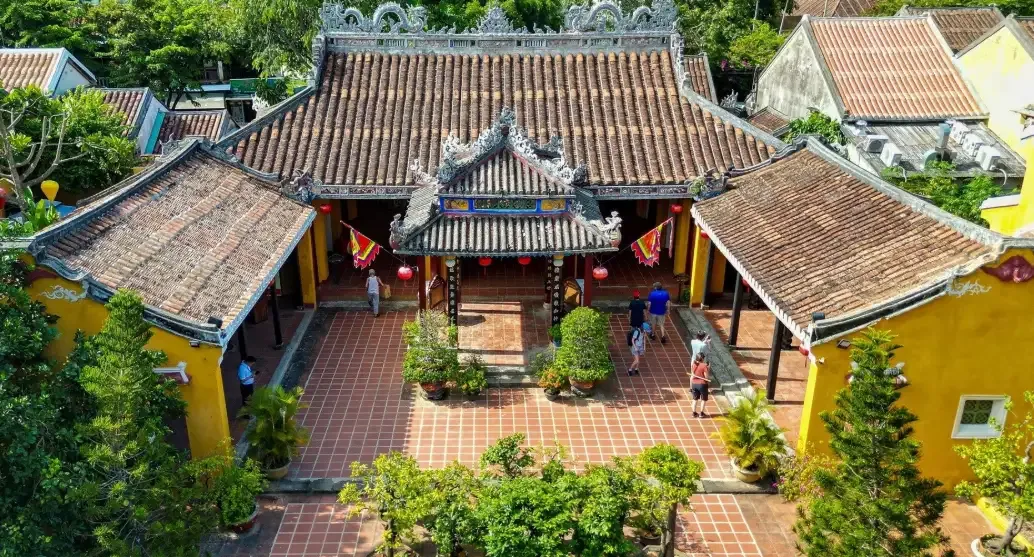
Today, Cam Pho Communal House remains an active place of worship for the local community. Alongside the village founders, the communal house also honors Ca Ong (the Whale God), reflecting the long-standing coastal traditions of Central Vietnam. On important lunar dates and traditional festivals, local residents continue to burn incense and make offerings, preserving customs that have been passed down for generations.
View more: Hoi An Historical Sites: Top Historic Places You Must Visit
How to Get to Cam Pho Communal House Hoi An
Locating this heritage site requires a short, pleasant journey from the absolute center of the Ancient Town. If you start at the famous Japanese Covered Bridge, simply head west along Nguyen Thi Minh Khai Street for about three minutes. Keep an eye out for a massive ancient banyan tree casting a shadow over the sidewalk. Right beneath its sprawling branches, the distinct gateway of the Cam Pho communal house will appear on your right.
Depending on your starting point, several transportation options make reaching this destination effortless:
- Walking (Free): The most practical option if you are already exploring the pedestrian-friendly streets.
- Bicycle Rental (30,000 – 50,000 VND per day): Many local boutique hotels offer free bikes; otherwise, daily rentals are cheap and perfect for navigating the quiet western quarter.
- Traditional Cyclo (150,000 – 200,000 VND per hour): A highly scenic, slow-paced ride through the historic district that can drop you right at the front gate.
- Electric Buggy (from 10,000 VND per kilometer): Ideal for families traveling from nearby beach resorts, dropping you off at the nearest pedestrian zone boundary.
>>> View more: Eco-Luxury Hoi An Cycling Tour: Cam Thanh & Organic Farm
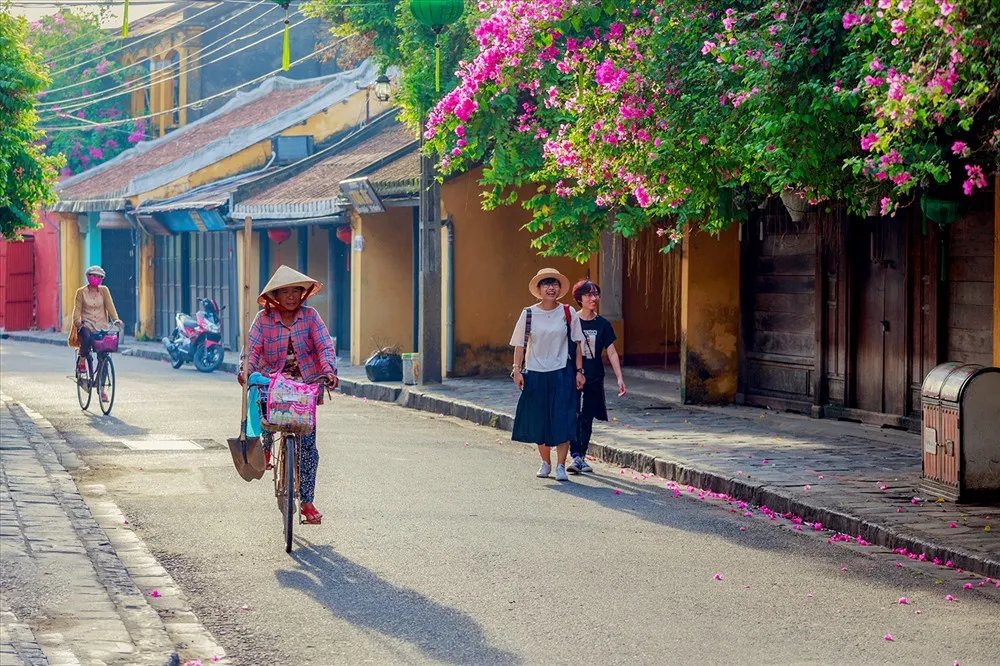
Cam Pho Communal House Architecture and Layout
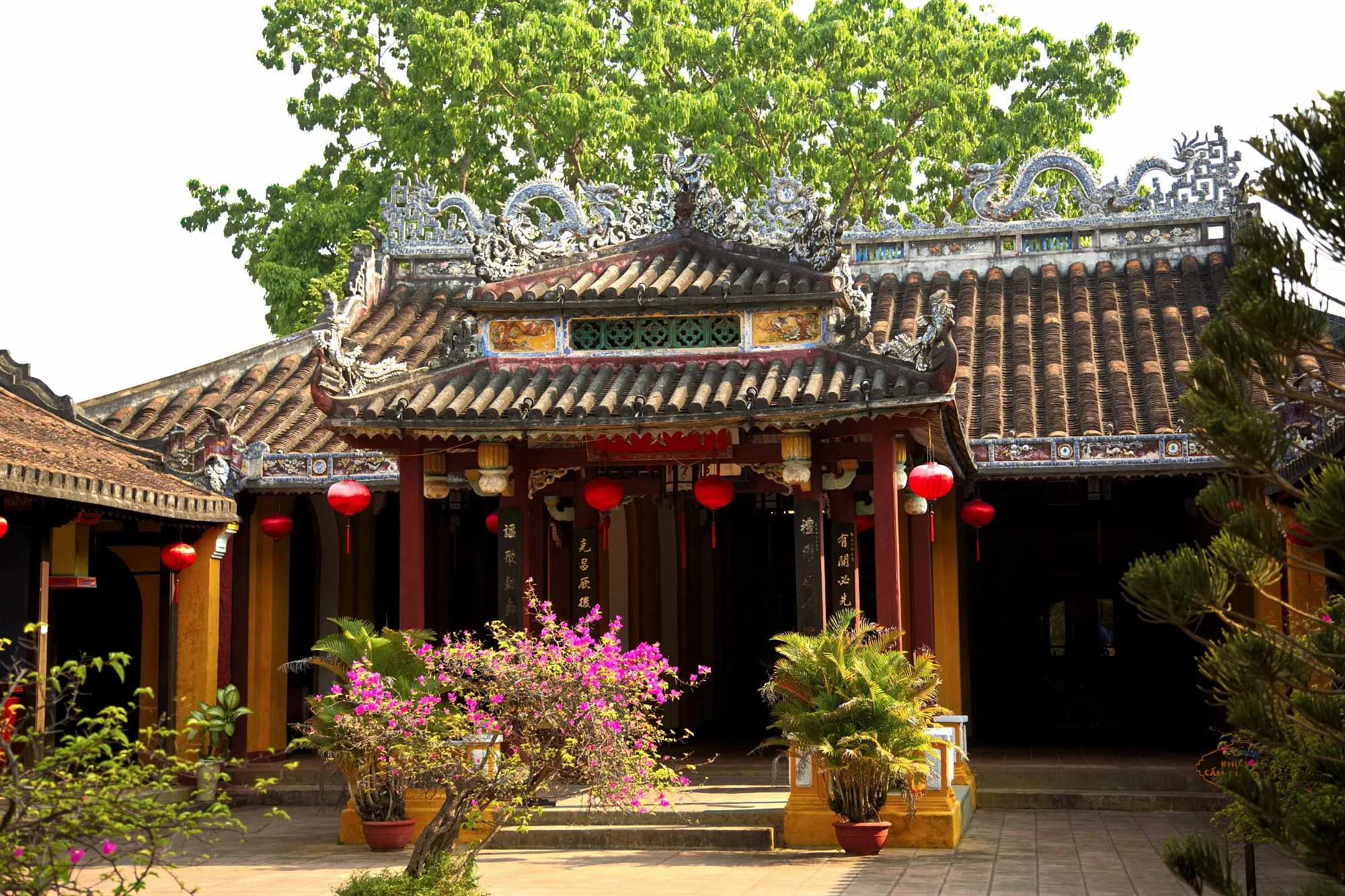
Architectural enthusiasts will immediately notice the distinct difference between this site and the vivid, heavily decorated Chinese structures nearby. The Cam Pho communal house embodies pure traditional Vietnamese design principles. The entire complex is arranged in the shape of the Chinese character “Quoc” (Nation), symbolizing unity and completeness. The layout prioritizes natural ventilation, balance, and harmony with the surrounding environment.
Traditional Vietnamese Three-Gate Entrance
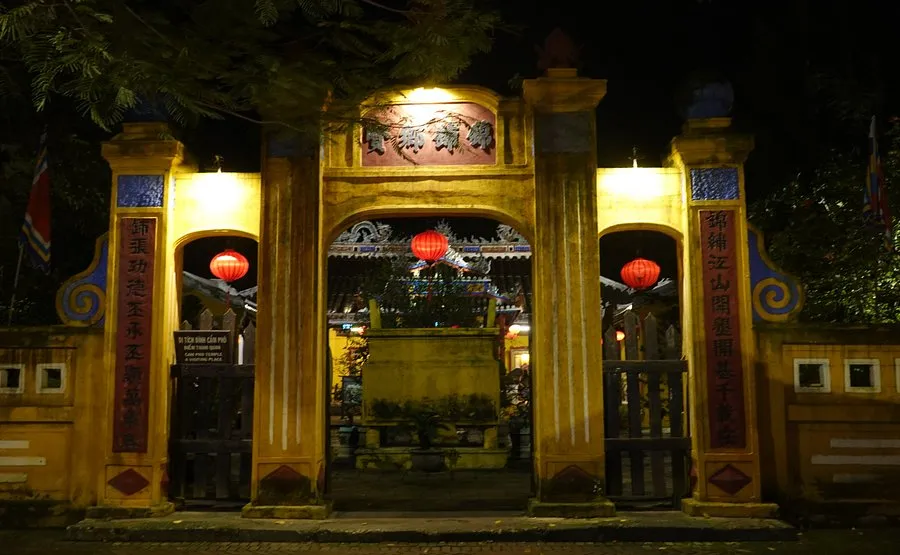
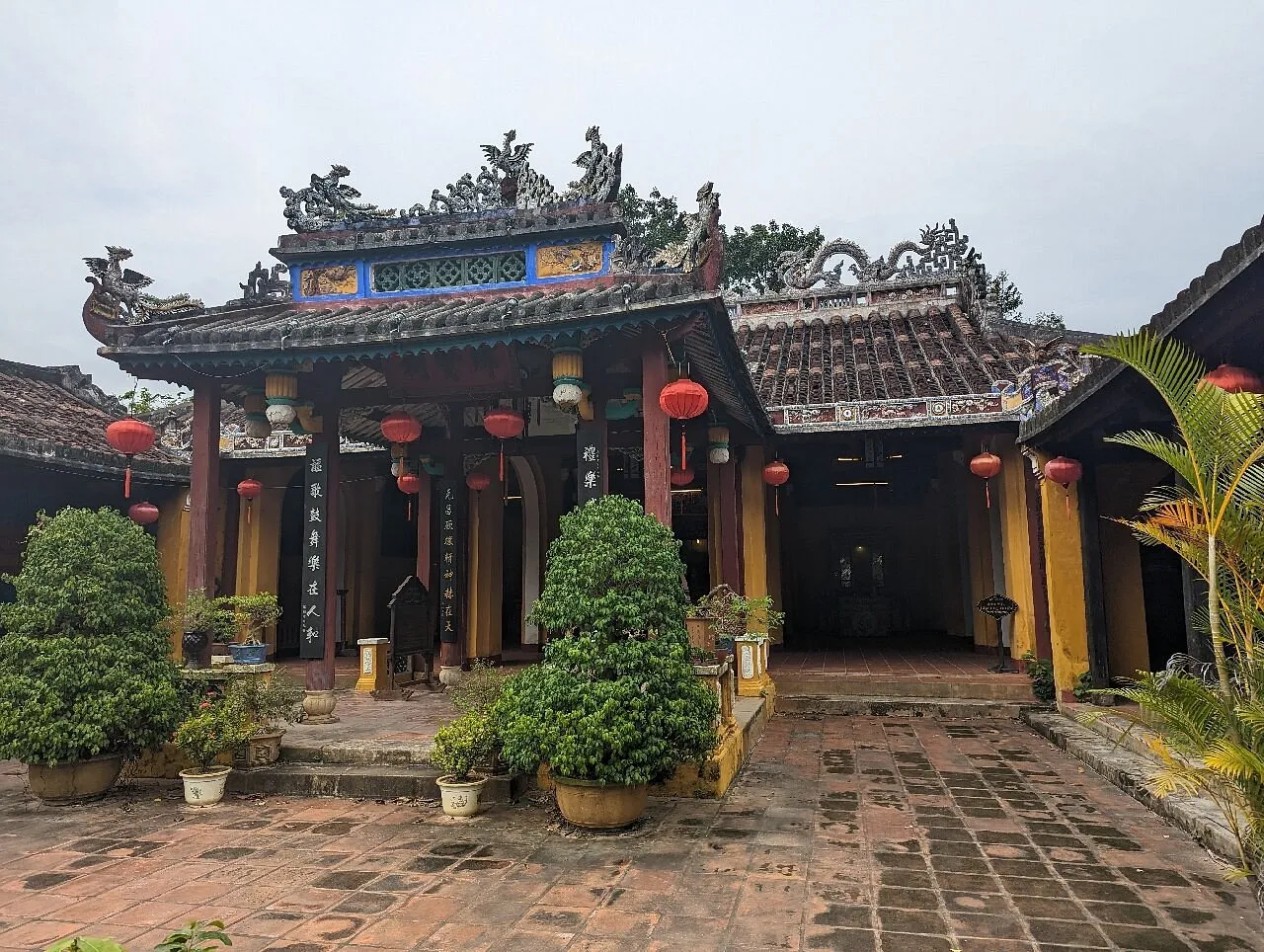
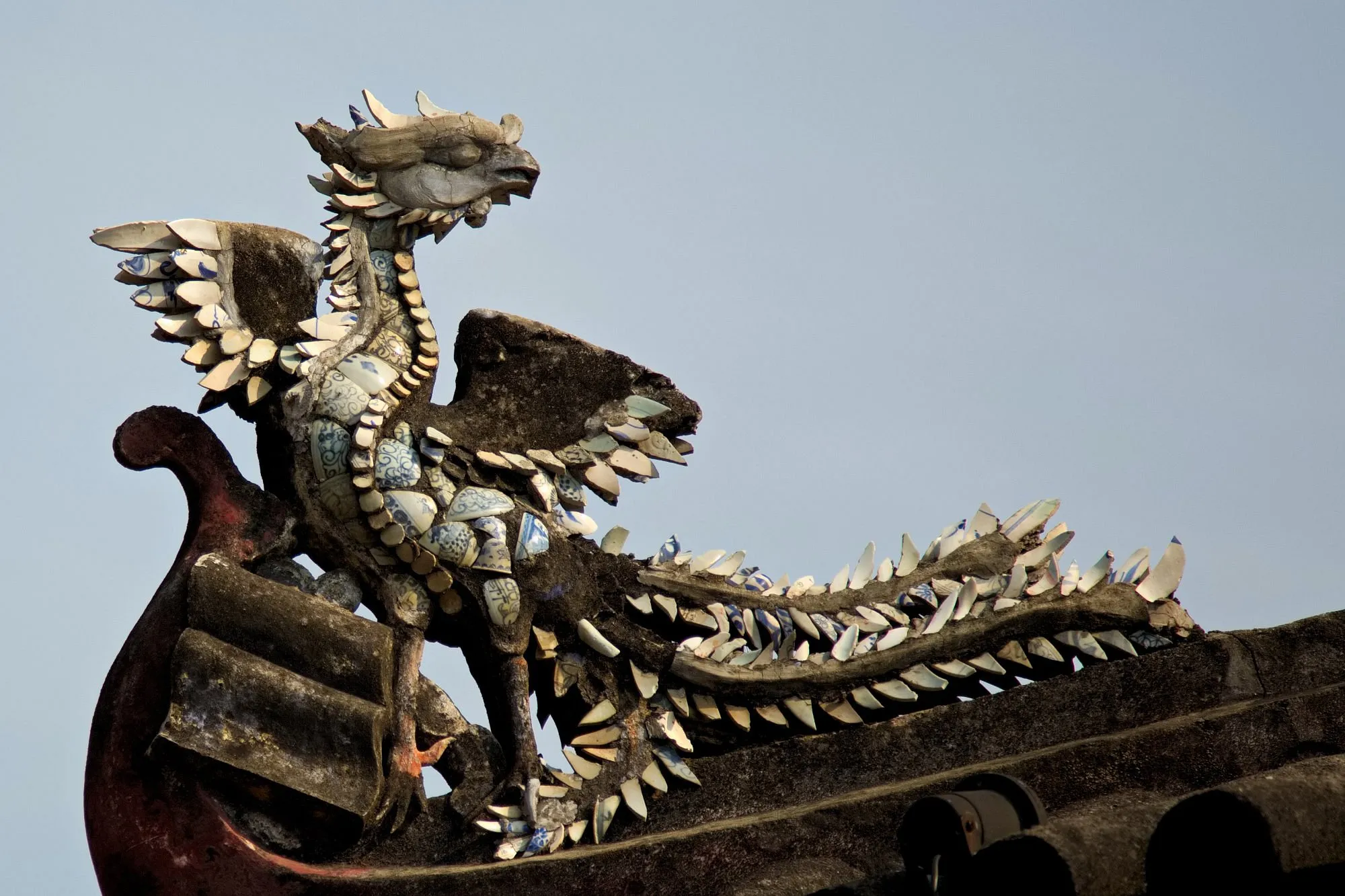
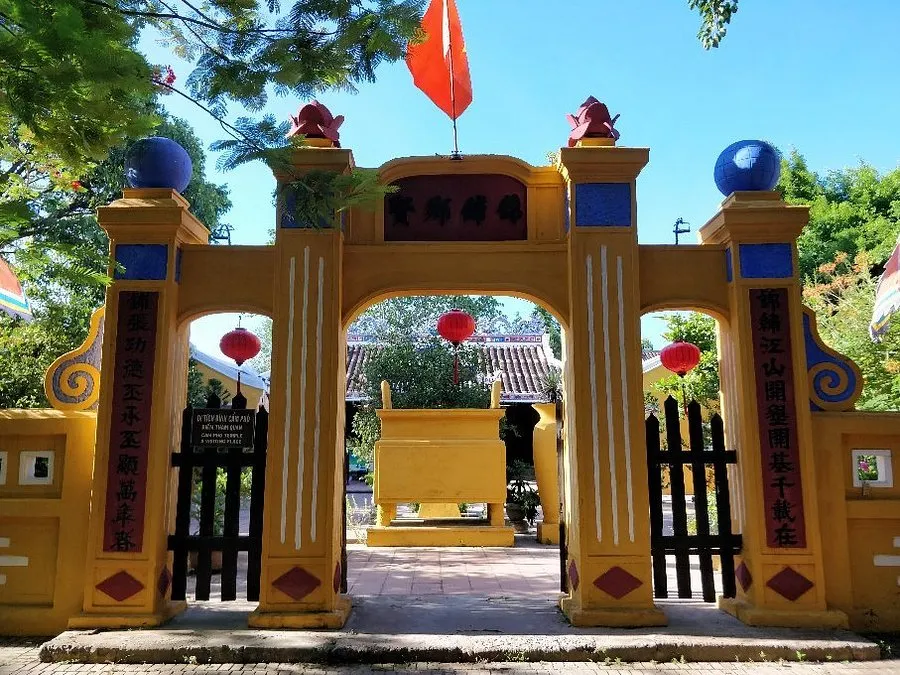
Your architectural journey at the Cam Pho communal house begins at the Tam Quan, the traditional three-door gate. In ancient Vietnamese philosophy, the central door was reserved strictly for deities, royalty, or high-ranking mandarins, while commoners and villagers used the two side entrances. The robust brick pillars supporting the gate are adorned with intricate porcelain mosaics featuring mythological creatures. Meanwhile, the protective shade of the adjacent banyan tree creates a natural, cooling transition from the secular street to the sacred space within.
View more: Minh Huong Communal House Hoi An: A Complete Guide
Main Worship Hall (Phuong Dinh)
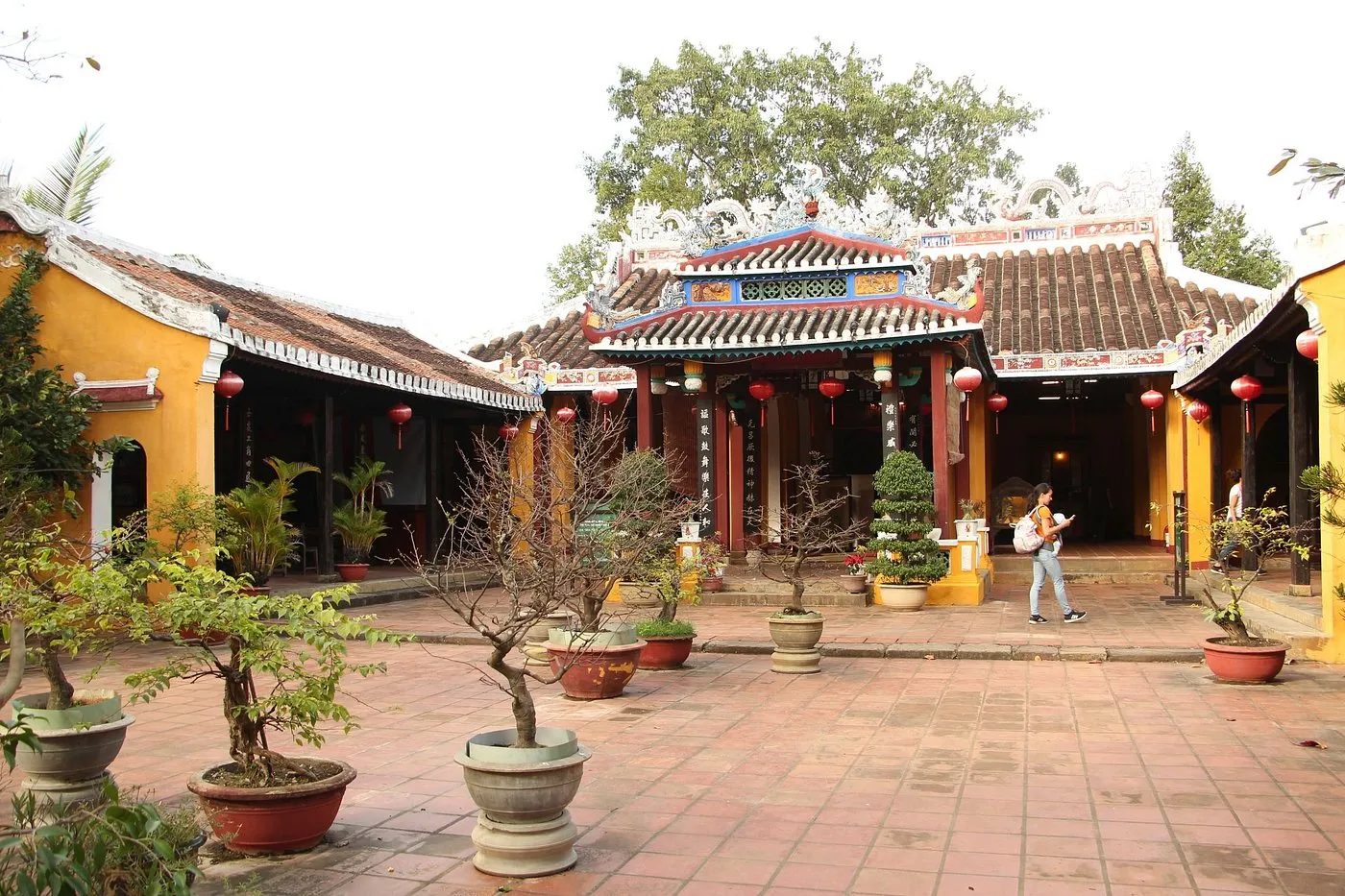
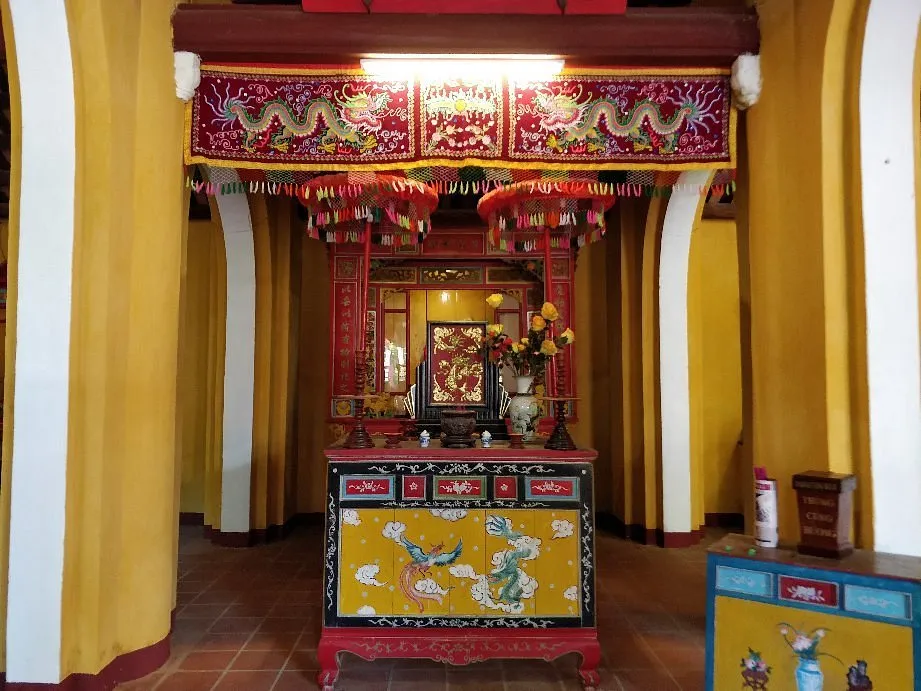
Walking deeper into the complex brings you to the Phuong Dinh, the core spiritual center of the Cam Pho communal house. This massive structure is supported by enormous ironwood columns resting on carved stone lotus bases. The roof utilizes classic yin-yang ceramic tiles, designed to keep the interior cool during the harsh tropical summers. Look closely at the wooden rafters connecting the pillars; ancient craftsmen assembled them using precise mortise and tenon joints, entirely without metal nails.
View more: Visit Tran family Chapel Hoi An: A Cultural Ancestral House Guide
East and West Auxiliary Houses
Flanking the main sanctuary are two identical elongated buildings known as the East and West Houses (Dong Duong and Tay Duong). Historically, these sections served distinct practical purposes during village festivals. Elders gathered here to prepare elaborate offerings, discuss community affairs, and dress in traditional ceremonial attire. Today, these airy spaces often display antique artifacts, old photographs of Hoi An, and cultural relics preserved by the local ward.
View more: Duc An Old House: A Glimpse into History and Heritage
Courtyard and Ritual Space
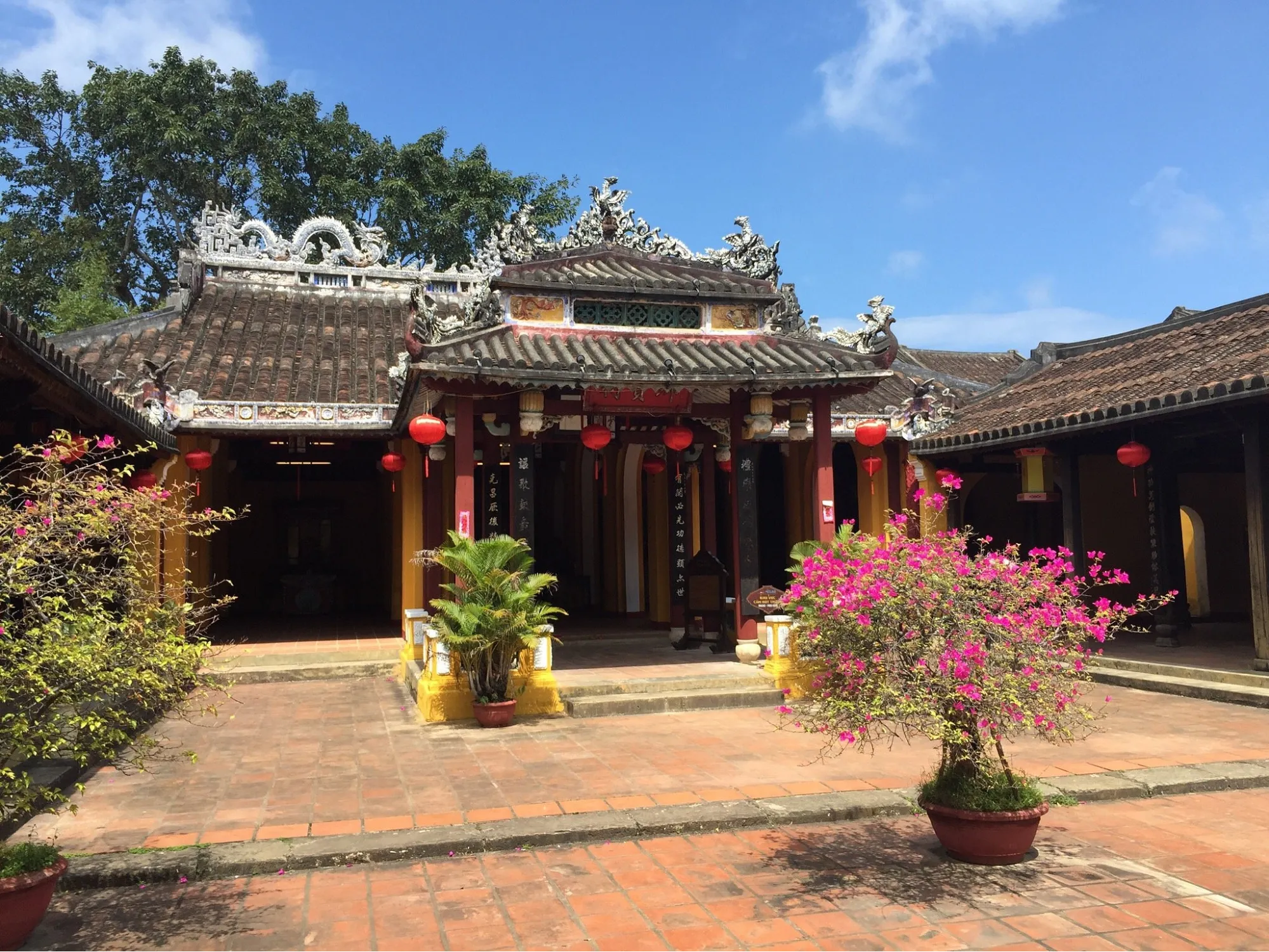
Connecting all these structures at the Cam Pho communal house Hoi An is a meticulously maintained open courtyard. Traditional Vietnamese architecture places immense value on the integration of nature, and this central area acts as the lungs of the entire complex. Carefully pruned bonsai trees, blooming frangipani, and ancient stone planters dot the stone-paved floor. During significant lunar calendar events, this quiet space transforms into a vibrant stage for traditional music performances and communal feasts.
View more: Quan Am Pagoda Hoi An: History, Architecture & Visitor Guide


Why Cam Pho Communal House Is Unique
Unlike Hoi An’s Chinese assembly halls, Cam Pho Communal House represents the indigenous Vietnamese roots of the Ancient Town. For centuries, it has served as the village’s religious, administrative, and cultural center, where residents gathered to worship village founders, discuss community affairs, and celebrate traditional festivals.
Today, the communal house remains an active spiritual site rather than simply a preserved monument. Local families continue to visit on important lunar dates, making it one of the few heritage sites in Hoi An where visitors can still observe authentic community traditions.
What to Expect When Visiting Cam Pho Communal House
Unlike the crowded tailoring streets or the chaotic night market, a visit to the Cam Pho communal house offers a completely different rhythm. You are stepping into an active place of worship rather than a commercialized tourist attraction. Understanding the intended experience helps you appreciate the subtle beauty of this location.
Atmosphere and Experience
Stepping into Cam Pho Communal House immediately feels different from the lively streets of Hoi An Ancient Town. The shaded courtyard, mature banyan trees, and traditional wooden buildings create a calm setting where visitors can slow down and appreciate the site’s cultural significance.
During the early morning, only a handful of visitors typically explore the communal house, making it noticeably quieter than nearby attractions such as the Japanese Covered Bridge. This peaceful atmosphere makes it an excellent stop for travelers who enjoy slow travel, architecture photography, or simply taking a short break from the busier streets of Hoi An.
Because the communal house remains an active place of worship, you may also see local residents lighting incense or making offerings, particularly on the 1st and 15th days of the lunar month. These everyday religious activities offer visitors an authentic glimpse into the spiritual traditions that continue to shape the local community.
How Long to Spend Here
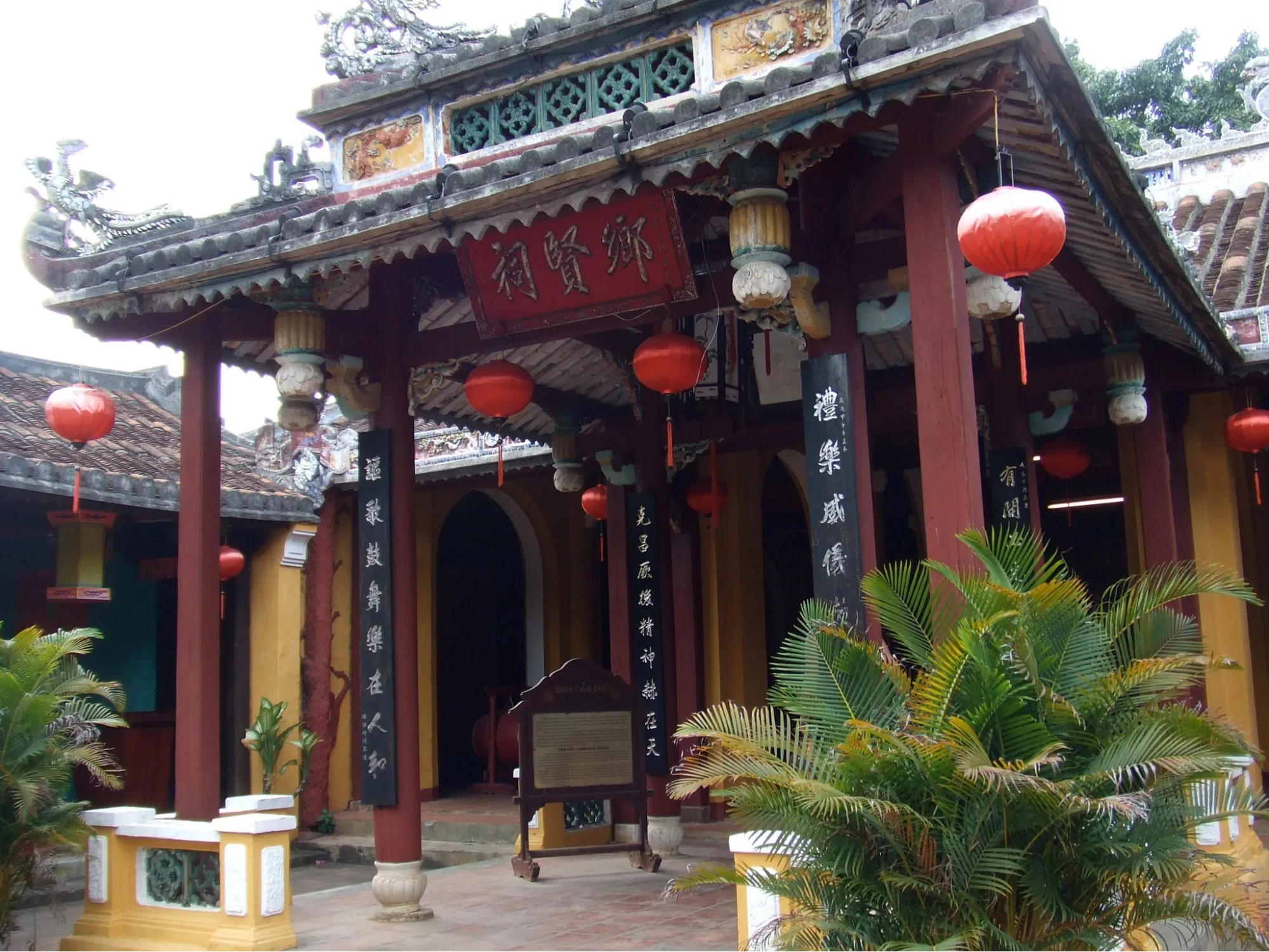
A thorough visit to the Cam Pho communal house generally takes between twenty and thirty minutes. This allows enough time to examine the exterior mosaics, walk through the auxiliary houses, and observe the main altar. Travelers with an interest in architecture, sketching, or mindful travel often find themselves lingering much longer. Sitting on one of the wooden benches in the courtyard provides an excellent opportunity to write in a travel journal or simply rest your feet.
Visitor Etiquette
Because this remains an active spiritual site, visitors must adhere to basic cultural etiquette. Dress modestly by ensuring your shoulders and knees are covered before entering the main hall. Remove your hats and sunglasses when stepping directly in front of the main altars. Keep your voice low, avoid pointing your feet directly at the shrines, and never touch the religious artifacts. Displaying cultural respect ensures that local caretakers continue to welcome international guests.
Photography Notes
The communal house offers splendid opportunities for travel photography, particularly for those who appreciate shadows, textures, and architectural geometry. The best lighting occurs in the early morning when soft rays cut through the incense smoke. Flash photography inside the main hall is generally frowned upon, so rely on a higher ISO setting. Always ask for a polite nod of permission before taking close-up portraits of the local caretakers.
Best Way to Include Cam Pho Communal House in Your Hoi An Itinerary
Integrating the Cam Pho communal house into your daily plan requires very little effort due to its central location. We recommend making it part of a dedicated morning walking route to beat the midday heat and avoid the heavy crowds. Here is a suggested, unhurried itinerary to help you experience the western quarter of the Ancient Town:
- 7:00 AM – 8:00 AM: Breakfast and Coffee. Start your day with a warm bowl of cao lau or a crispy banh mi, paired with a traditional Vietnamese iced coffee near the Hoai River.
- 8:00 AM – 8:30 AM: The Iconic Bridge. Head to the Japanese Covered Bridge right as the town fully wakes up. Exploring early guarantees fewer tourists in your frame.
- 8:30 AM – 9:30 AM: Cam Pho Communal House. Just a short walk west from the bridge, step into this peaceful sanctuary. Since the gates open at 8:00 AM, arriving during this window allows you to observe the caretakers performing their morning incense rituals in complete tranquility.
- 9:30 AM – 11:00 AM: Heritage Houses and Café Culture. Continue down Nguyen Thi Minh Khai Street. Explore the nearby Phung Hung Old House, then transition from a deep cultural experience to a relaxing mid-morning break at one of the charming local cafes.
This natural progression offers a perfectly balanced way to discover the different facets of Hoi An without ever feeling rushed.
Best Time to Visit Cam Pho Communal House
Timing your visit correctly can significantly enhance your overall experience. To see the Cam Pho communal house at its absolute best, consider these specific timing recommendations before planning your day:
- Best Hours of the Day: Aim for the early morning right after the gates open (8:00 AM to 9:30 AM). The morning light creates striking shadows across the ancient wooden pillars, and temperatures remain comfortable for walking. Late afternoon (around 4:00 PM) is another excellent window as the midday heat subsides.
- Ideal Months (Dry Season): February through August offers the most reliable weather. The clear skies and bright sunlight make this the perfect period for architectural photography and exploring the open courtyards.
- Typhoon and Wet Season Warnings: If you visit between September and January, the site takes on a completely different, almost melancholic beauty with rain hitting the old ceramic roof tiles. However, exercise extreme caution if traveling during October and November, which is peak typhoon season. Heavy storms can cause localized flooding in Hoi An, and the stone-paved courtyard becomes quite slippery when wet.
Local Insight: If you visit on the 1st or 15th day of the lunar month, you are more likely to encounter local residents making offerings and praying at the communal house. These occasions provide a rare opportunity to observe the site functioning as a living cultural and spiritual center rather than simply a historical monument.


Accommodation Near Cam Pho Communal House Hoi An
Choosing accommodation near this landmark places you in one of the most desirable sections of Hoi An. The western edge of the Ancient Town is notably quieter than the eastern side, offering peaceful nights while remaining steps away from major attractions. By basing yourself near the Cam Pho communal house, you position yourself perfectly to experience both the vibrant dining scene and the quiet cultural corners of the historic district. If you want to easily slip out for early morning walks before the town fully wakes up, consider these highly-rated properties:
Hotel Royal Hoi An – MGallery
This luxurious riverside property beautifully blends Japanese elegance with French Indochine design aesthetics, paying homage to Hoi An’s vibrant trading past. Boasting pampering spa services and stunning rooftop pool views over the ancient town, it serves as an exquisite sanctuary for relaxation.
- Perfect for: Travelers seeking high-end amenities and premium hospitality or couples looking for a romantic and luxurious escape
- Address: 39 Dao Duy Tu Street (approx. 7-minute walk).
- Estimated Price: $150 – $250 USD per night.
Lantana Boutique Hoi An Hotel
Situated right on the edge of the pedestrian zone, this charming boutique option offers an intimate atmosphere with elegant rooms overlooking the tranquil Hoai River. Consistently praised for its exceptional local hospitality, it serves as a highly convenient and welcoming base for exploring the historic quarter.
- Perfect for: Travelers seeking a cozy, personalized stay or couples wanting immediate access to the Old Town’s charm.
- Address: 09 Thoai Ngoc Hau Street (approx. 3-minute walk).
- Estimated Price: $70 – $110 USD per night.
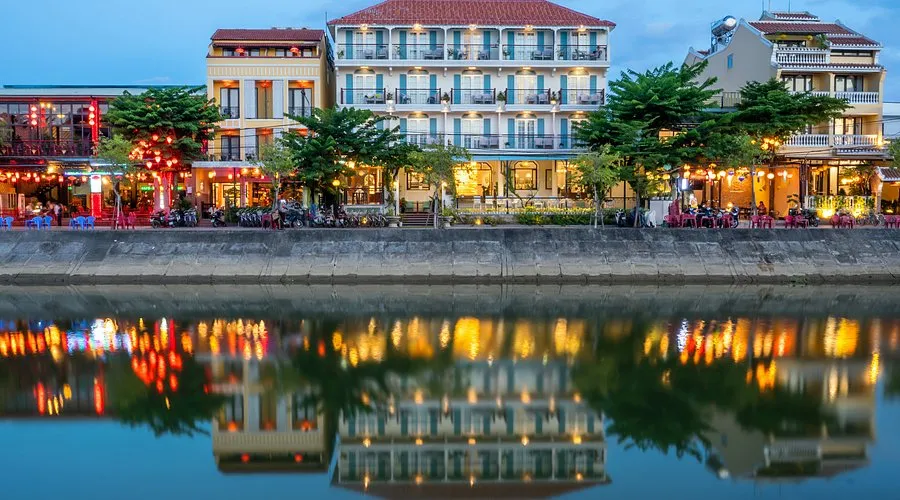
Vinh Hung Heritage Hotel
For a truly immersive cultural experience, this beautifully restored wooden merchant house allows you to stay right in the heart of the historic district. Featuring authentic antique furniture and traditional wooden architecture, it offers guests the rare opportunity to enjoy an exclusive, private museum stay.
- Perfect for: History enthusiasts seeking a deeply authentic cultural immersion or travelers wanting to step back in time.
- Address: 143 Tran Phu Street (approx. 5-minute walk).
- Estimated Price: $80 – $130 USD per night.
Best Attractions Near Cam Pho Communal House
The immediate vicinity surrounding the Cam Pho communal house is rich with complementary heritage sites. Grouping these attractions together creates a cohesive and logical exploration of the town’s western quarter. Here are the top nearby landmarks to add to your walking route:
The Japanese Covered Bridge
Located just a stone’s throw away, the Japanese Covered Bridge stands proudly as the ultimate symbol of Hoi An’s rich multicultural past. Dating back to the 16th century, this iconic landmark beautifully preserves the intricate craftsmanship and unique vision of its original builders. Visiting this magnificent structure back-to-back with other heritage sites provides a fascinating contrast between traditional Vietnamese and classic Japanese architectural styles. It remains a captivating must-see destination that perfectly captures the historical essence of the ancient town.
- Address: Western end of Tran Phu Street (approx. 2-minute walk).
- Opening Hours: 24/7 for the exterior; interior temple access is typically 8:00 AM to 5:00 PM.
- Entrance Fee: Requires one tear-off stub from the comprehensive Old Town ticket.
Phung Hung Old House
A short walk eastward brings you to the Phung Hung Old House, a magnificent two-story wooden structure that stands as a testament to the town’s prosperous trading era. This meticulously preserved residence beautifully showcases the affluent lifestyle of 19th-century merchants who once thrived in Hoi An. Under one harmonious roof, it perfectly blends an exquisite mix of Japanese, Chinese, and traditional Vietnamese design elements. Exploring this architectural gem offers visitors a captivating glimpse into the historical wealth and cultural fusion of the ancient town.
- Address: 04 Nguyen Thi Minh Khai Street (approx. 2-minute walk).
- Opening Hours: 8:00 AM to 5:30 PM daily.
- Entrance Fee: Requires one tear-off stub from the comprehensive Old Town ticket.
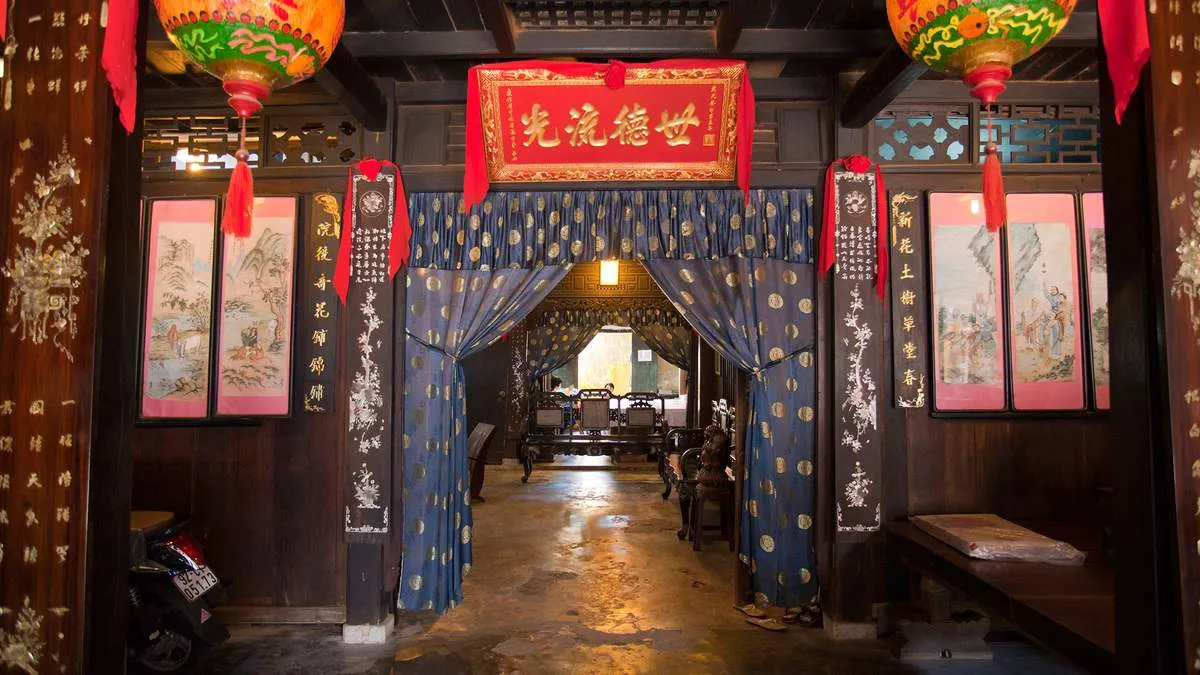
Song Hoai Square
If you continue your journey toward the river, you will discover Song Hoai Square, an expansive and beautifully paved open area right along the water’s edge. This vibrant public space truly comes alive at sunset, serving as the perfect spot for leisurely evening strolls and soaking in the cool riverside atmosphere. From here, visitors can easily board traditional wooden boats to gently cruise along the Hoai River. Above all, it offers an unparalleled vantage point for enjoying the magical lantern viewing experience, making it an unforgettable highlight of any trip to the ancient town.
- Address: 01 Cao Hong Lanh Street (right along the Hoai River).
- Opening Hours: Open 24/7 (busiest and most photogenic from 5:00 PM to 10:00 PM).
- Entrance Fee: Free to enter.
Travel Tips for Visiting Cam Pho Communal House
To make the most of your visit to the Cam Pho communal house Hoi An, a bit of preparation goes a long way. Keep these essential travel tips in mind before stepping through the ancient gates:
- Maximize Your Ticket: Always carry your comprehensive Old Town entrance ticket with you. The ticket checkers are usually positioned near the main gate. Since the pass provides access to five different heritage sites, plan your other four choices in advance to get the full value of your purchase.
- Hire a Local Guide: While the architecture is visually stunning, the site lacks extensive English informational plaques. A knowledgeable guide can translate the ancient Han-Nom scripts, explain the specific mythological creatures carved into the rafters, and share oral histories that you will not find in standard guidebooks.
- Prepare for the Climate: Hydration and sun protection are crucial if you are exploring during the midday heat. While the interior halls are heavily shaded and naturally cool, the walking routes leading to the site offer very little cover.
- Carry Small Bills (VND): Bring a small amount of local currency. While certainly not required, leaving a modest donation in the designated boxes helps the local ward actively maintain this invaluable piece of Vietnamese heritage.
Is Cam Pho Communal House Worth Visiting?
The short answer is a resounding yes. For travelers who value depth, cultural authenticity, and quiet observation, the Cam Pho communal house is absolutely worth a dedicated spot on your itinerary. It provides a necessary, peaceful counterbalance to the more commercialized aspects of the Ancient Town. If you travel to understand the true soul of a destination rather than simply checking off famous landmarks, spending time here will be deeply rewarding.
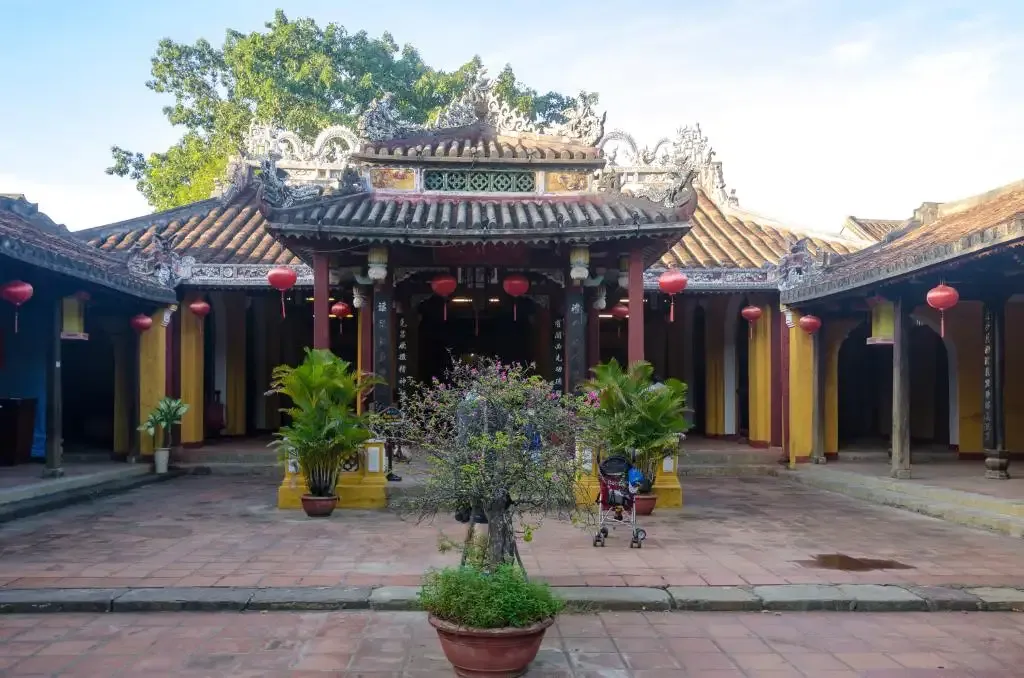
This is a place where the layered history of Vietnam feels tangible and alive. You are not just looking at old wood and stone; you are standing in an active community space where generations of villagers have sought comfort, celebrated harvests, and built lifelong bonds. In a rapidly modernizing world, experiencing and respecting these quiet corners of heritage is the very essence of meaningful travel.
Elevate Your Cultural Journey with Hoi An Unique Travel
History is more than just a site to check off your itinerary; it is a narrative waiting to be decoded. At Hoi An Unique Travel, we specialize in peeling back the layers of the ancient town that most travelers miss. With over a decade of professional expertise and a portfolio of industry-recognized awards, we transform your visit into an immersive intellectual journey.
Our professional Hoi An tours are designed for the discerning traveler who values substance over spectacle. We don’t just show you the entrance to the Cam Pho communal house; we provide the historical context, the nuances of Vietnamese village governance, and the story of how this space has served as the heartbeat of the local community for generations. Whether you are navigating the intricacies of local spirituality or wandering the hidden corners of the Old Town, we provide the expert perspective that turns a standard visit into a profound, personal discovery.
Click here to explore our exclusive Hoi An tours and let us redefine your cultural experience.
FAQs About Cam Pho Communal House
Is entrance fee required for Cam Pho Communal House?
Yes, entry requires the general Hoi An Old Town ticket. This comprehensive ticket costs 120,000 VND for international travelers and includes five tear-off stubs. You will use one of these stubs to enter the communal house. Keep the ticket handy, as it is valid for multiple days throughout your stay in the historic district.
How is Cam Pho Communal House different from Chinese assembly halls in Hoi An?
The primary difference lies in cultural origin and architectural style. The Cam Pho communal house features traditional Vietnamese “Dinh” architecture and serves the indigenous local community, honoring village founders and Vietnamese deities. In contrast, Chinese assembly halls (Hoi Quan) were built by expatriate merchants from specific regions of China, featuring highly ornate, colorful designs and worshipping figures like Thien Hau (Goddess of the Sea).
How long should I spend at Cam Pho Communal House?
Most visitors spend about 20 to 30 minutes exploring the complex. This allows ample time to view the courtyard, inspect the detailed wood carvings in the main sanctuary, and read the historic information. If you enjoy travel photography, sketching, or simply soaking in a peaceful atmosphere away from the crowds, you may easily find yourself staying for up to an hour.
Is Cam Pho Communal House suitable for first-time visitors to Hoi An?
Absolutely. For first-time visitors, it provides crucial context about the local Vietnamese culture that predates the international trading boom. It offers a gentle, uncrowded introduction to local spiritual practices. Because it is located just steps away from the famous Japanese Bridge, it is incredibly easy for newcomers to find and explore safely.
Is Cam Pho Communal House included in the Hoi An Ancient Town ticket?
Yes. Entry to Cam Pho Communal House is included in the Hoi An Ancient Town heritage ticket, which grants access to several historical attractions within the old town.
Recent Posts






Our Associations


Our Awards








