Popular Tours






Have you ever wondered what fueled the rise of Vietnam’s most enchanting ancient trading port? Long before the yellow-walled merchant houses and lantern-lit streets became famous, the Thu Bon River was the lifeblood of this region. Flowing from the rugged Truong Son Mountains down to the East Sea, this historic waterway carried merchants and exotic goods from across the globe. At Hoi An Unique Travel, we believe exploring the Thu Bon River is the absolute best way to truly understand the soul of Central Vietnam.
An Introduction to Thu Bon River
The Thu Bon River originates high up in the dense forests of the Truong Son mountain range. Stretching approximately 152 kilometers, the waterway carves its path through fertile valleys before widening across the coastal plains. This gentle flow naturally divides the landscape, creating a network of small islands and picturesque estuaries.
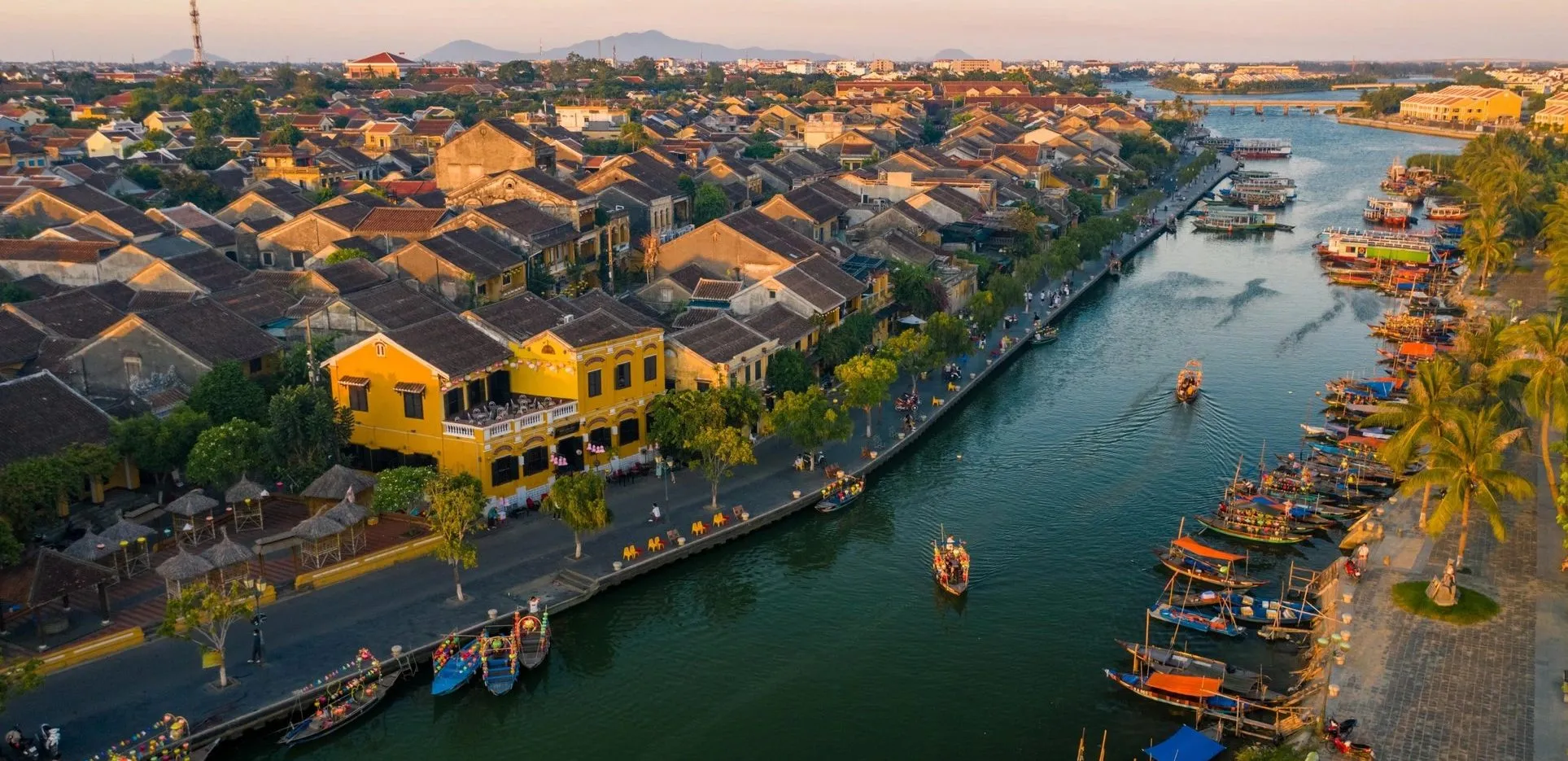
As it reaches the heritage district, a beautiful distributary known as the Hoai River splits off to flow directly through the heart of Hoi An Ancient Town. This slow-moving branch features calm, mirror-like waters that flawlessly reflect the historic yellow merchant houses and iconic silk lanterns.

For the communities living along these banks, the water remains a vital source of daily sustenance. Fishermen expertly cast their nets at dawn, while farmers rely on the rich alluvial soil to cultivate vibrant vegetable gardens. The rhythm of local life here stays deeply connected to the ebb and flow of the tides.
The History of Thu Bon River
Centuries ago, the Thu Bon River served as the primary gateway to the powerful Champa Kingdom. Arab, Persian, and Chinese merchants navigated these waters searching for valuable spices, aloe wood, and silk. By the 16th century, this bustling maritime highway had blossomed into a global trading hub where Japanese, Dutch, and Portuguese galleons anchored safely. Merchants waiting out the monsoon winds eventually built the distinct architectural blend of assembly halls and bridges that define the ancient town today.

As the 18th century came to a close, natural silting gradually made the estuary too shallow for deep-draft modern vessels. International trade shifted north to Da Nang, inadvertently freezing this once-thriving port in time. Today, the pristine preservation of Hoi An’s trading heritage owes its very existence to the changing course of the water.
>>> View more: Cam Nam Island: A Hidden Gem in Hoi An Worth Exploring
How to Get to Thu Bon River Hoi An
Accessing the waterfront requires almost no effort if you are already exploring the heritage area. The southern boundary of the walking streets runs directly parallel to the water. Strolling down Bach Dang or Nguyen Thai Hoc streets will bring you right to the bustling embankment where small wooden rowboats wait.
Depending on your starting point, reaching the Thu Bon River Hoi An is incredibly straightforward. Here are the most convenient transportation options with estimated costs:
- Walking: Free. If you are already exploring Hoi An Ancient Town, the Thu Bon River is only a 2–5 minute walk from most pedestrian streets, particularly Bach Dang Street and Nguyen Thai Hoc Street.
- Bicycle: $1.50 – $2.00 (30,000 – 50,000 VND) per day. A fantastic option for traveling from An Bang or Cua Dai beaches. Many boutique hotels even offer complimentary bicycles to their guests.
- Local Taxi or Grab: $3 – $5 (70,000 – 120,000 VND). Ideal for a quick, air-conditioned ride from the coastal resorts directly to the riverbanks.
- Private Car Transfer (from Da Nang): $15 – $22 (350,000 – 500,000 VND). The most comfortable way to arrive directly at your riverside accommodation from Da Nang International Airport.
Things to Do on Thu Bon River
Exploring the Thu Bon River offers endless opportunities to connect with the local culture, from peaceful morning excursions to vibrant evening traditions.
Take a Traditional Boat Ride
A daytime cruise on a small wooden sampan allows you to observe daily life away from the crowded streets. Local rowers skillfully navigate the gentle currents, taking you past quiet islands and hidden mangroves. It is a slow, meditative way to absorb the surrounding natural beauty.
>>> View more: Tam Thanh Mural Village: Vietnam’s First Art Village by the Sea

You can easily hire these traditional boats directly from the central pier along the Bach Dang Street promenade or near the An Hoi Bridge. The rates are strictly regulated by the local government, typically costing around $6 to $8 (150,000 to 200,000 VND) per boat for a 20-minute journey, depending on the number of passengers.
Join a Sunset Cruise
As late afternoon approaches, the fading light transforms the landscape completely. A sunset cruise on the Thu Bon River captures the exact moment the sky turns brilliant shades of gold, pink, and purple. The cooler temperatures make this the perfect time to relax with a cold beverage on deck, elevating your Thu Bon River Hoi An journey into a truly magical evening.
For the most spectacular views, plan your cruise about 30 to 45 minutes before sunset. During this time, the warm golden light reflects beautifully off Hoi An’s historic yellow buildings, creating some of the most photogenic scenes along the river.

Release Lanterns on the River
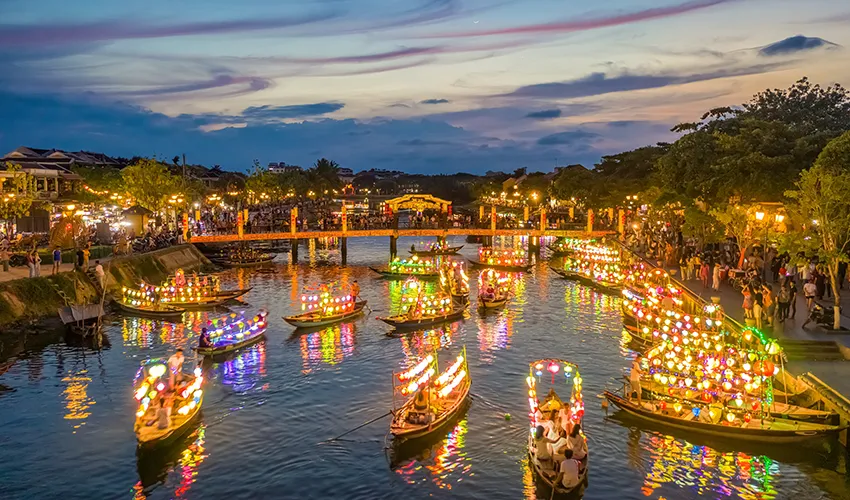
When darkness falls, the surface of the Thu Bon River mirrors thousands of flickering lights. Purchasing a small paper lantern from riverside vendors—typically costing just $0.50 (10,000 to 20,000 VND)—and gently placing it into the current is a beloved local tradition. Many travelers make a heartfelt wish for health or good fortune as their light softly drifts along the Thu Bon River Hoi An toward the sea.
Explore Riverside Villages
Renting a bicycle and riding along the flat, paved paths beside the water reveals sleepy hamlets virtually untouched by mass tourism. Small ferries easily transport you and your bike across the channels to explore narrow village lanes. If you venture just a few kilometers off the main roads, you can discover several remarkable local communities:
- Triem Tay Eco-Village: Shaded by rows of bamboo, this peaceful island community focuses heavily on sustainable agriculture and traditional garden houses.
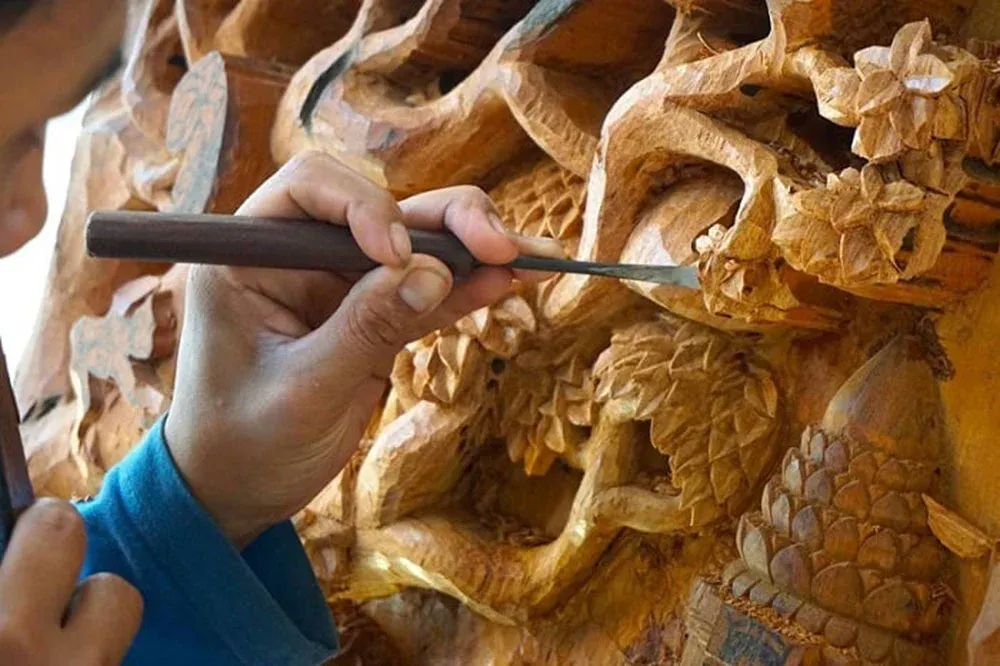
- Kim Bong Carpentry Village: Famous for its master woodworkers, you can hear the rhythmic tapping of chisels shaping intricate temple pillars and riverboats.
- Tra Nhieu Weaving Village: Hidden within nipa palm forests, artisans here still hand-weave colorful sleeping mats using locally harvested reeds.
Experience Local Fishing Culture
Waking up early provides a chance to witness traditional fishing methods along the Thu Bon River firsthand. In the soft morning light, you can watch locals expertly toss massive, circular casting nets that flare out perfectly over the water. To dive deeper into this aquatic lifestyle, several eco-tours operating on the Thu Bon River Hoi An even teach visitors how to balance and paddle the iconic bamboo basket boats. If you want to observe this thriving maritime heritage, consider visiting these authentic enclaves:
- Duy Hai Fishing Village: Located near the river’s estuary, this bustling morning market offers a fascinating glimpse into the local seafood trade and traditional fish-drying techniques.
- Thanh Nam Fishing Village: Situated just a short boat ride from the heritage district, this small community relies heavily on the time-honored techniques of setting bamboo fish traps.
- Cam Thanh Village: While famous for its dense water coconut palms, this estuarine settlement is the ideal place to learn hands-on river crabbing from veteran fishermen.

Enjoy Riverside Dining
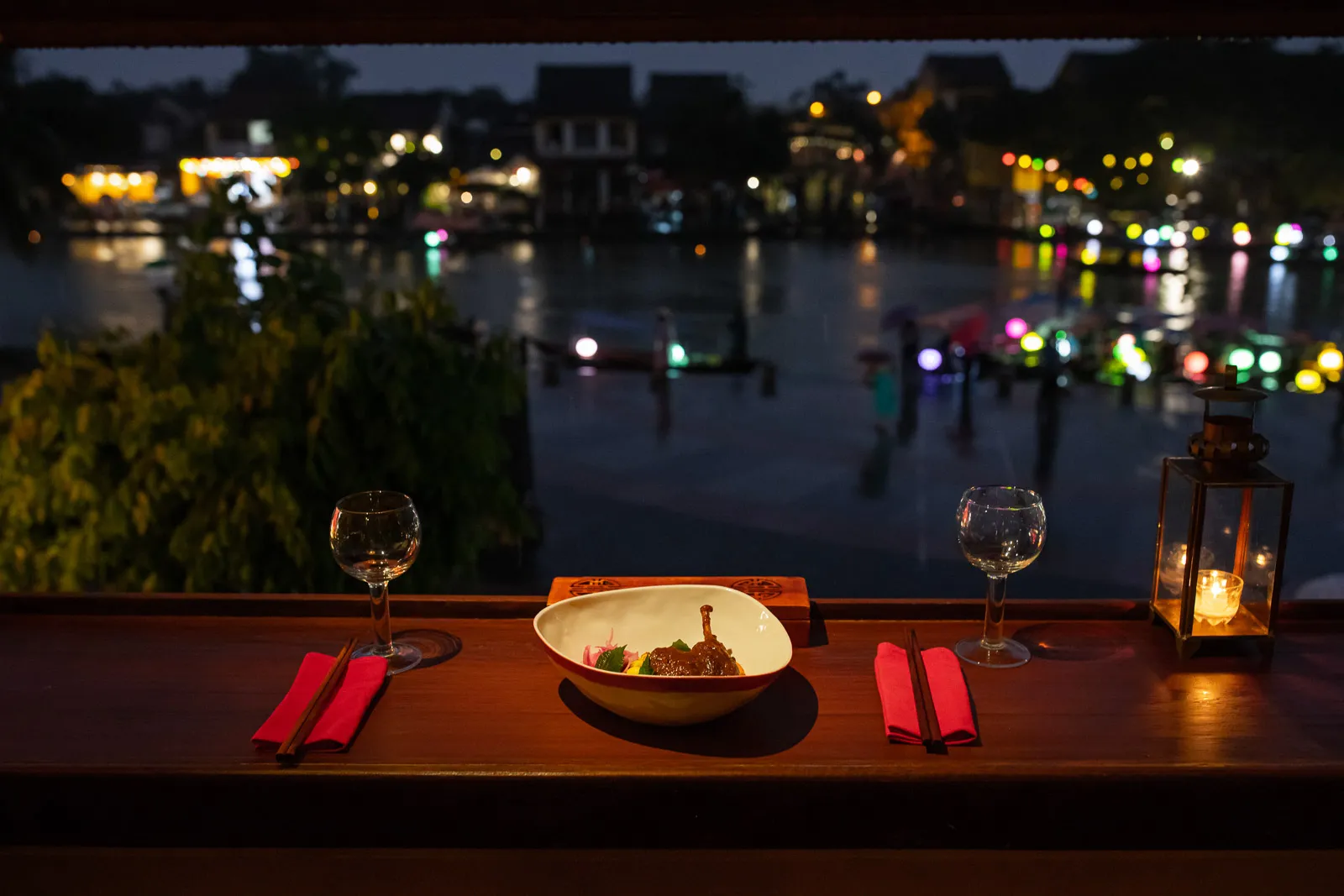
Countless cafes and open-air restaurants line the embankments of the Thu Bon River, offering incredible views alongside regional cuisine. Sitting on a balcony with a steaming bowl of authentic Cao Lau noodles while watching the wooden boats drift by is an essential culinary experience.
Capture Stunning Photos Along the Thu Bon River
The Thu Bon River offers some of Hoi An’s most picturesque scenery, making it a favorite destination for photographers and travelers alike. Throughout the day, the changing light creates completely different moods—from peaceful sunrise reflections and vibrant local life in the morning to golden sunsets and lantern-lit evenings after dark. Whether you’re using a professional camera or simply taking photos with your phone, exploring different viewpoints along the river is one of the best ways to preserve your memories of Hoi An.
Some of the best places to capture the beauty of the Thu Bon River include:
- Bach Dang Riverside: A lively waterfront lined with traditional wooden boats, riverside cafés, and historic yellow buildings that reflect beautifully on the water.
- An Hoi Bridge: One of the best viewpoints for photographing colorful lantern boats and the vibrant atmosphere of Hoi An at night.
- Japanese Covered Bridge Area: A classic location where Hoi An’s iconic architecture meets the peaceful river, especially beautiful during the early morning.
- On a Sunset Boat Cruise: Photograph the golden hour from the water as sunlight illuminates the ancient town and creates shimmering reflections across the river.
- Cam Nam Riverside: A quieter riverside setting featuring local fishing boats, peaceful village scenery, and excellent sunrise photography opportunities.
Best Places to Visit Along Thu Bon River Vietnam
The fertile banks of the Thu Bon River Vietnam are lined with fascinating cultural enclaves, each preserving distinct artisanal traditions and a slower pace of life.
Cam Nam Island
Located just a short walk across the bridge from the central market, Cam Nam feels like an immediate escape into rural life. The island is highly regarded among food enthusiasts for its sweet corn soup and plates of tiny river clams served with crispy rice crackers. To help plan your excursion, keep these details in mind:
- Address: Cam Nam Ward, Hoi An (accessible via the Cam Nam Bridge).
- Entrance Fee: Free to enter (visitors only pay for their culinary experiences or bicycle rentals).
- Visiting Hours: Open 24/7, though local riverside eateries generally operate from 8:00 AM to 8:00 PM.

Cam Kim Island
A short boat ride takes you to this quiet sanctuary famous for its deep-rooted woodworking heritage. The Kim Bong carpentry village here has produced the intricate pillars and altars found throughout the ancient town for generations. If you plan to watch the master woodworkers in action, keep these practical details in mind:
- Address: Cam Kim Commune, Hoi An (accessible by local ferry from the heritage district or via the Cam Kim Bridge).
- Entrance Fee: Free to explore, though purchasing small wooden souvenirs directly from the artisans is a great way to support the local economy.
- Visiting Hours: The island is open 24/7, but the craft workshops typically operate from 8:00 AM to 5:00 PM.
Tra Que Village
While technically situated between the estuarine waters of the Thu Bon River and the sea, this agricultural community utilizes natural algae harvested from local lagoons as fertilizer. The result is an incredibly fragrant harvest of organic mint, basil, and coriander that defines the region’s culinary identity. Plan your visit with these essential details:
- Address: Tra Que Village, Cam Ha Commune, Hoi An.
- Entrance Fee: $1.50 (35,000 VND), which goes directly into a community fund to support local farming families.
- Visiting Hours: 7:00 AM to 5:00 PM (early morning or late afternoon is highly recommended to observe the farmers in action and avoid the midday heat).

Thanh Ha Pottery Village
Situated slightly upstream along the Thu Bon River Hoi An, artisans in Thanh Ha have been shaping local clay into ceramics for over five centuries. Walking through the narrow village alleys, you will see terracotta tiles drying in the sun and skilled elders effortlessly shaping clay on foot-powered wheels. Here is what you need to know before exploring:
- Address: Thanh Ha Ward, Hoi An (about 3 kilometers west of the ancient town).
- Entrance Fee: $1.50 (35,000 VND), which typically includes a small, handmade ceramic souvenir to take home.
- Visiting Hours: 8:00 AM to 5:30 PM daily.

Tra Nhieu Fishing Village
Hidden among the dense nipa palm forests near the mouth of the Thu Bon River, Tra Nhieu is a haven of tranquility. The calm waterways here are perfect for kayaking or stand-up paddleboarding away from the bustling town center. The village is also known for traditional mat weaving and processing local fish sauce. To ensure a smooth journey to this peaceful eco-village, keep the following details handy:
- Address: Duy Vinh Commune, Duy Xuyen District, Quang Nam Province (accessible by a scenic boat ride or a longer bicycle trip from Hoi An).
- Entrance Fee: Free to explore (activities like kayaking, basket boat rides, or guided eco-tours require separate booking fees).
- Visiting Hours: Open 24/7, though daytime hours (7:00 AM to 5:00 PM) are best for exploring the waterways and visiting artisan workshops.
>>> View more: Eco-Luxury Hoi An Farming and Fishing Tour

Suggested Thu Bon River Itinerary
To truly capture the essence of this historic waterway, a well-paced schedule is essential. This suggested itinerary perfectly balances active cultural exploration with serene, relaxing moments along the Thu Bon River:
- 8:00 AM – Morning Ride to Thanh Ha Pottery Village: Start your day early by cycling just outside the bustling town center. This allows you to watch skilled artisans shape raw clay into beautiful ceramics before the intense midday heat arrives.
- 10:30 AM – Cross the Water to Cam Kim Island: Catch a breezy local ferry across the river channels. Here, you can observe the master woodcarvers of Kim Bong village meticulously crafting intricate temple pillars and traditional riverboats.
- 1:00 PM – Riverside Seafood Lunch: Retreat to a shaded, open-air restaurant along the banks. Savoring regional specialties while watching the gentle currents pass by is the ultimate midday reset.
- 4:30 PM – Sunset Wooden Boat Cruise: Board a private, traditional sampan for a leisurely journey. Watching the golden hour reflect off the water is arguably the most magical visual experience on the Thu Bon River Hoi An.
- 6:30 PM – Evening Lantern Release: Conclude your day back in the illuminated heritage district. Purchase a small paper lantern, make a heartfelt wish, and gently release it into the glowing tide.
Best Time to Visit Thu Bon River Hoi An
Planning your visit around the right weather and time of day will significantly enhance your waterfront experience. To make the most of your journey, consider these seasonal and daily timing guidelines:
- Best Time of the Year: The dry season, running from February through August, provides the most favorable conditions for water activities. During these months, the skies are generally clear, the water is calm, and the humidity is manageable, making it perfect for any Thu Bon River outdoor excursions.
- Best Time of the Day: Early mornings (between 6:00 AM and 9:00 AM) are ideal for witnessing local fishermen in action and beating the intense midday heat. Alternatively, late afternoons (from 4:00 PM onwards) offer cooler temperatures, breathtaking golden sunsets, and the chance to participate in the magical evening lantern releases.
- Typhoon Season Warning: Travelers should exercise caution during the peak rainy season in October and November. Heavy inland rains frequently cause the Thu Bon River to rise dramatically, sometimes flooding the historic streets and temporarily halting all boat operations.
Where to stay near Thu Bon River Hoi An
Choosing accommodation near the water guarantees a peaceful retreat after a busy day of sightseeing. Whether you prefer boutique resorts in the Cam Chau district with stunning infinity pools or luxury heritage properties on the main embankment, waking up next to the water is unforgettable. Here are three exceptional places to stay along the Thu Bon River Hoi An:
Anantara Hoi An Resort
Nestled among lush tropical gardens right on the historic riverbanks, this French colonial-style sanctuary offers unparalleled elegance. Guests can watch the morning mist roll off the water from their private balconies while enjoying a freshly brewed local coffee.
- Address: 1 Pham Hong Thai Street, Hoi An.
- Estimated Price: $200 – $350 per night.
- Best Suited For: Luxury travelers and romantic couples seeking world-class service just steps away from the ancient walking streets.
Bay Resort Hoi An
Located on a peaceful bend overlooking the heritage district, this contemporary retreat seamlessly blends local architecture with modern comforts. The stunning riverside swimming pool is designed to look as though it flows directly into the gentle currents of the Thu Bon River.
- Address: Xuyen Trung Block, Cam Nam Ward, Hoi An.
- Estimated Price: $150 – $250 per night.
- Best Suited For: Experience seekers and families who want immediate access to the town center while maintaining a quiet, resort-style atmosphere.

Silk Sense Hoi An River Resort
Situated in the tranquil Cam Chau district, this eco-conscious property is deeply inspired by the region’s traditional silk weaving heritage. It provides a highly sustainable, premium escape featuring lush organic gardens situated right beside the scenic waterway.
- Address: 1 Dong Da Street, Cam Chau Ward, Hoi An.
- Estimated Price: $120 – $180 per night.
- Best Suited For: Sustainable tourism advocates, wellness enthusiasts, and travelers looking for a restorative retreat away from the crowds.
Discover Hoi An’s Sunset on the Thu Bon River
There is no better way to conclude a day of historical exploration than by experiencing the golden hour directly on the Thu Bon River. As the afternoon heat fades, the waterways transform into a shimmering canvas of amber and violet. This transition offers a rare, tranquil perspective of the ancient town’s heritage architecture, far removed from the bustling walking streets.
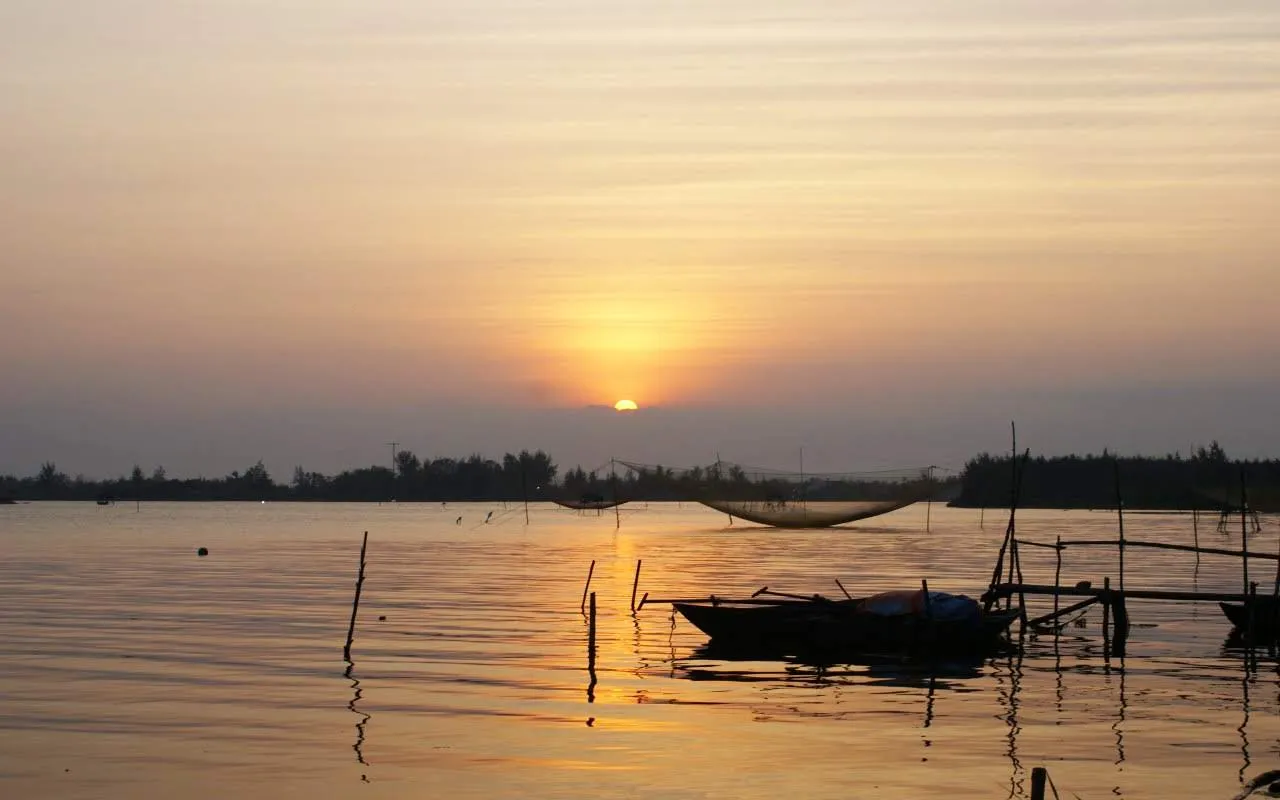
To fully immerse yourself in this magical atmosphere, we highly recommend joining our signature evening excursion along the Thu Bon River Hoi An. Our carefully crafted itinerary allows you to relax on a traditional wooden boat, enjoy local refreshments, and participate in the authentic lantern release tradition. You can secure your spot and view the complete schedule by booking the Sunset Hoi An River Cruise directly through Hoi An Unique Travel.
Travel Tips for Visiting Thu Bon River Viet Nam
To ensure a seamless and responsible journey along the Thu Bon River Viet Nam, keep these practical travel tips in mind before you head to the waterfront:
- Agree on Boat Fares Upfront: Always negotiate the price of a private boat ride before stepping on board, unless you have pre-booked a fixed-price tour through a reputable travel agency.
- Prioritize Sun Protection: Bring a wide-brimmed hat, polarized sunglasses, and apply reef-safe sunscreen. The water strongly reflects the midday sun, making sunburns common even on cloudy days.
- Choose Eco-Friendly Lanterns: While the evening lantern releases are beautiful, try to purchase lanterns made strictly from traditional bamboo and paper. Avoiding those with plastic wire frames helps protect the marine ecosystem of the Thu Bon River for future generations.
- Secure Your Electronics: When leaning over a wooden sampan to capture the perfect sunset or lantern photo, ensure your smartphone or camera is secured with a strap to avoid accidental drops into the current.
- Dress Comfortably but Respectfully: Lightweight, breathable fabrics are ideal for the tropical climate. However, bring a light scarf or overshirt if your river cruise includes stops at local pagodas or traditional ancestral houses along the banks.
- Carry Small Cash: Having small denominations of Vietnamese Dong (VND) is incredibly helpful when buying riverside street food, tipping your boat rower, or paying small entrance fees at the craft villages.
Exploring Thu Bon River Tours with Hoi An Unique Travel
At Hoi An Unique Travel, we believe that navigating the Thu Bon River should be an intimate and culturally enriching experience rather than a standard sightseeing trip. Our carefully curated excursions range from serene morning photography tours to immersive eco-adventures where you can learn traditional fishing techniques directly from local families. By choosing our premium Thu Bon River Vietnam experiences, you are guaranteed small group sizes, knowledgeable local guides, and a profound connection to the region’s vibrant maritime heritage.
>>> Viewmore: Hoi An Tours & Private Luxury Experiences | Hoi An Unique Travel
Frequently Asked Questions About Thu Bon River
Can you take a cruise on Thu Bon River?
Yes, visitors have numerous cruising options ranging from quick 20-minute rides on simple wooden rowboats to luxurious multi-course dinner cruises on larger vessels.
How long is Thu Bon River?
The waterway stretches approximately 152 kilometers from its source in the mountainous Ngoc Linh region down to the coastal estuary.
Is there an entrance fee to visit Thu Bon River?
There is no fee to walk along the embankments or look at the water. However, you will need to pay for individual boat rides or entrance tickets to specific craft villages along the banks.
How far is Thu Bon River from Hoi An Ancient Town?
It is zero distance away. The waterway flows directly alongside the southern edge of the heritage district, forming the physical border of the historic walking streets.
Can you swim in Thu Bon River?
Swimming is generally not recommended due to boat traffic, changing currents, and water quality.
What is the difference between Hoai River and Thu Bon River?
The Hoai River is a branch of the larger Thu Bon River that flows directly through Hoi An Ancient Town.
How long does a boat ride on Thu Bon River last?
Most traditional boat rides last between 20 and 45 minutes, while sunset or dinner cruises typically take one to two hours.
Recent Posts






Our Associations


Our Awards








