Popular Tours






What makes visitors queue for hours just to taste a simple plate of yellow rice and shredded chicken? Com Ga Hoi An captivates the senses with its vibrant colors and the distinct, chewy texture of local free-range chicken that you can’t find anywhere else. Join us on a culinary tour to uncover the magic behind the ingredients that define the heritage town’s most famous meal.
Must Knows About Hoi An Chicken Rice (Com Ga)
Short on time? Here is a quick survival guide before you hunt down the best golden rice plates in town:
- What Makes It Special: Fluffy rice cooked in rich chicken broth with fresh turmeric, topped with hand-shredded “walking chicken” salad tossed with lime and Vietnamese coriander (rau ram).
- Average Price: 35,000 to 60,000 VND ($1.40 – $2.50 USD) per portion.
- Where to Go: Phan Chau Trinh Street is famously known as “Chicken Rice Street”—home to legendary spots like Ba Buoi and Ba Nga.
- The Local Secret: Never eat the rice and chicken separately! Always mix them thoroughly with a dollop of local sweet chili jam for the authentic flavor.
The Art of Shredded Chicken and Why It Is Famous Chicken Rice Hoi An
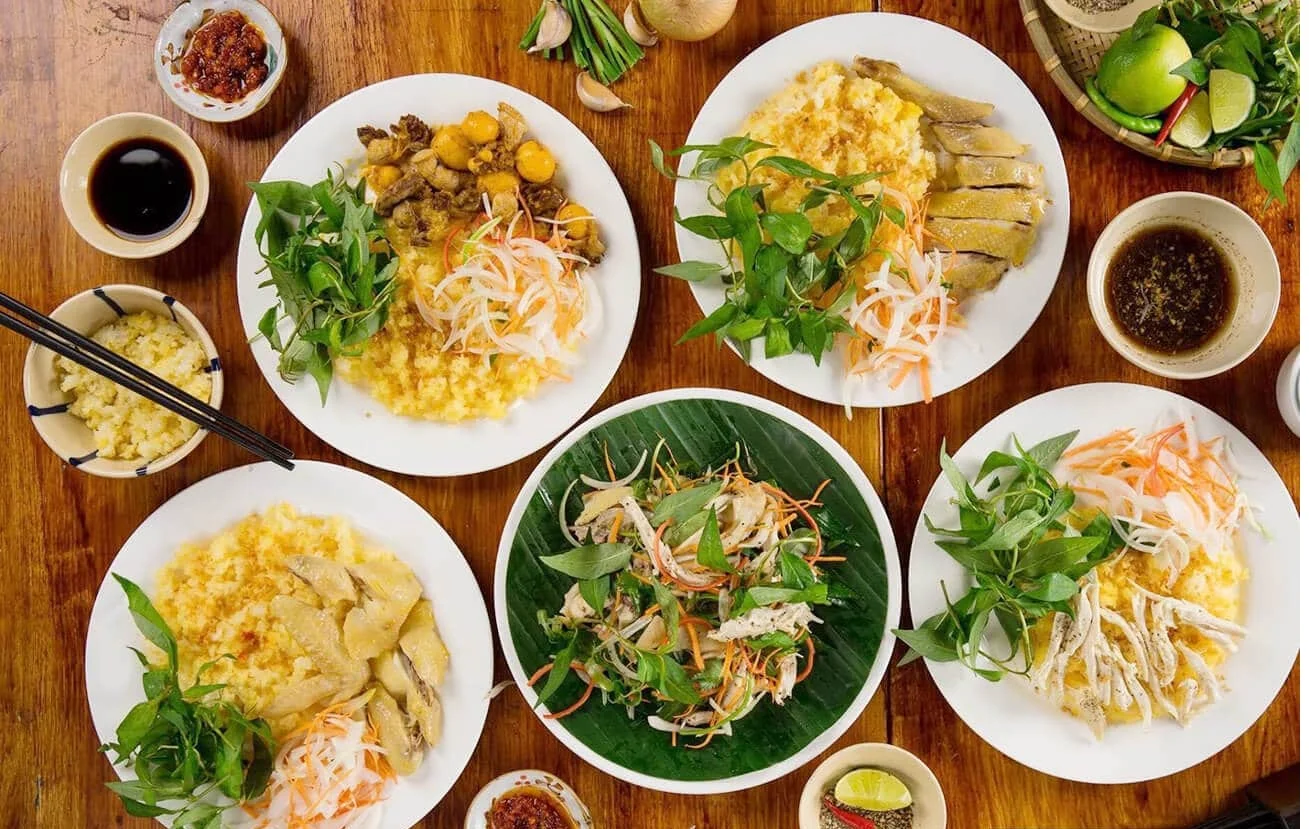
To the uninitiated, chicken rice might seem like a simple staple found across Asia, but Hoi An Chicken Rice (Com Ga Hoi An) is a breed apart. Its fame lies in the meticulous preparation and the specific quality of the local ingredients. Unlike the Hainanese version where the chicken is chopped bone-in, the Hoi An style features chicken that is poached to perfection, hand-shredded, and then tossed with onions, Vietnamese coriander (rau ram), and lime juice.
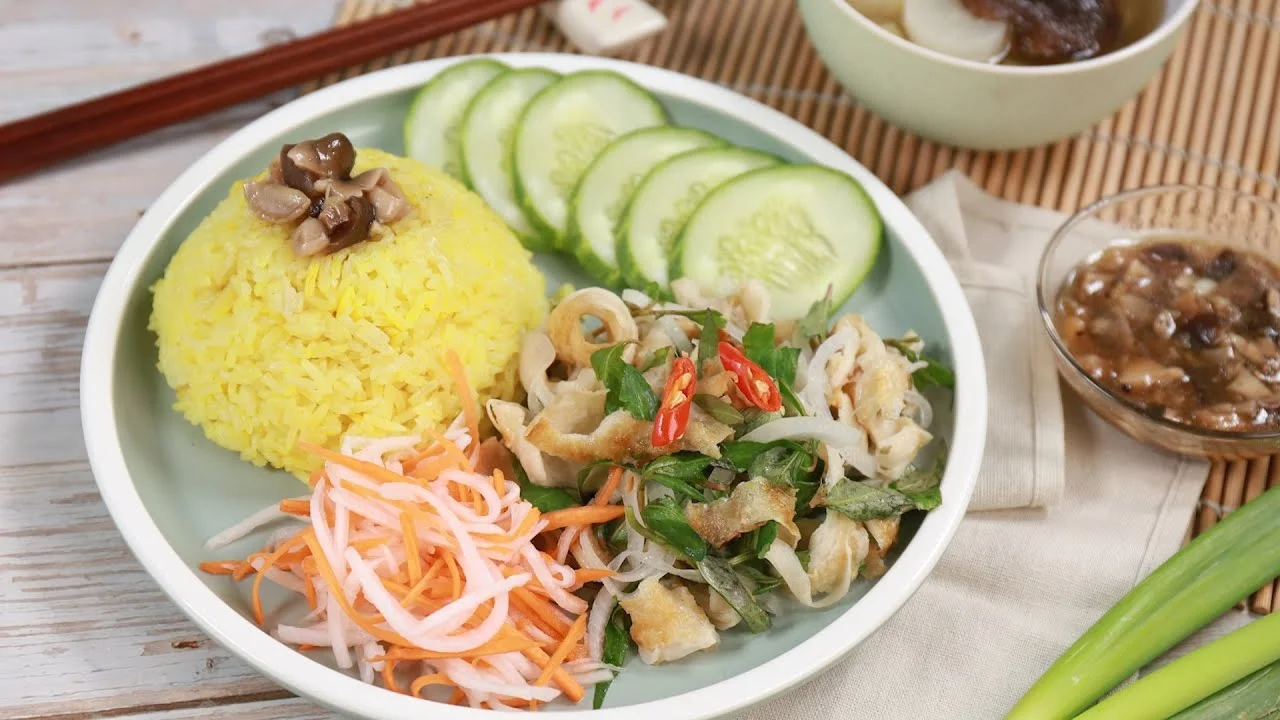
This salad-like topping provides a burst of fresh, zesty flavor that cuts through the richness of the meat. The rice itself is a work of art, cooked in chicken broth and infused with turmeric, giving it a vibrant yellow color that mimics the sun-drenched walls of the town. The grains are then toasted before boiling, resulting in a texture that is firm, glossy, and incredibly fragrant.
The poultry used is strictly free-range “walking chicken” from local farms, known for its firm flesh and sweet taste, far superior to the mushy industrial variety. This commitment to texture and freshness is why famous chicken rice Hoi An has become a culinary icon. It is a dish that balances the savory, the sour, the spicy, and the herbal in a way that is distinctly Central Vietnamese.
How to Get to Famous Chicken Rice Restaurants by Walking or Taxi
The beauty of Hoi An is its compact nature, meaning your culinary quest is never too arduous. Most of the legendary Hoi An chicken rice restaurant locations are clustered around the periphery of the Ancient Town or just a short walk away.
On Foot

If you are staying within the heritage zone or near the Central Market, walking is the most enjoyable way to reach your destination. Strolling down Phan Chau Trinh Street, often dubbed “Chicken Rice Street,” allows you to build an appetite while soaking in the atmosphere. The streets are pedestrian-friendly, shaded by trees, and offer a glimpse into local life that a car ride misses.
By Taxi or Grab

For those staying at beach resorts in An Bang or Cua Dai, a taxi is a convenient option. A ride to the town center will cost approximately $3 to $5 USD. You can ask the driver to drop you off at the intersection of Le Loi and Phan Chau Trinh, which places you right in the heart of the chicken rice action.
By Bicycle
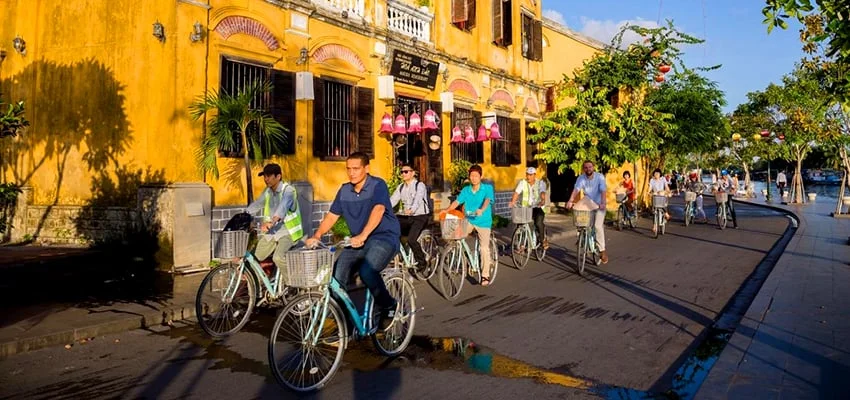
Cycling is a signature Hoi An experience and an excellent way to reach chicken rice restaurants. From the beach or riverside, the ride into town is flat and scenic. Bicycle parking is widely available along sidewalks for a small fee (approximately 5,000 VND), giving you the freedom to explore multiple food stops at your own pace.
>> Discover a different side of Hoi An with a relaxing Hoi An Cycling Tour.


Where to Eat: A Guide to the Best Chicken Rice in Hoi An
With so many vendors claiming to be the best, choosing where to eat can be overwhelming. We have curated a list of the most celebrated establishments, each with its own unique twist on the classic recipe.
Com Ga Ba Buoi
This is arguably the most famous name in town, a legendary establishment that has been serving Hoi An chicken rice since the 1950s. The restaurant retains a nostalgic charm with its yellow walls and wooden tables. The rice here is renowned for its perfect fluffiness and rich flavor, having absorbed the essence of the chicken broth.

The chicken salad topping is balanced perfectly with the sharp bite of onions and the herbaceous punch of rau ram. It is often served with a small bowl of soup and papaya salad on the side. Due to its popularity, it can get crowded, so arriving early is wise.
- Address: 22 Phan Chau Trinh Street, Hoi An
- Price Range: 35,000 – 50,000 VND (Approx. $1.40 – $2.00 USD)
View more: The Ultimate Guide to Hoi An Night Market 2026
Com Ga Ba Nga
Just down the street from Ba Buoi, Com Ga Ba Nga offers a more robust Hoi An chicken rice experience with a deeper, fuller flavor profile. This spot is especially popular with locals who favor a richer, more savory taste. The chicken is known for its slightly nutty depth, likely influenced by the breed or traditional feeding methods.
What distinguishes Ba Nga’s Hoi An chicken rice is the accompanying sauce – a thick, dark gravy that delivers a pronounced umami kick, setting it apart from lighter versions found elsewhere. The atmosphere is lively and unpretentious, reflecting the essence of Vietnamese street dining, where shared tables and close quarters add to the communal charm.
- Address: 8 Phan Chau Trinh Street, Hoi An
- Price Range: 40,000 – 60,000 VND (Approx. $1.60 – $2.40 USD)
Com Ga Ba Thuan
For those seeking a less commercialized Hoi An chicken rice experience, Ba Thuan is a fantastic alternative tucked away in a small alley. It feels more like eating in someone’s home than in a restaurant. The portion sizes are generous, and the chicken is remarkably tender.

What sets Ba Thuan apart is the personalized service and the consistent quality of its Hoi An chicken rice. The rice is always hot and fragrant, while the accompanying chili sauce is homemade and delightfully fiery. This hidden gem rewards travelers willing to venture slightly off the main thoroughfare in search of authentic local flavor.
- Address: 17/4 Hai Ba Trung Street, Hoi An
- Price Range: 30,000 – 45,000 VND (Approx. $1.20 – $1.80 USD)
Com Ga Xi
If you prefer your chicken rice with a side of street-side ambiance, Com Ga Xi is the place. It is a small, family-run stall that punches well above its weight in flavor. The chicken is shredded to order, ensuring it remains juicy and fresh.

Their secret weapon is the pickle. The accompanying pickled carrots and papaya are crisp and perfectly acidic, cutting through the fat of the chicken beautifully. It is a simple, no-frills meal that focuses entirely on the quality of the ingredients.
- Address: 47/2 Tran Hung Dao Street, Hoi An
- Price Range: 25,000 – 40,000 VND (Approx. $1.00 – $1.60 USD)
>>> View more: Ultimate Guide to Shopping in Hoi An Market and Local Food
Com Ga Ty
Situated in a quiet courtyard, Com Ga Ty offers a serene dining experience. The owner, Mr. Ty, is passionate about his craft and often chats with customers. The rice here is slightly drier and more separated, which some diners prefer over the moister versions.
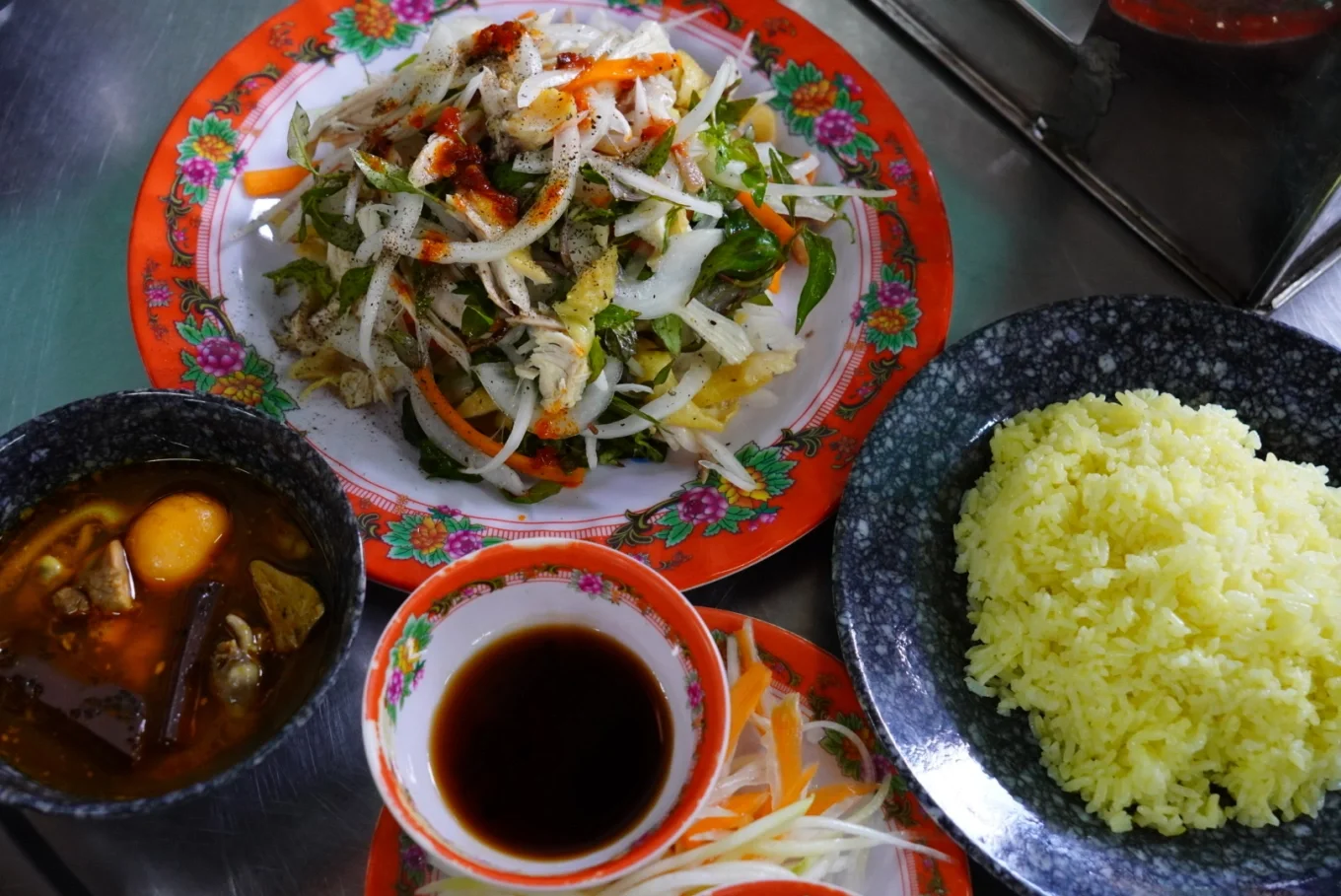
The presentation is neat and colorful, with the yellow rice contrasting beautifully with the green herbs and red chili. It is an excellent choice for those who want to enjoy their meal at a slower pace, away from the hustle of Phan Chau Trinh street.
- Address: 27 Phan Chau Trinh Street, Hoi An
- Price Range: 35,000 – 50,000 VND (Approx. $1.40 – $2.00 USD)
>>> Discover the soul of the city with a flavorful Hoi An Street Food journey.
>>> View more: Hoi An Food: 11 Must-Try Dishes in the Ancient Town
The Local Secret to Eating Com Ga Hoi An
To eat like a true local, do not treat the chicken and rice as separate entities on your plate! To experience the authentic flavor harmony, follow this traditional street-side ritual:
- Step 1: Pour a generous spoonful of the dark, savory giblet gravy or soy sauce directly over the golden rice.
- Step 2: Add a dollop of Hoi An sweet chili jam (tương ớt Hội An)—the sticky, smoky, and mildly spicy condiment found in jars on every table.
- Step 3: Grab your chopsticks and spoon, then mix the shredded chicken, fresh herbs, pickled papaya, and turmeric rice thoroughly together.
Why this works: The sweet heat of the local chili jam cuts through the richness of the chicken fat beautifully, turning a simple plate of rice into an explosion of Central Vietnamese flavors!
Bringing the Flavor Home with a Hoi An Chicken Rice Recipe
After returning home, you will likely crave the comforting taste of this golden dish. Fortunately, you can recreate the magic in your own kitchen with a simplified Hoi An chicken rice recipe. The key is not just the ingredients but the technique.

First, poach a whole chicken with ginger, onions, and turmeric powder. The turmeric is crucial for achieving that signature yellow skin and later, the yellow rice. Once cooked, let the chicken cool before hand-shredding the meat. Do not use a knife; tearing it by hand preserves the texture.
Use the poaching broth to cook your jasmine rice. Sauté the raw rice grains with minced garlic and chicken fat before adding the broth. This step ensures every grain is coated and flavorful.
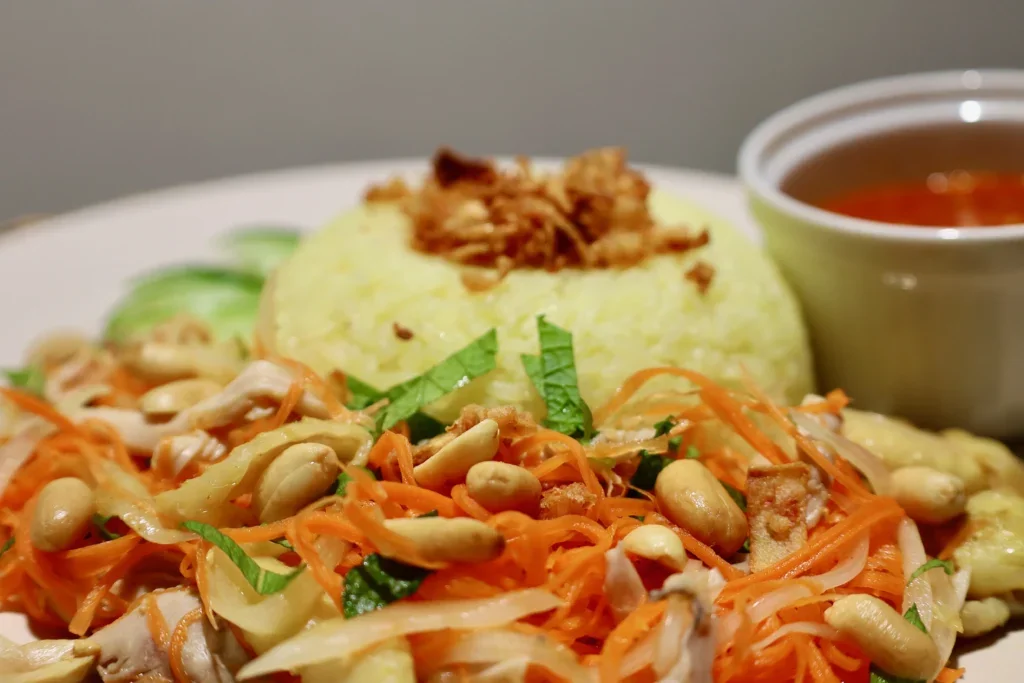
For the salad, mix the shredded chicken with thinly sliced onions (soaked in ice water to remove the bite), lime juice, salt, pepper, and a generous handful of Vietnamese coriander. Serve the salad over the yellow rice, garnish with more herbs, and serve with a side of clear broth and chili sauce.
While it might not taste exactly like it does sitting on a plastic stool in Hoi An, it will bring a warm wave of nostalgia and deliciousness to your dining table.
Explore the flavors of Vietnam through a signature Cooking Class Hoi An
Essential Dining Tips for Avoiding Lines at Peak Hours
The popularity of the best chicken rice Hoi An spots means that queues are often unavoidable, particularly during standard lunch and dinner times. With a few strategic choices, however, you can enjoy your meal with minimal waiting and a more relaxed dining experience.
Eat Off-Peak
The golden rule is to dine when most others are not. Lunch service usually peaks between 11:30 AM and 1:00 PM, so arriving around 11:00 AM or after 1:30 PM greatly increases your chances of being seated immediately. For dinner, consider an early meal at about 5:30 PM or a later supper after 8:00 PM.
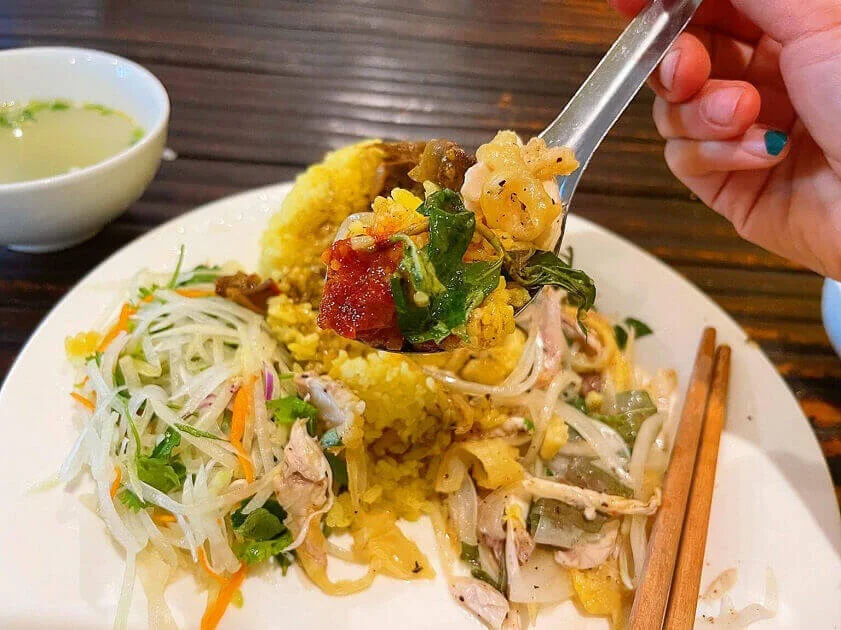
In addition to avoiding crowds, off-peak dining often means a calmer atmosphere. The kitchen staff have more time to focus on each order, which can result in faster service and a more attentive overall experience.
Order Takeout
When tables are full, follow the local approach and order “mang về” (takeaway). Most chicken rice restaurants in Hoi An can prepare your order to go within just a few minutes. This allows you to skip the queue entirely while still enjoying the same quality dish.
Takeout also gives you flexibility in choosing where to eat. Many visitors enjoy bringing their meal to a shaded bench along the Hoai River or back to their hotel balcony, turning a simple takeaway into a relaxed, scenic meal.
Share a Table
Do not hesitate to share a table with others. In busy local eateries, it is common to sit wherever a seat is available, even if that means joining strangers. This informal arrangement is part of everyday dining culture in Hoi An.
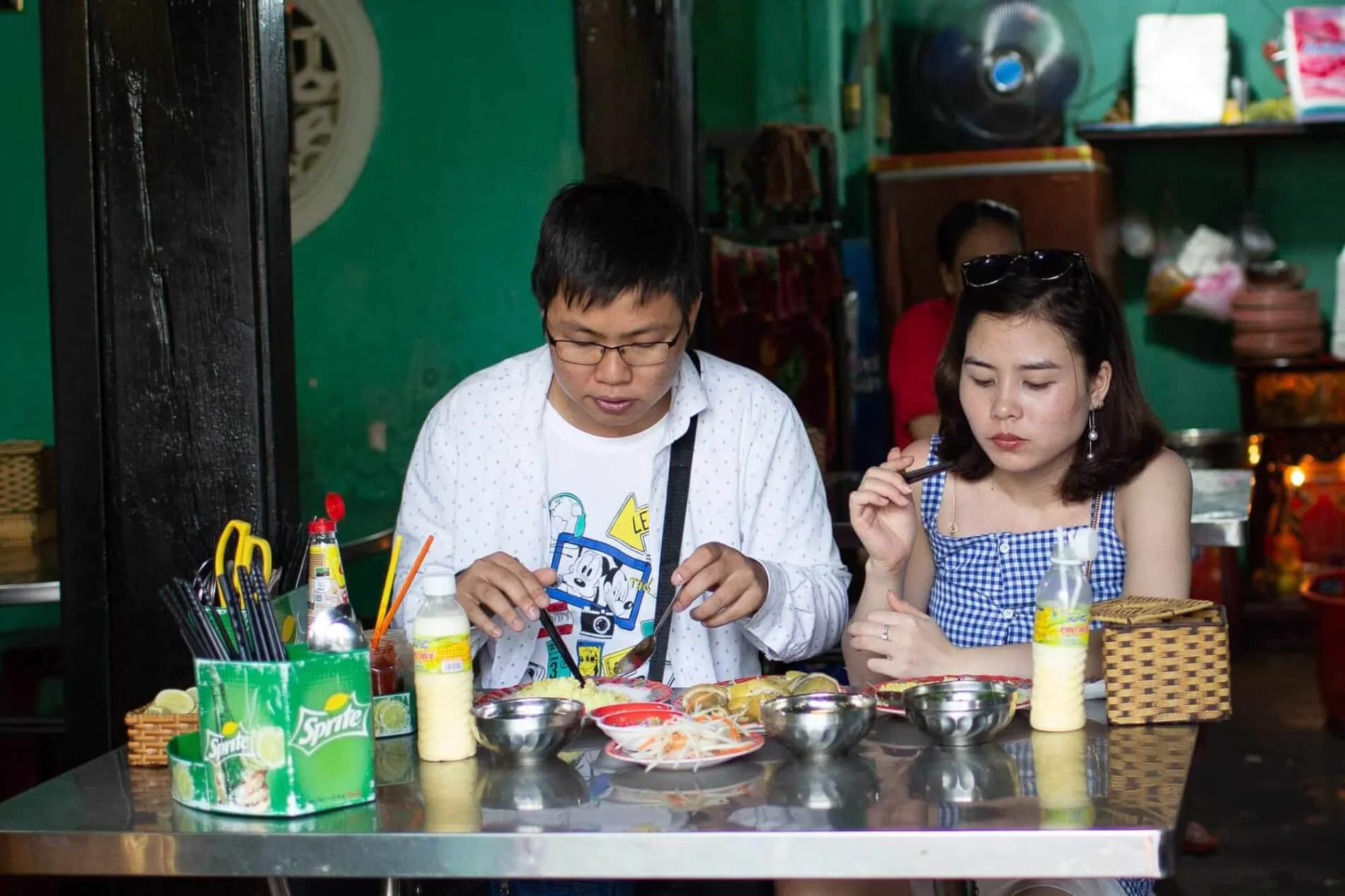
Sharing a table often shortens waiting times and adds a social element to your meal. It can lead to friendly exchanges with locals or fellow travelers, making your chicken rice experience more memorable and culturally immersive.


Why Join a Culinary Tour with Hoi An Unique Travel?
You can certainly find a bowl of chicken rice on your own, but Hoi An Unique Travel offers more than just a meal; we offer a culinary education. We take you beyond the famous names to the hidden spots that only locals frequent.

Our guides are passionate foodies who explain the nuances of the ingredients. They show you the specific herbs in the market, explain the history of the dish, and teach you how to mix your own dipping sauce like a pro. We bridge the language gap, ensuring you get exactly what you want.
We handle the logistics, from private transport to table reservations during peak hours. We can combine your chicken rice tasting with a broader street food tour, allowing you to sample Cao Lau, White Rose, and Banh Mi in a single curated adventure.
Ready to taste the authentic soul of Vietnam? Book Now for priority access to our exclusive food tours, or Contact Us to arrange a private culinary discovery. For immediate assistance and a personalized itinerary, call +84 916 976 731 for a free consultation.
>>> View more: Hoi An Tours & Private Luxury Experiences | Hoi An Unique Travel
FAQs About Hoi An Chicken Rice FAQS
What is Hoi An special chicken rice?
Hoi An Chicken Rice, or Com Ga Hoi An, is a signature dish featuring fluffy, turmeric-infused yellow rice served with hand-shredded poached chicken salad, onions, lime juice, and Vietnamese coriander (rau ram). It is much lighter, more zesty, and more herb-forward than other chopped-bone versions of chicken rice in Asia.
What is the best food to eat in Hoi An?
While opinions vary, the absolute “Holy Trinity” of Hoi An’s culinary scene consists of Cao Lau (heritage pork noodles), White Rose Dumplings (Banh Bao Banh Vac), and Com Ga (Chicken Rice). Banh Mi is also a globally renowned must-try contender.
What is the national dish of Hoi An?
Cao Lau is officially considered the most exclusive dish of Hoi An because authentic noodles can traditionally only be made using mineral-rich water from the local thousand-year-old Ba Le Well and ash from Cham Island trees, making it impossible to replicate anywhere else outside the town.
What is Vietnamese chicken rice called?
In the local language, chicken rice is called “Com Ga”. “Com” means cooked rice, and “Ga” means chicken. When you want to specify the unique, hand-shredded style from this heritage town, you simply ask for “Com Ga Hoi An”.
Recent Posts






Our Associations


Our Awards








