Popular Tours






Have you ever wondered what lies behind the faded yellow walls of Hoi An’s ancient merchant homes? While many visitors flock to bustling assembly halls, Hoi An Unique Travel invites you to discover the true spiritual soul of this heritage site. The Tran family chapel offers a rare glimpse into the private life of a prominent aristocratic lineage. Stepping through its wooden gates feels like opening a family diary from the 19th century, serving as a beautiful testament to Vietnamese filial piety and architectural mastery.
An Introduction to the Tran family Chapel Hoi An
Tucked away on a quiet street in the heart of the Ancient Town, the Tran family chapel is a sanctuary of peace. The property spans over 1,500 square meters, blending subtle Chinese, Japanese, and Vietnamese architectural influences. Generations of the Tran clan have gathered at Tran family chapel Hoi An Vietnam to honor their ancestors, maintaining traditions that date back over two centuries.
| Information | Details |
| Address | 21 Le Loi Street, Hoi An Ancient Town |
| Opening Hours | 7:00 AM – 9:00 PM Daily |
| Admission | Included in the Hoi An Ancient Town Ticket |
| Recommended Visit Duration | 20–30 Minutes |
| Best Time to Visit | 7:00 AM – 9:00 AM |
| Photography | Allowed (Flash Photography Not Recommended) |
| Best For | Culture Lovers, History Enthusiasts, Heritage Travelers, Families |

History of Tran family Chapel Hoi An Vietnam
The story of this remarkable compound begins in the early 19th century. During the reign of Emperor Gia Long in 1802, a mandarin named Tran Tu Nhac commissioned the construction of the Tran family chapel. Before serving as an ambassador to China, he wanted to ensure his family had a dedicated place for ancestor worship.
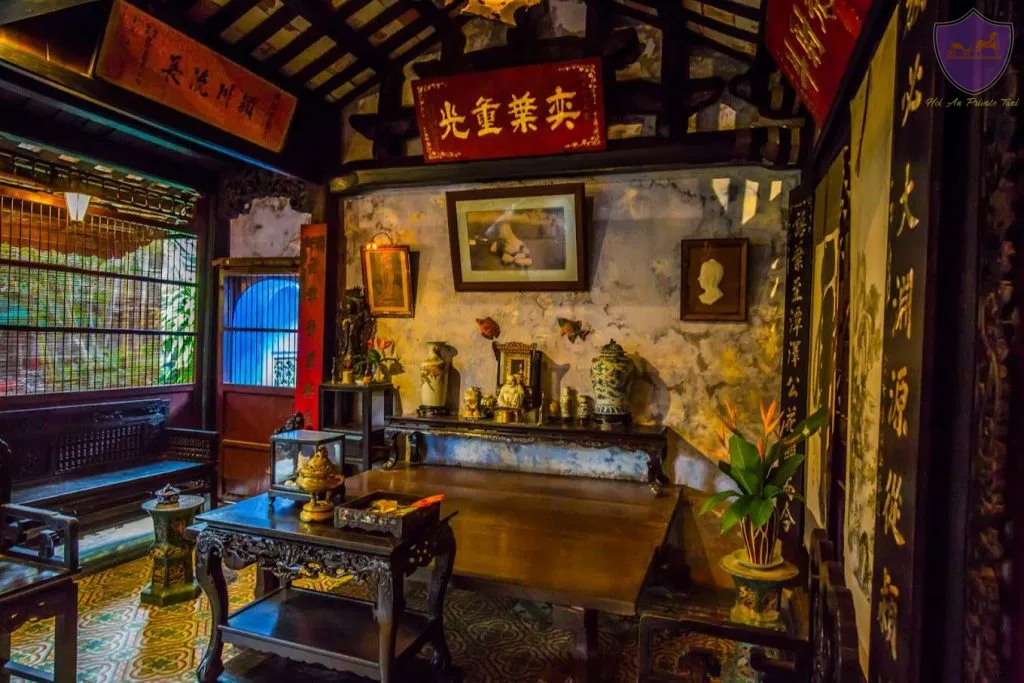
The layout has survived wars, floods, and the test of time almost entirely intact. Descendants of the original builder still meticulously maintain the property today. They often welcome international travelers, sharing personal anecdotes that bring the history of Tran family chapel Hoi An Vietnam to life.
View more: Quan Am Pagoda Hoi An: History, Architecture & Visitor Guide
Why Tran family Chapel Matters in Hoi An Ancient Town
Ancestor worship is the spiritual cornerstone of Vietnamese culture. Unlike commercial assembly halls built by foreign merchants, the Tran family chapel represents domestic devotion. It serves as a living bridge connecting the living descendants with their departed forebears.
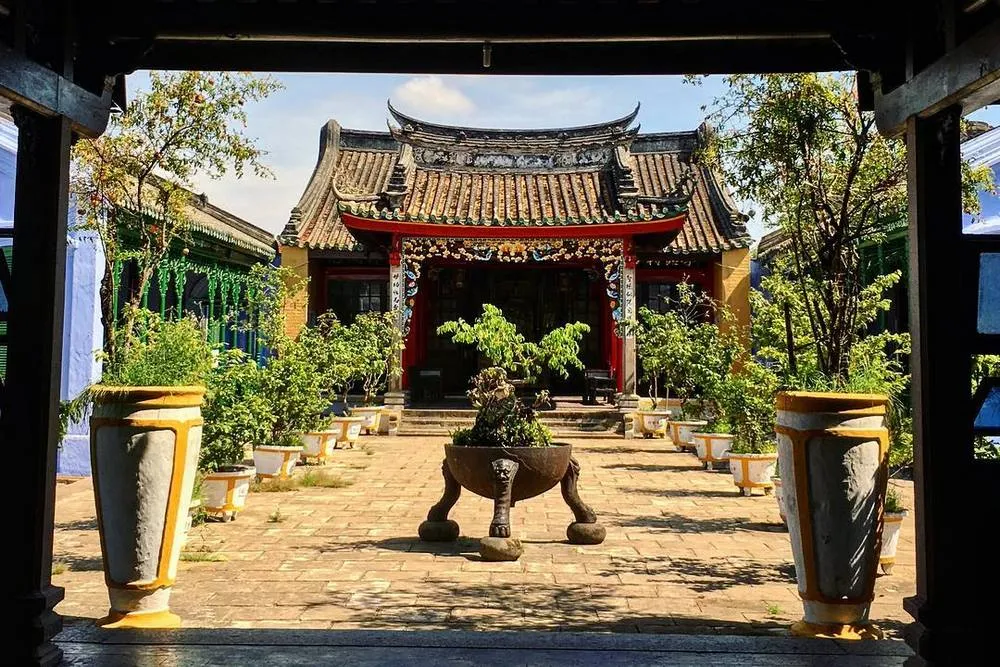
Walking through the compound, visitors witness the physical manifestation of filial piety. The deliberate preservation of this space ensures that the Tran lineage remains rooted in its history. It provides cultural explorers a profoundly authentic perspective on Vietnamese family values.
View more: Hoi An Historical Sites: Top Historic Places You Must Visit
How to Get to Tran family Chapel Hoi An Vietnam
Navigating to the Tran family chapel is wonderfully straightforward. Situated at 21 Le Loi Street, it sits comfortably within the pedestrian-friendly core of the Ancient Town. Depending on your starting point and travel style, several convenient transportation options will bring you to this heritage site:
- Walking and Bicycling: Strolling from the iconic Japanese Covered Bridge takes less than five minutes. Alternatively, bicycling remains the most sustainable choice. Many boutique hotels provide complimentary bikes, or you can easily rent one for roughly $1.50 to $2.00 per day.
- Traditional Cyclo: For a more romantic, slow-paced journey through the historic streets, hiring a traditional cyclo costs between $6 and $10 per hour.
- Electric Shuttles: If you are arriving from the beach or surrounding neighborhoods, eco-friendly electric buggies offer a breezy ride for just $1 to $2, dropping you directly at the edge of the pedestrian zone.
- Private Car: For those traveling from Da Nang, a comfortable private car drop-off near the Old Town border typically costs around $12 to $15.
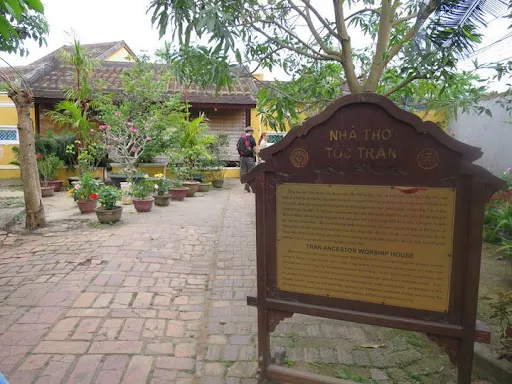
Once inside the walking area, simply head down Le Loi Street and look for the distinctive wooden gate surrounded by lush foliage.


Tran Family Chapel Architecture and Highlights
Beyond its profound historical significance, the Tran family chapel stands as a masterful showcase of 19th-century craftsmanship. The entire compound was designed with deep intention, where every beam, courtyard, and carving holds distinct cultural and spiritual meaning.
Traditional Wooden Vietnamese Design
The structural skeleton of the Tran family chapel relies entirely on precious jackfruit wood. Artisans from the famous Kim Bong Carpentry Village crafted the intricate beams and columns without using a single metal nail. The arched wooden roof supports demonstrate a perfect balance of engineering and aesthetic grace, establishing Tran family chapel Hoi An Vietnam as a masterpiece of ancient carpentry.
Courtyard Layout and Spatial Structure
Feng shui principles dictate every inch of the property layout. A vibrant front garden welcomes positive energy, while a protective screen blocks malicious spirits from entering the main hall. The harmonious arrangement of plants, stone features, and open space creates an immediate sense of tranquility.
Ancestral Altar and Ritual Space
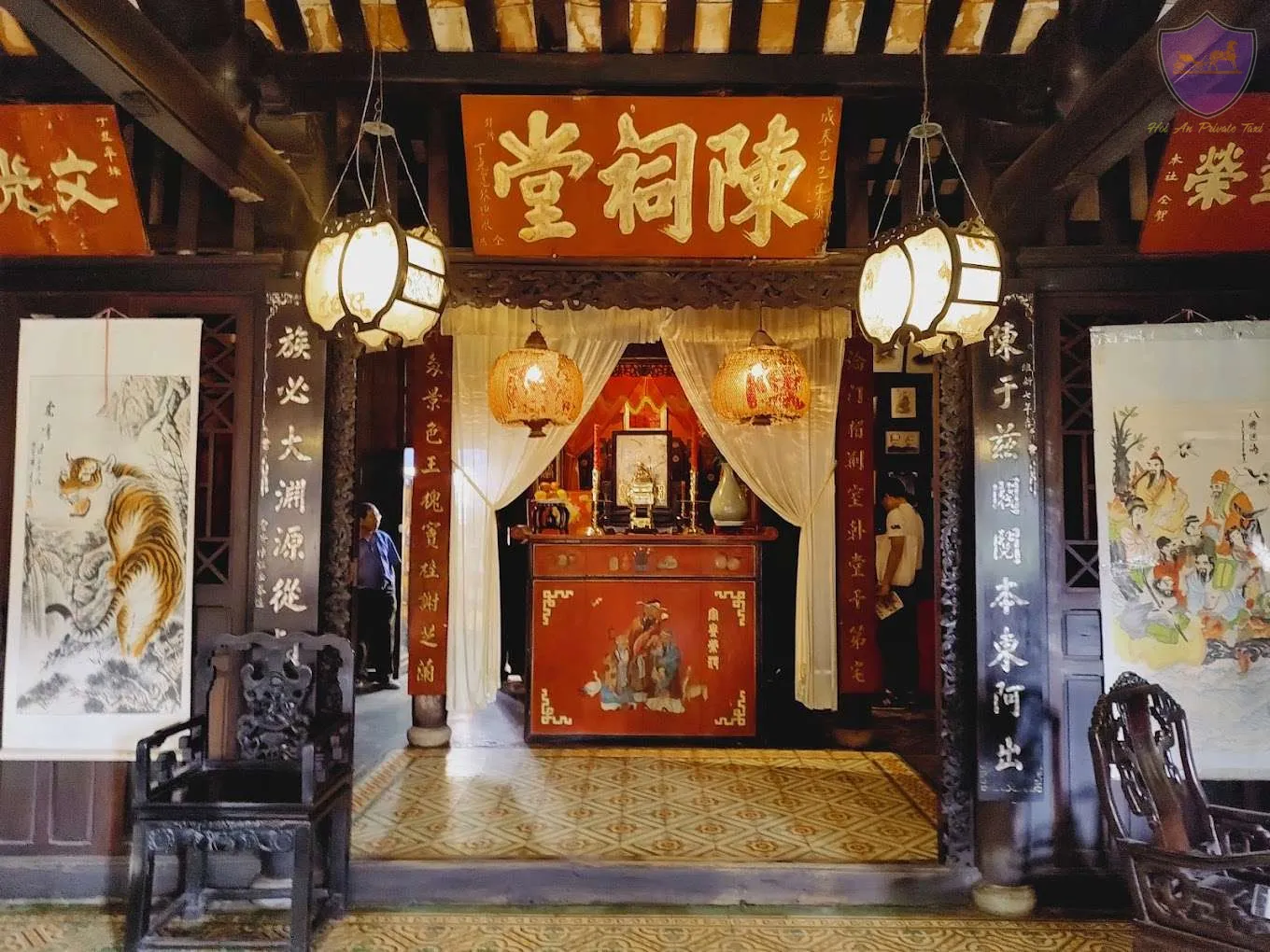
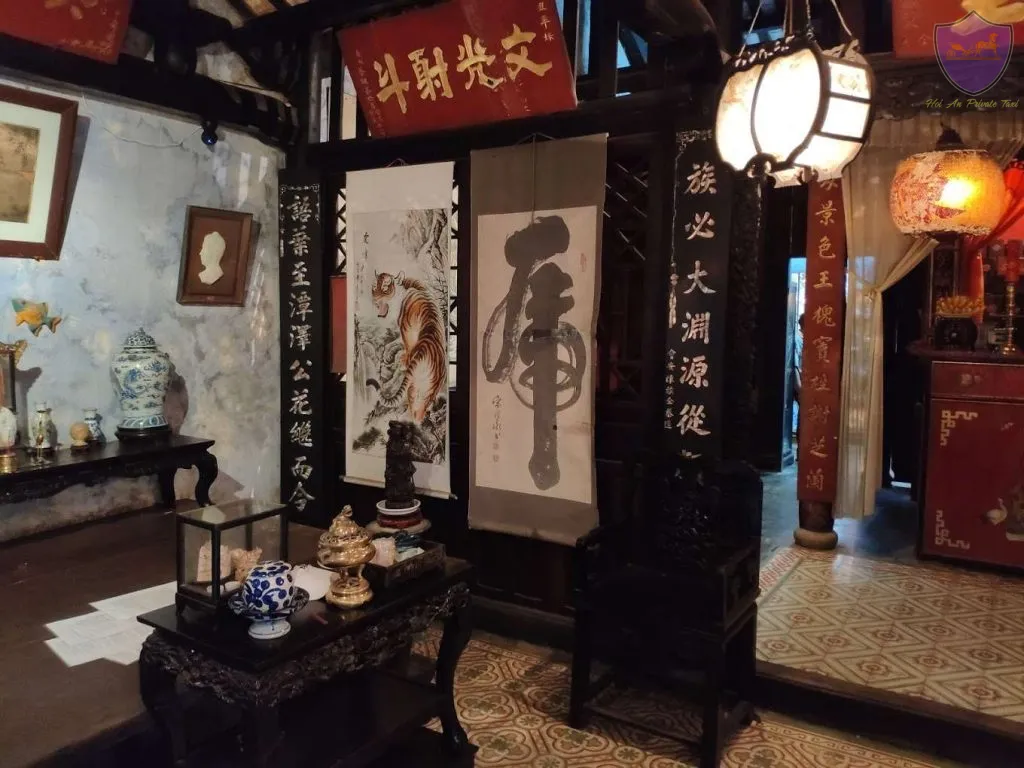
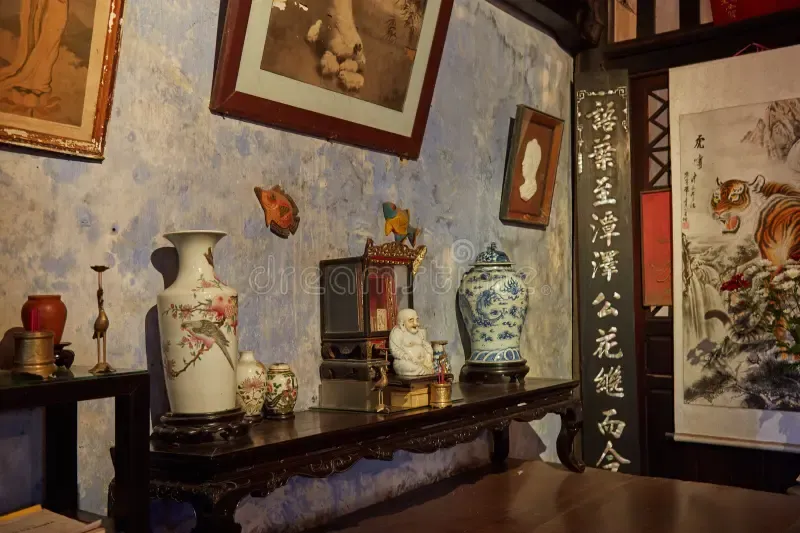
The central altar commands the highest respect within the Tran family chapel. Arranged with strict adherence to spiritual hierarchy, the space features antique incense burners, brass candle holders, and wooden tablets bearing the names of ancestors. Sliding wooden doors gracefully separate the sacred worship area from the everyday living quarters.

Decorative Elements and Symbolism
Look closely at the roof eaves and wooden panels to spot intricate carvings of bats, peaches, and lotus flowers. These symbols represent prosperity, longevity, and purity. The integration of yin and yang concepts is visible in the alternating convex and concave roof tiles.
What to Expect When Visiting Tran family Chapel
A visit to the Tran family chapel is much more than a standard sightseeing stop; it is an immersive cultural encounter. Knowing what to anticipate during your time here will help you fully appreciate the quiet rhythm and spiritual depth of this heritage site.
Atmosphere and Overall Experience
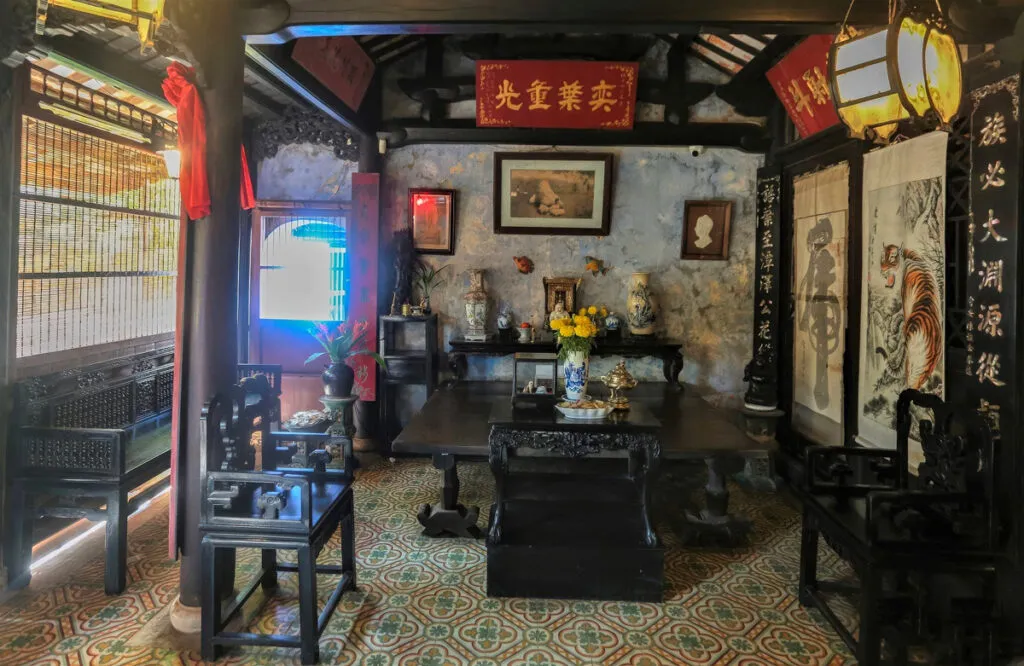
Stepping inside Tran family chapel Hoi An Vietnam feels like entering a different era. The air carries the faint, sweet scent of sandalwood incense. Unlike the crowded streets outside, this sanctuary offers a hushed, contemplative environment where visitors can truly appreciate the slower pace of heritage travel.
How Long to Spend Here
A thorough exploration takes roughly 20 to 30 minutes. This allows ample time to admire the woodwork, listen to a brief historical explanation from the resident family members, and enjoy a quiet moment in the courtyard. Rushing through this space defeats the purpose of visiting a spiritual sanctuary.
Visitor Etiquette and Respectful Behavior
Because the Tran family chapel remains an active place of worship, respectful conduct is strictly required. Dress modestly by covering your shoulders and knees. Speak softly, remove your hat when standing before the main altar, and avoid touching the antique artifacts or ancestral tablets.
Photography Tips and Restrictions
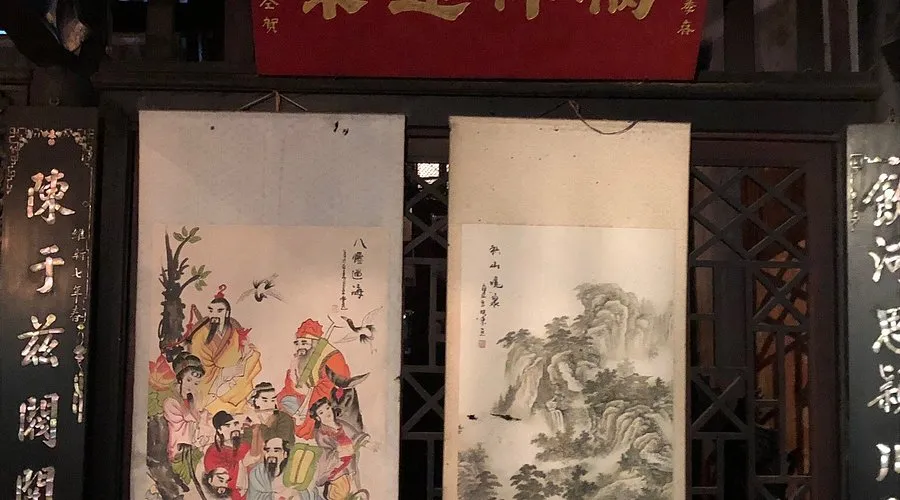
The warm, natural light filtering into the courtyard creates beautiful photographic opportunities. Always ask for permission before taking portraits of the family members living there. Avoid using a flash inside the main hall, as it disrupts the solemn atmosphere and can damage ancient pigments.
Best Way to Include Tran Family Chapel in Your Hoi An Itinerary
Tran Family Chapel is best explored as part of a cultural walking tour through Hoi An Ancient Town. Since the chapel requires only 20–30 minutes to visit, it can easily be combined with several nearby heritage attractions.
Suggested Half-Day Itinerary:
- 8:00 AM – 8:30 AM: Visit Tran Family Chapel and learn about Vietnamese ancestor worship traditions.
- 8:30 AM – 9:15 AM: Explore Tan Ky Old House, one of Hoi An’s best-preserved merchant homes.
- 9:15 AM – 10:00 AM: Walk to the Japanese Covered Bridge, the iconic symbol of Hoi An’s multicultural trading history.
- 10:00 AM – 10:45 AM: Visit the Cantonese Assembly Hall to admire its elaborate architecture and cultural significance.
- 10:45 AM – 11:30 AM: Finish your morning at Hoi An Central Market, where you can experience local daily life and sample traditional specialties.
This route offers a balanced introduction to Hoi An’s history, architecture, culture, and local lifestyle, making it ideal for first-time visitors.

Best Time to Visit Tran Family Chapel
The best time to visit Tran Family Chapel is during the dry season, from February to August, when the weather is generally sunny and comfortable for exploring Hoi An Ancient Town on foot.
Best Time of Day:
- Early Morning (7:00 AM – 9:00 AM): The chapel is typically quieter, allowing visitors to explore the site at a relaxed pace and take photos without crowds.
- Late Afternoon (3:00 PM – 5:00 PM): Temperatures are usually cooler than midday, making it a pleasant time to combine the chapel with nearby attractions in the Ancient Town.
Best Time of Year:
- February to April: Often considered the most comfortable period to visit Hoi An, with pleasant temperatures, lower humidity, and minimal rainfall.
- May to August: Suitable for travelers visiting during the summer months, although daytime temperatures can be quite warm.
- October to November: Expect occasional heavy rainfall and flooding in some areas of Hoi An, which may affect outdoor sightseeing plans.


Accommodation Near Tran Family Chapel
Staying within walking distance of the Tran family chapel allows for effortless exploration of the Ancient Town. Numerous boutique hotels and restored heritage stays line the nearby streets, offering premium comfort while prioritizing sustainable tourism practices. To enhance your connection to the local community, here are a few highly recommended options just steps away from the heritage site:
Vinh Hung Heritage Hotel
As one of the few hotels located entirely within the preserved pedestrian zone, Vinh Hung Heritage Hotel is housed in an authentic, centuries-old timber merchant building. Stepping into its antique-filled spaces feels like traveling back in time, perfectly extending the historical atmosphere of your heritage tour. This unique accommodation is exceptionally well-suited for history enthusiasts and cultural travelers who prioritize an immersive, traditional experience over modern luxury amenities. Furthermore, guests staying here will love the exclusive convenience of waking up right in the heart of the Old Town, allowing them to explore the quiet streets long before the daily crowds arrive.
- Address: 78 Tran Phu Street, Hoi An (A 3-minute walk).
- Estimated Price: $70 – $120 per night.
Allegro Hoi An – A Little Luxury Hotel & Spa
Located entirely within the preserved pedestrian zone, Vinh Hung Heritage Hotel is housed in an authentic, centuries-old timber merchant building. Its antique-filled spaces perfectly extend the historical atmosphere of your tour, making it ideal for history enthusiasts who prioritize immersive cultural experiences over modern luxury. Guests will love the exclusive privilege of waking up right in the heart of the Old Town to explore the quiet streets long before the crowds arrive.
- Address: 86 Tran Hung Dao Street, Hoi An (A 5-minute walk).
- Estimated Price: $110 – $160 per night.

Lantana Boutique Hoi An Hotel
Nestled along the tranquil banks of the Hoai River, Lantana Boutique Hoi An Hotel offers a peaceful retreat with sweeping water views. Despite its quiet setting, the property keeps you comfortably close to the bustling heritage streets and night markets, which are just a short walk away. This elegant hotel is highly recommended for couples and travelers seeking a romantic, relaxed atmosphere that perfectly balances riverside serenity with convenient access to the Old Town’s vibrant activities.
- Address: 09 Thoai Ngoc Hau Street, Hoi An (A 6-minute walk).
- Estimated Price: $60 – $90 per night.
Best Attractions Near Tran Family Chapel Hoi An
Because the Tran family chapel boasts a highly central location on Le Loi Street, it serves as the perfect launchpad to explore neighboring landmarks. You can effortlessly string together a morning of cultural discovery. Here are a few must-visit historic sites located just a short stroll away:
Phung Hung Old House
Phung Hung Old House is a fascinating two-story wooden home that perfectly showcases 18th-century merchant architecture. Its unique structure beautifully blends Japanese, Chinese, and Vietnamese design elements, reflecting Hoi An’s diverse trading history. This well-preserved landmark is ideal for history and architecture enthusiasts wanting to explore intricate wood carvings and see how prosperous merchants once lived.
- Address: 04 Nguyen Thi Minh Khai Street.
- Opening Hours: 8:00 AM – 6:00 PM.
- Entrance Fee: Included in the Old Town sightseeing ticket (1 valid punch per entry).
Tan Ky Old House
Tan Ky Old House is an impeccably preserved 18th-century merchant home that has remarkably survived centuries of historic floods. The building showcases a brilliant courtyard drainage system and intricate carvings that reflect a harmonious blend of Japanese, Chinese, and Vietnamese architectural styles. This “living museum” is highly recommended for cultural explorers and architecture lovers who want a first-hand look at Hoi An’s resilient heritage.
- Address: 101 Nguyen Thai Hoc Street.
- Opening Hours: 8:30 AM – 5:45 PM.
- Entrance Fee: Included in the Old Town sightseeing ticket.

Japanese Covered Bridge (Chua Cau)
Serving as the timeless symbol of Hoi An’s multi-cultural trading past, this iconic 17th-century bridge features a beautifully preserved, quiet shrine spanning a narrow canal. Historically built to connect the town’s Japanese and Chinese trading quarters, its unique architecture perfectly reflects a harmonious blend of diverse cultural influences. This absolute must-see landmark is ideal for history enthusiasts and photographers looking to capture the quintessential essence of the ancient town. Visiting early in the morning or viewing it illuminated at night offers the most magical and serene experience.
- Address: At the western intersection of Tran Phu and Nguyen Thi Minh Khai streets.
- Opening Hours: Ticket checks generally operate from 7:00 AM to 9:00 PM.
- Entrance Fee: Included in the Old Town sightseeing ticket.
Cantonese Assembly Hall
Built in the late 19th century, this majestic community hall is famous for its striking dragon statues, vibrant ceramic mosaics, and a peaceful rear garden. It historically served as a vital gathering place and spiritual center for Chinese merchants and sailors navigating the regional trade routes. This vibrant landmark is perfect for culture lovers and photographers looking to admire intricate traditional craftsmanship while finding a quiet oasis away from the busy streets.
- Address: 176 Tran Phu Street.
- Opening Hours: 7:00 AM – 5:30 PM.
- Entrance Fee: Included in the Old Town sightseeing ticket.
Travel Tips for Visiting Tran family Chapel
To ensure your visit to the Tran family chapel is as seamless and enriching as possible, keep these practical guidelines in mind before stepping through the wooden gates:
- Bring your Ancient Town ticket: Entry to Tran Family Chapel is included in the Hoi An Ancient Town Pass, so be sure to keep your ticket accessible during your visit.
- Visit early for a quieter experience: The chapel is typically less crowded in the morning, allowing you to explore the architecture and cultural displays at a more relaxed pace.
- Dress respectfully: As the chapel remains an active place of ancestor worship, modest clothing is recommended when visiting.
- Take time to observe the details: Look closely at the wooden carvings, ancestral altar, and family artifacts, which provide valuable insight into traditional Vietnamese family culture.
- Combine your visit with nearby attractions: Tran Family Chapel is within walking distance of Tan Ky Old House, the Japanese Covered Bridge, and Hoi An Central Market, making it easy to include in a cultural walking itinerary.
Is Tran family Chapel Worth Visiting?
Yes, especially for travelers interested in Vietnamese culture, history, and local traditions. While many attractions in Hoi An focus on merchant life and architectural heritage, Tran Family Chapel offers a more personal perspective on ancestor worship and the family values that have shaped generations of local residents.
Its central location, peaceful atmosphere, and inclusion in the Hoi An Ancient Town ticket make it a worthwhile stop for visitors seeking a deeper understanding of the cultural traditions behind Hoi An’s UNESCO World Heritage status.
FAQs About Tran family Chapel Hoi An
How much is the entrance fee for Tran family Chapel?
Access is included in the mandatory Hoi An Old Town sightseeing ticket, which costs 120,000 VND (approximately $5 USD). There is no separate Tran family chapel entrance fee, as this pass grants you access to five chosen heritage sites across the town.
How long does it take to visit Tran family Chapel?
Most visitors spend between 30 and 45 minutes exploring the grounds. This provides enough time to admire the architecture, listen to the family’s history, and enjoy the tranquil atmosphere of the courtyard without feeling rushed.
How is Tran family Chapel different from other old houses in Hoi An?
While houses like Tan Ky or Phung Hung were built primarily for commerce and living, this compound was designed specifically for ancestor worship. Its layout prioritizes spiritual hierarchy and family gatherings rather than displaying goods or facilitating trade.
Is Tran family Chapel suitable for a short visit itinerary?
Yes, its central location makes it a perfect addition to even a half-day walking tour. Because it rarely suffers from heavy crowding, you can enjoy a profound cultural experience without wasting time waiting in long lines.
Recent Posts






Our Associations


Our Awards








